-
aljawahermetalcoating
- June 13, 2026
- No Comments
PVD vs Electroplating: Key Differences, Benefits, and Applications
Table of Contents
- Key Takeaways
- What is PVD coating?
- What is electroplating?
- PVD vs electroplating: quick comparison
- Key benefits of PVD coating
- Key benefits of electroplating
- Common applications
- Which option should you choose?
- Industry insight example
- Wrapping up
- Frequently asked questions
Key Takeaways
- PVD offers increased durability, scratch resistance, and beauty.
- Electroplating is an economical approach to protection and functionality.
- Depending on project requirements, environmental conditions, and cost, different types of coatings will be used.
- Professional guidance from Aljawaher metal coating helps ensure long-term coating performance.
PVD coating and electroplating are two of the most common methods for finishing metal products, used to enhance their appearance, resistance to corrosion, and performance. The main difference is that PVD (Physical Vapor Deposition) creates a thin, highly durable coating through a vacuum process, while electroplating uses an electric current to deposit a metal layer onto a surface.
These technologies are frequently being contrasted in industries including construction, architecture, automotive, hospitality, and interior design. For those seeking trustworthy metal finishing services in Dubai, knowing the pros and cons of these processes will assist in making a wise investment decision.
What is PVD coating?
PVD (Physical Vapor Deposition) is an advanced coating technology that is used to coat a thin layer of metal on top of a surface within a vacuum tunnel.
How does it work?
- The metal material is vaporized under vacuum conditions.
- The vapor particles form bonds with the surface of the product.
- A very durable and decorative coating is formed.
Key Features
- Environmentally friendly process
- Excellent scratch resistance
- Long-lasting color stability
- Premium decorative finish
- High corrosion resistance
Moreover, the most common applications for PVD coatings include architectural hardware, high-end interior finishes, decorative panels, and high-quality metal objects.
What is electroplating?
Electroplating is the process of applying a coating of one metal onto another metal surface with the use of an electrical current and chemical solution.
How does it works?
- The metal part is immersed in an electrolyte solution.
- The solution is passed through by an electric current.
- The metal ions will bind to the surface to form a coating layer.
The following are typical electroplating materials
- Nickel
- Chrome
- Copper
- Zinc
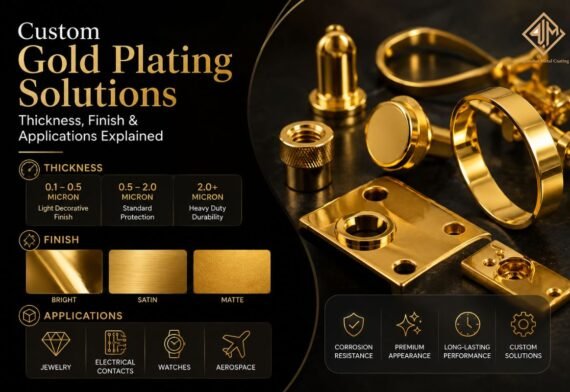
- Gold
Additionally, electroplating services in Dubai are used in various industries to enhance the appearance and properties of metal surfaces.
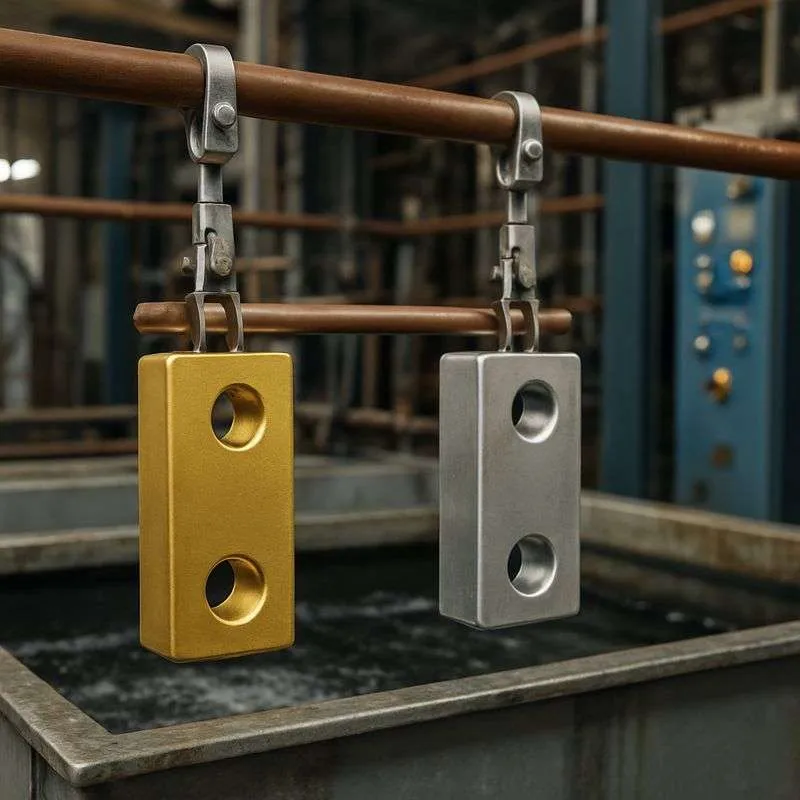
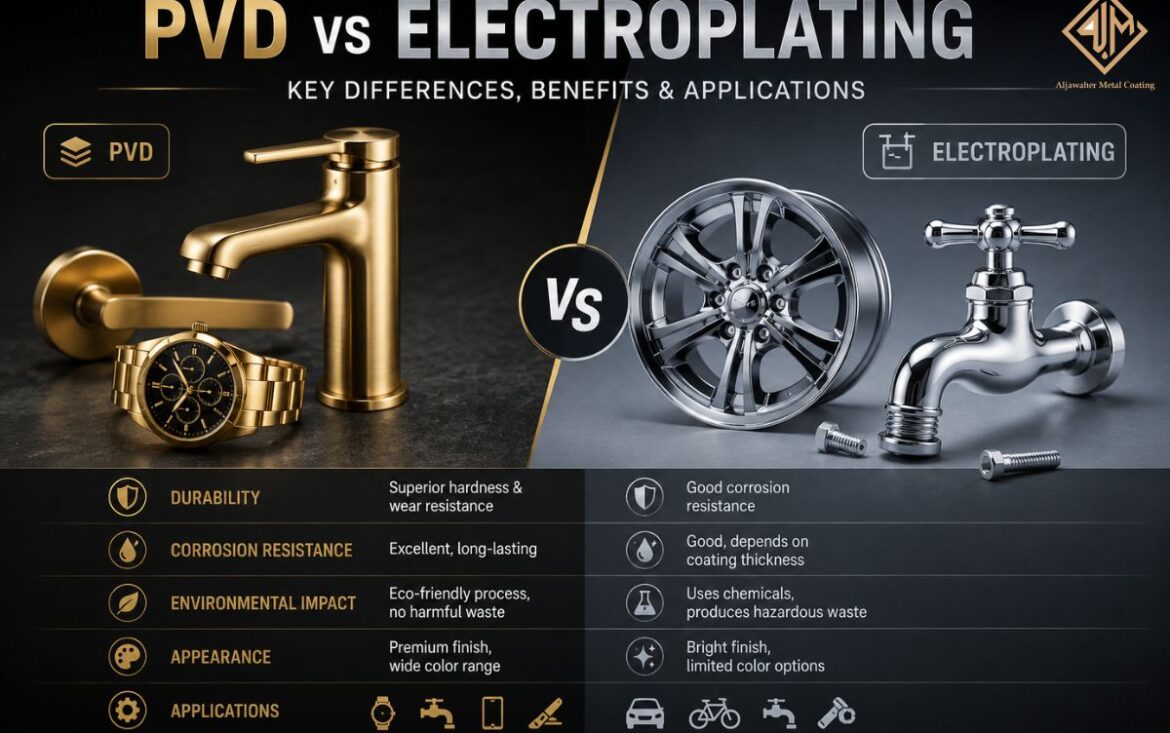
PVD vs electroplating: quick comparison
| Feature | PVD Coating | Electroplating |
| Process | Vacuum-based deposition | Electrical deposition |
| Durability | Very high | Moderate to high |
| Scratch Resistance | Excellent | Good |
| Environmental Impact | Lower | Higher due to chemical usage |
| Color Options | Wide decorative range | Limited compared to PVD |
| Corrosion Resistance | Excellent | Good |
| Maintenance | Low | Moderate |
| Initial Cost | Higher | Lower |
When durability, luxuriously draping appearance, and longevity are important, PVD is typically the preferred option. When cost and the need for functional metal protection are primary considerations, electroplating is a great choice.
Key benefits of PVD coating
- Superior Durability
PVD coatings are ideal for highly trafficked commercial and architectural uses, as they can withstand heavy use.
- Better Color Retention
In contrast to conventional finishes, PVD coating fades much less and can last for years.
- Eco-Friendly Process
Produces less harmful by-products than numerous conventional coating methods.
- Premium Appearance
Popular with luxury projects, PVD provides contemporary metallic finishes like gold, bronze, black, rose gold, and champagne.
Key benefits of electroplating
- Cost-Effective Solution
For large production volumes, the electroplating process may be more economical.
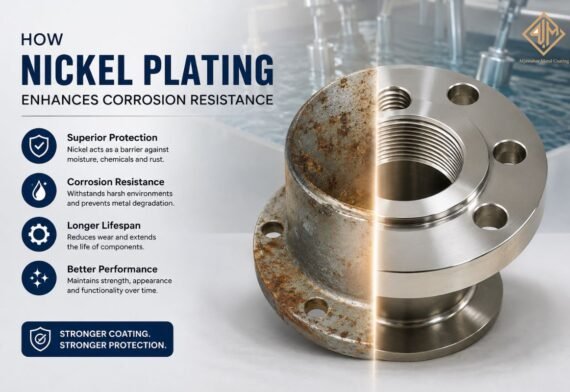
- Enhanced Corrosion Protection
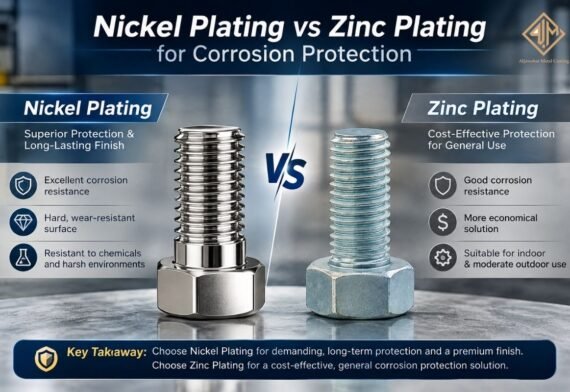
Components are protected from environmental damage by metal layers like nickel and zinc.
- Improved Conductivity
Electroplated surfaces are beneficial to many electrical and industrial parts.
- Versatile Applications
From automotive parts to industrial machinery, electroplating supports a wide range of industries.
Moreover, electroplating is a popular choice for businesses looking for nickel plating services in Dubai, as it offers a combination of performance and cost-effectiveness.
Common applications
1. PVD Applications
- Architectural hardware
- Elevator panels
- Decorative metal sheets
- Luxury furniture fittings
- Hotel interior elements
- Retail displays
2. Electroplating Applications
- Automotive components
- Fasteners
- Industrial machinery
- Electrical connectors
- Household hardware
- Manufacturing equipment
Both technologies are significant in modern electroplating in UAE and the advanced metal finishing industry.
Which option should you choose?
The best option for you will depend on the needs of your project.
Choose PVD If:
- High-end style is required.
- It is important that it can last a long time.
- The project is to be finished in a luxury style.
- Sustainability of the environment is emphasized.
Choose Electroplating If:
- Cost is one of the key factors.
- Functional protection is the main goal.
- A high volume of production is needed.
- It is significant to enhance the conductivity.
Aljawaher Metal Coating, being one of the best metal coating company in Dubai, assists clients to assess the project requirements and determine the most appropriate coating technology to enhance the project performance and value.
Industry insight example
Discuss a luxury hotel decorating the interior of its rooms and hallways with fancy door handles, elevator panels, and metal accents. Initially, the costs may be reduced with regular contact, but the results will wear over time.
If this is the case, PVD coatings may provide greater long-term value due to their increased resistance to scratches and color change and ease of maintenance.
That’s why many architects, developers, and contractors rely on experts such as Aljawaher metal coating to determine the appearance, durability, and lifecycle cost of coatings.
However, under certain operating conditions, electroplating might be more practical and economical for industrial equipment.
Wrapping up
While both PVD coating and electroplating have their advantages, the selection depends on the performance needs, budget constraints, and application. The durability, aesthetics, and long-lasting value are some of the reasons PVD is considered the preferred surface engineering option, whereas electroplating offers reliable cost-effective protection and industrial functionality. When choosing between the two, businesses typically consider their project requirements and future objectives.
From architectural ornamentation to industrial applications, Aljawaher metal coating offers customizable options supported by industry knowledge and cutting-edge technology. Being a reliable metal finishing services in Dubai, they assist their clients in choosing the best coating options to make their products more durable, attractive, and efficient.
Contact Aljawaher Metal Coating today to talk about your metal finishing needs and find out the best possible metal coating solution for your application. By following a few simple steps and using the latest coating techniques, you can produce results that last and prove to be a good return on investment.
Frequently asked questions
PVD uses a vacuum-based process, whereas electroplating is the method that involves electrical current and chemical solutions to coat a surface with metal.
Yes. Overall, PVD is known to have a longer service life, greater scratch resistance, and better color retention.
Electroplating is a common process across the automotive, industrial, manufacturing, and electrical sectors.
PVD is regarded as an environmentally friendly coating process in comparison with many conventional coating techniques.
Because of its high-quality look and extensive color range, PVD is sometimes favored for decorative and luxury uses.