-
aljawahermetalcoating
- August 20, 2026
- No Comments
Chrome Plating vs Powder Coating: Which Is Better?
Table of Contents
- Key takeaways
- What is chrome plating actually?
- What is powder coating actually?
- Chrome plating vs powder coating: side-by-side comparison
- Which one handles Dubai’s climate better?
- Cost differences nobody talks about upfront
- Common mistakes when choosing a finish
- Expert recommendations by application
- Final thoughts
- Frequently asked questions
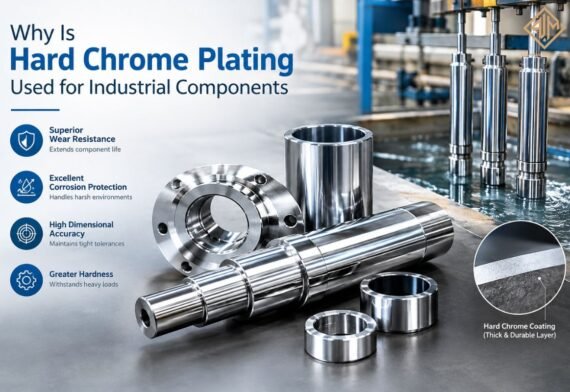
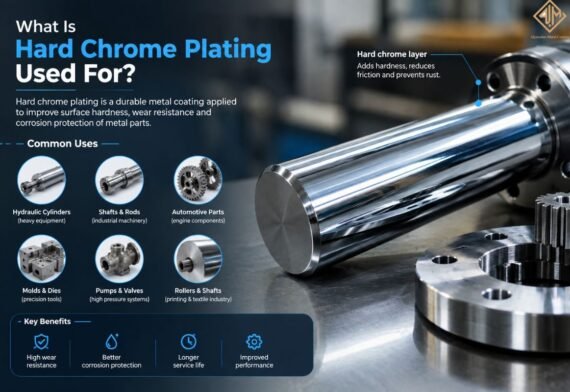
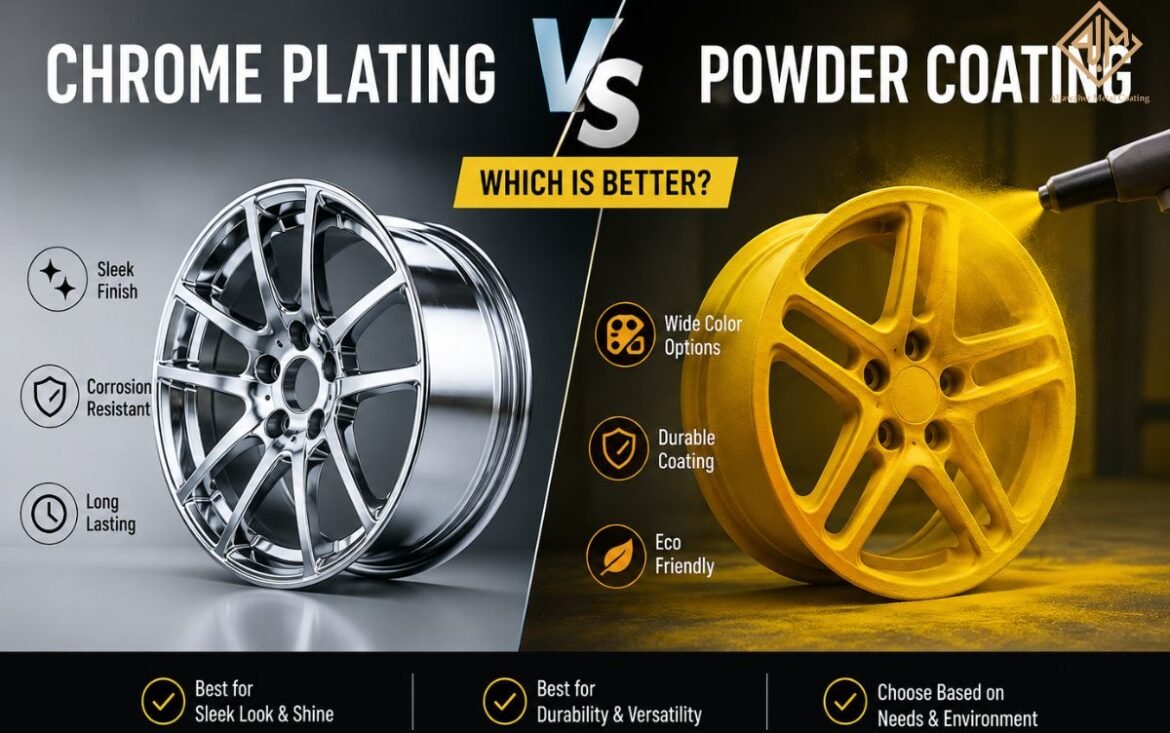
If you’re trying to decide between the two coating techniques, powder coating generally wins out in terms of flexibility, resistance to chipping, and maintenance requirements. Chrome plating, on the other hand, is unbeatable in terms of hardness and its shiny finish. Hard chrome has a hardness rating of between 68 and 72 on the Rockwell C scale. This is why hydraulic rods and industrial rollers are coated rather than plated.
The problem with decorative chrome is that it is very thin and may require multiple applications in order to achieve a usable thickness, while water gets through cracks and can get underneath the chrome layer and bubble it. Powder coating, on the other hand, doesn’t have this flaw. It is cured at a temperature of around 200°C in order to form a layer of between one and four mil, which flexes instead of cracking and is resistant to chipping, UV rays, and corrosion with a lot less maintenance.
Key takeaways
- The process of chrome plating gives high hardness, and therefore it is suitable for hydraulic cylinders and rings.
- Decorative chrome has a thinner coating, which makes the surface prone to cracking from any shocks.
- The powder-coating process improves flexibility and makes it more resistant to cracking caused by daily actions.
- Growing regulatory restrictions on chromium are making powder coating a more attractive option for industrial consumers who prefer simpler maintenance.
What is chrome plating actually?
Chrome plating works through an electrochemical process. The item is placed inside a chromic acid solution while an electrical current is applied. The result is a thin layer of chromium formed on the surface. This process dates back to the first decades of the twentieth century, and since that time it has attracted people because of its shiny appearance.
The two types can be distinguished from each other. Decorative chrome plating is not thick at all, while hard chrome plating is much thicker and used for resistance against wear in industrial environments. They do not respond the same when subjected to stress; hence, many customers are disappointed because they think that they are two types of the same process.
Chrome really is difficult. It’s not a marketing ploy; it’s because of this hardness that hydraulic cylinders and piston rings are chrome lined in the first place. Hardness and toughness, however, are two different properties. A thin decorative layer might break under minor impacts, and once the crack finds its way through to the base metal underneath, corrosion can start. So that’s the bubbling and peeling you might see on old chrome trim, and this is rarely reversible.
What is powder coating actually?
Powder coating does not require any liquid solvents. Instead, dry polymer powder, which is either polyester or epoxy, is charged electrostatically and sprayed onto a grounded metallic part. Then it is put into an oven, which heats it to around 200°C, causing melting and crosslinking.
The thickness of the new layer is between 1 and 4 mils, which is more than that of chrome, and this thickness allows for better protection against external forces. When chrome cracks, powder coatings often bend and recover.
Furthermore, epoxy has good resistance to different chemicals but tends to fade when exposed to sunlight for a long period of time. Polyester loses some of its chemical shielding properties but is much more stable in terms of UV rays.
Chrome plating vs powder coating: side-by-side comparison
| Factor | Chrome Plating | Powder Coating |
| Hardness | Very high (Rockwell C 68–72 for hard chrome) | Moderate, sits between soft plating and hard chrome |
| Flexibility | Low, brittle under impact, especially in thin layers | High, absorbs impact without cracking |
| UV resistance | Not applicable, metallic finish doesn’t fade | Strong with polyester resin, weaker with epoxy |
| Corrosion resistance | Strong when intact, fails quickly once cracked | Strong and consistent as long as the film stays unbroken |
| Maintenance | Regular polishing needed to prevent limescale | Low, occasional cleaning usually enough |
| Coating thickness | Thin, often needs several passes for durability | 1–4 mils in one application |
| Environmental impact | Uses hexavalent chromium, a regulated carcinogen | No toxic bath chemicals involved |
| Typical cost | Higher, especially for thicker industrial coats | Generally lower, especially at scale |
| Best suited for | Mirror-finish trim, hydraulic parts, decorative accents | Outdoor furniture, vehicle frames, architectural aluminum |
Which one handles Dubai’s climate better?
Heat, humidity swings, sand in the air- none of it treats every finish the same. Chrome holds its shine fine in dry heat, but it needs regular polishing to keep water spots and limescale from building up, which is a bigger deal here than people expect given how much condensation forms across the humid months.
Therefore, powder coating generally needs less babysitting in this climate. Polyester-based finishes hold their color under direct sun for years, and the sealed film doesn’t retain water the way chrome does. If you’re running a vehicle fleet, outdoor signage, or architectural aluminum in Dubai, that lower-maintenance profile saves real money over a few summers.
Still, if the point is a specific decorative look, say a mirror-polished trim piece, nothing about powder coating replicates that. That’s where chrome plating services in Dubai still have a genuine edge over any polymer option.
Cost differences nobody talks about upfront
Powder coating is almost always the cheaper option per part, especially at volume. Some of that comes down to process. Chrome plating often needs several passes to build up enough thickness to actually be durable, and each pass adds labor and material cost. Powder coating usually gets there in one pass.
There’s a compliance cost too, one that rarely shows up on the initial quote. Hexavalent chromium, used in the plating bath, is carcinogenic and tightly regulated for disposal and worker exposure. Facilities running chrome lines carry that overhead, and it’s a big part of why chrome plating rarely comes in cheaper than powder coating for comparable jobs. The best metal coating company in Dubai can guide you on which is best and less expensive.
Common mistakes when choosing a finish
- Assuming “harder” automatically means “more durable.” Chrome’s hardness doesn’t stop it from cracking on impact. Hardness and toughness are different properties, and mixing them up leads to the wrong pick.
- Skipping maintenance planning. Chrome needs periodic polishing to avoid limescale. If nobody budgets for that, the finish degrades faster than anyone expected.
- Choosing chrome for flexible or high-vibration parts. Anything that flexes regularly will eventually crack a chrome layer. Powder coating is the safer bet there.
- Picking powder coating on looks alone without checking the resin. Epoxy chalks under UV. Fine indoors, a poor call for anything installed outside in Dubai.
- Not asking about coating thickness. A thin “chrome-look” finish and true hard chrome behave completely differently under load, and the pricing should reflect which one you’re actually paying for.
Expert recommendations by application
- Automotive trim and decorative accessories: Chrome plating will give a lustrous finish that is hard to beat.
- Exterior furniture, signage, and aluminum: Powder coating will withstand the sun’s rays and will require less servicing.
- Hydraulic machinery: Hard chrome is powerful where surface blistering is severe.
- Vehicle frame and supports: Powder coating can deal with impacts better and reduces long-term maintenance.
- For mixed application: In cases where flexibility is required, use powder coating, while in case rigidity is necessary, opt for chrome if the primary concern is wear resistance and aesthetics.
Final thoughts
Neither finish is the best in every situation, as those who claim this do oversimplify the issue. Chrome has high hardness and unique shining properties, but it requires constant care and can chip after being hit hard. Powder coating does not shine brightly but is more flexible and cheaper in the long term. That is why it has become popular for outdoor and high-use applications.
When you have to choose between technologies in the UAE, Aljawaher Metal Coating can help you with both chrome and powder coating applications.
Frequently asked questions
Not really, no. Chrome is harder, but powder coating flexes under impact instead of cracking, so it often outlasts chrome on parts that see regular wear or movement.
Powder coating, usually, especially at volume. Chrome often needs multiple passes just to reach a durable thickness, and that adds up.
After proper surface prep, technically yes. It’s uncommon though, since it kills the reflective look people choose chrome for in the first place.
The chromium layer itself resists corrosion fine. The problem starts once it cracks or chips, at which point moisture reaches the base metal and corrosion spreads from underneath.
Generally, yes, especially polyester-based powder coating. It handles UV exposure and humidity with a lot less maintenance than chrome.
Usually between 1 and 4 mils, applied in a single pass and cured at around 200°C.
Mostly regulation. Hexavalent chromium is carcinogenic, and the compliance costs around it are pushing manufacturers toward alternatives like powder coating.
Hard chrome runs around 68 to 72 on the Rockwell C scale. Powder coating is lower on hardness but wins on flexibility and impact absorption.
Chrome, by a fair margin. It needs regular polishing to avoid limescale and water spotting. Powder coating usually just needs occasional cleaning.
Yes. Providers offering chrome plating services in Dubai alongside powder coating, like Aljawaher Metal Coating, can help match the process to the part rather than defaulting to whichever one they sell more of.