-
aljawahermetalcoating
- August 29, 2026
- No Comments
Nickel Plating vs Zinc Plating for Corrosion Protection
Table of Contents
- Key takeaways
- What does zinc plating actually do?
- What does nickel plating actually do?
- Electroless nickel vs electrolytic nickel: key differences
- Nickel vs zinc: comparison table
- Which one survives Dubai’s climate better?
- Cost: what you’re really paying for
- Matching the coating to the job
- Mistakes companies make when choosing a coating
- Finding reliable plating nearby
- Why choose professionals?
- Expert recommendations
- Final thoughts
- Frequently asked questions
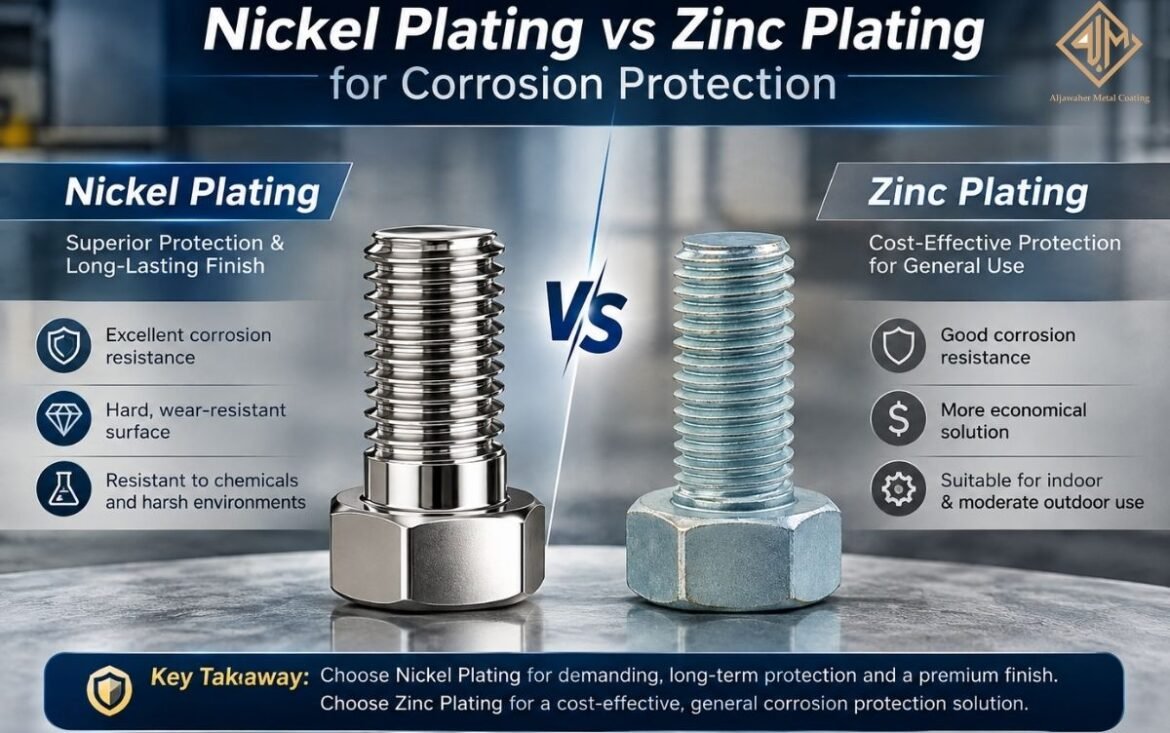
Zinc plating is less expensive and works well on indoor or low-corrosion pieces, but it wears off quickly when humidity and salt come into play. Nickel plating, particularly electroless nickel, works better in Dubai’s heat and humidity and produces a thicker, smoother coating over complex objects.
Moreover, those comparing Nickel Plating Services in Dubai for use outdoors or in the presence of chemicals and heavy use will most likely determine that nickel is the better choice. Of course, zinc is still good for cheap jobs in low-risk environments.
Key takeaways
- Zinc plating offers steel protection by sacrificing itself first and protecting the steel underneath.
- Electroless nickel creates a very even coat on complex shapes.
- Although zinc plating is cheaper upfront, it may need to be recoated sooner.
- Due to the heat and humidity of Dubai and the presence of salt in the air, the application needs to be more durable.
What does zinc plating actually do?
Zinc plating operates on the principle of sacrificial protection. Essentially, zinc is applied to the surface of steel, and this makes it corrode before the underlying steel does. Zinc is like a shield that bears the brunt of the damage. Once the zinc coating is fully worn off, the steel surface is exposed, and rust starts to accumulate very quickly.
However, this is the reason zinc plating can be seen everywhere on any fasteners, brackets, and other hardware that is used inside and in other more controlled environments. It is a relatively cheap process; it can be done very fast, and it does its job properly and efficiently provided the hardware is not being left in the standing water or salt spray for years.
The major problem is the control over the thickness of the zinc layer. This problem is usually related to electroplated zinc, as it tends to form uneven coats, especially on sharp edges, deep indents, or internal bores. This means that corners will have more zinc deposited on them, while tight internal spaces will suffer from a decrease in the zinc layer thickness.
What does nickel plating actually do?
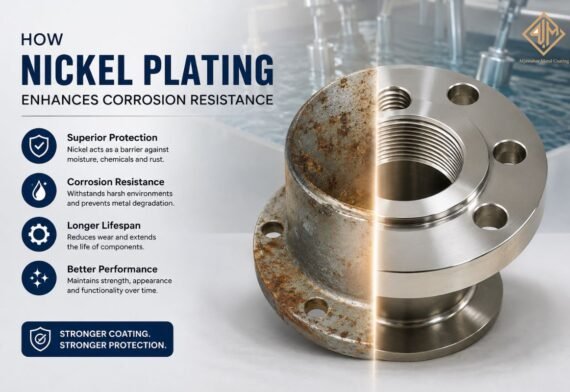
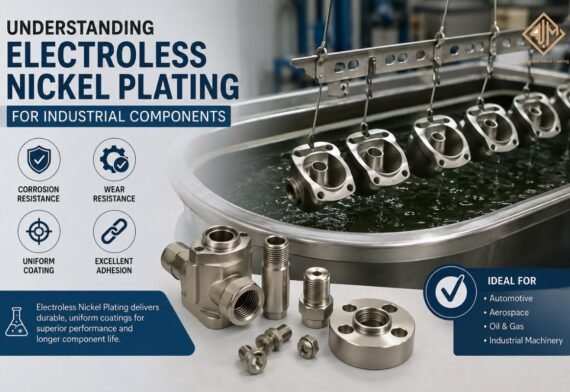
Nickel plating, or specifically electroless nickel plating, operates in a totally different way. Instead of using up its own material to protect the substrate, electroless nickel builds an impermeable and even-enough shell that can resist corrosion from outside. Importantly, there are no corroded pieces of nickel due to this process; the coating itself does the job.
“Electroless” means that there is no electric current used to deposit the metal as it occurs in the processes of the electroplating of zinc or nickel. Electroless nickel uses a controlled chemical process in a plating bath. Thus, even the most complicated parts with intricate shapes get covered evenly since coating is applied evenly on any surface without the issues that involve variable current density.
Because of the use of pumps along with various valves and hydraulic components and precision-machined parts, many companies tend to choose electroless nickel plating services in Dubai. In fact, uneven coating shouldn’t be taken just as a problem regarding appearance, which is particularly important when it comes to parts that have internal channels and tight tolerances, as an uneven coating may distort the fitting, functioning, or fluid flow characteristics.
Electroless nickel vs electrolytic nickel: key differences
It is important to note that the term “nickel plating” is used in relation to two different processes that work quite differently from each other.
The electrolytic nickel technique makes use of electric current to coat the nickel on the part, being somewhat similar to zinc plating, which is cheaper than electroless nickel but is still far from being as precise and effective as electroless nickel.
Electroless nickel plating uses a chemical reaction to deposit a nickel-phosphorus alloy. The amount of phosphorus present in the nickel-phosphorus alloy can be classified as low, medium, or high, and this has an effect on hardness, corrosion resistance, and appearance. The more phosphorus is used, the better the properties against acids will be, while the lower the phosphorus amount, the stiffer the product will be. A respectable company will inquire about working conditions before recommending the phosphorus amount to you.
Nickel vs zinc: comparison table
| Factor | Zinc Plating | Nickel Plating (Electroless) |
| Protection method | Sacrificial (corrodes first) | Barrier layer (resists directly) |
| Coating uniformity | Uneven on complex shapes | Highly uniform, even on internal surfaces |
| Hardness | Lower, softer surface | Higher, more wear-resistant |
| Corrosion resistance | Moderate, shorter lifespan in harsh climates | Strong, especially in humid or coastal conditions |
| Typical cost | Lower upfront cost | Higher upfront cost |
| Best suited for | Fasteners, indoor hardware, low-exposure parts | Valves, pumps, molds, marine or coastal-exposed parts |
| Appearance | Bright or dull silver finish | Semi-bright to bright, consistent finish |
| Common industries | General manufacturing, automotive fasteners | Oil and gas, marine, aerospace, precision engineering |
Which one survives Dubai’s climate better?
This is the question that actually matters if you’re operating here and not just reading a comparison written for a cooler, drier market. Dubai’s high humidity for much of the year, combined with airborne salt off the coast, speeds up corrosion on anything under-protected.
Zinc plating can still do fine indoors or in climate-controlled facilities. Outdoors, in coastal industrial zones, or anywhere condensation and salt-laden air are a daily fact of life, that sacrificial layer degrades faster than it would somewhere drier. Once it’s gone, corrosion on the base metal follows quickly.
Therefore, electroless nickel handles this environment noticeably better, since its barrier protection doesn’t depend on wearing away to work. That’s a big reason why companies looking into nickel plating services in Dubai are usually dealing with equipment that sits outdoors, sits near the coast, or runs in industrial settings where moisture isn’t occasional. It’s constant.
Cost: what you’re really paying for
Zinc plating wins on sticker price, and for plenty of applications that’s the right call. Coating a batch of interior fasteners that get swapped out every few years anyway? Spending more on nickel doesn’t buy you much.
The comparison gets more interesting once lifespan and replacement cycles enter the picture. A zinc-coated part that needs re-coating every two years because of corrosion damage can end up costing more over five years than a nickel-plated part that only needed coating once. That gap widens fast for parts that are expensive or awkward to replace, like precision-machined components buried inside a larger assembly.
Nickel plating costs more per part. Whether that flips into the cheaper option over time depends on how harsh the environment is and what downtime from a failed part would actually cost you.
Matching the coating to the job
- When Zinc Plating Makes Sense
Zinc plating fits when the part lives indoors, isn’t fighting constant moisture, and gets serviced on a predictable schedule anyway. Fasteners, brackets, general hardware, parts in dry storage: all good candidates. If the budget’s tight and the corrosion risk is genuinely low, there’s no reason to pay for protection the part doesn’t need.
- When Electroless Nickel Plating Is the Better Choice
Nickel earns its cost once a part faces real exposure: outdoor equipment, marine environments, hydraulic and pneumatic components, molds, or anything with tight internal tolerances where an even coating affects function rather than just looks. Oil and gas, precision manufacturing, and industrial equipment companies reach for electroless nickel plating services in Dubai because the parts involved are expensive, hard to replace, and run in conditions that would chew through zinc within a couple of years.
Mistakes companies make when choosing a coating
A few patterns show up again and again when this decision goes wrong.
- Choosing based on price alone- The cheapest coating upfront isn’t always the cheapest over the part’s service life, especially in a corrosive climate.
- Not specifying the environment- A plating shop can’t recommend the right phosphorus content or coating type without knowing whether the part faces chemicals, salt, heat cycling, or abrasion.
- Ignoring part geometry- Complex shapes with internal features often need electroless nickel simply because electroplated coatings can’t reach evenly into every recess.
- Skipping pre-treatment quality checks- Poor surface prep undermines even a good coating process. Cleanliness and proper etching matter as much as the coating itself.
- Assuming all “nickel plating” is the same- Electrolytic and electroless nickel behave differently. Specify the wrong one, and you end up paying nickel prices for zinc-level performance.
Finding reliable plating nearby
Search electroless nickel plating near me, and the results will vary wildly in quality, turnaround, and technical know-how. Not every shop offering plating actually specializes in electroless nickel, and bath chemistry, phosphorus content, and quality control practices differ a lot between providers.
Once you’ve got a shortlist from that electroless nickel plating near me search, ask about their testing process specifically. A shop worth using can explain how they verify coating thickness and adhesion. “It looks good” isn’t a testing process. Salt spray testing and thickness measurement aren’t extras; they’re how you actually know the coating will perform once the part’s back in service.
Additionally, location still matters, mostly for turnaround and communication rather than raw proximity. A shop that’s technically five minutes away but slow to respond or vague about their process isn’t automatically the better pick over one a bit further out with a track record.
Why choose professionals?
A lot of businesses in Dubai land here after weighing the above. Aljawaher Metal Coating works across chrome, nickel, gold, silver, and brass plating, and electroless nickel is one of the more requested services for industrial and precision parts that need to survive local conditions, not just look good on delivery day.
The equipment matters less than knowing which phosphorus content fits which application, being upfront about turnaround, and backing the work with actual testing. Anyone comparing Nickel Plating Services in Dubai and wanting a provider that treats corrosion resistance as the real goal, rather than an afterthought, will want that conversation before committing to a batch of parts.
Ask around for the best metal coating company in Dubai, and you’ll usually get pointed toward shops with a track record across several plating types, not just one narrow specialty. That versatility counts for something when your parts list includes fasteners, valves, and decorative finishes in the same order.
Expert recommendations
A few practical points worth acting on, no matter who ends up doing the work:
- Get a written spec on phosphorus content when ordering electroless nickel. “Nickel plating” alone isn’t specific enough for critical parts.
- Ask for salt spray test results (typically referenced against ASTM B117 in the industry) for anything facing outdoor or coastal exposure.
- Thicker coating doesn’t automatically mean better protection. Adhesion and uniformity matter more than raw thickness in most applications.
- Mixed batches don’t need one coating for everything. Zinc-plate the indoor hardware, nickel-plate the outdoor equipment, and call it done.
Final thoughts
Zinc plating stays the practical, budget-friendly pick for low-exposure parts, and it does that job well. Nickel plating, especially electroless nickel, justifies its higher cost once parts face real corrosion risk, complex geometry, or an environment as demanding as Dubai’s heat-and-salt combination.
It comes down to being honest about where the part will actually live and what a failure would cost in downtime or replacement. Still not sure which way to go? Get in touch with Aljawaher Metal Coating for guidance on matching the coating to the application instead of guessing and hoping it holds.
Frequently asked questions
- What’s the main difference between zinc and nickel plating?
Zinc protects sacrificially, corroding before the base metal does. Nickel forms a direct barrier that resists corrosion without wearing away first, which gives it the edge on longevity. - Is electroless nickel plating more expensive than zinc plating?
Per part, yes. It tends to last longer though, which can bring total costs down over the part’s lifespan. - Which coating is better for outdoor equipment in Dubai?
Electroless nickel, most of the time. It handles humidity and salt exposure more consistently than zinc over the years. - Can zinc plating be used on parts with complex shapes?
It can, but expect uneven thickness on sharp edges or internal recesses. That’s a known limitation compared with electroless nickel. - What does “phosphorus content” mean in electroless nickel plating?
It’s the percentage of phosphorus alloyed with nickel during deposition. Low, mid, and high phosphorus coatings land differently on hardness and corrosion resistance depending on the application. - How do I know if a shop offering electroless nickel plating near me is reliable?
Ask about their testing process, salt spray testing, and thickness verification specifically. A shop that can walk you through their quality checks in detail is usually the safer choice. - Does zinc plating rust eventually?
Eventually, yes. Once the sacrificial zinc layer wears through or gets breached, the exposed steel starts rusting, faster still in humid conditions. - Is nickel plating suitable for decorative finishes as well as industrial parts?
Both, actually. It’s used for corrosion protection on industrial components and for bright, even decorative finishes on hardware and fixtures.