-
aljawahermetalcoating
- October 15, 2026
- No Comments
How Long Does Tin Plating Last? Factors That Affect Its Lifespan
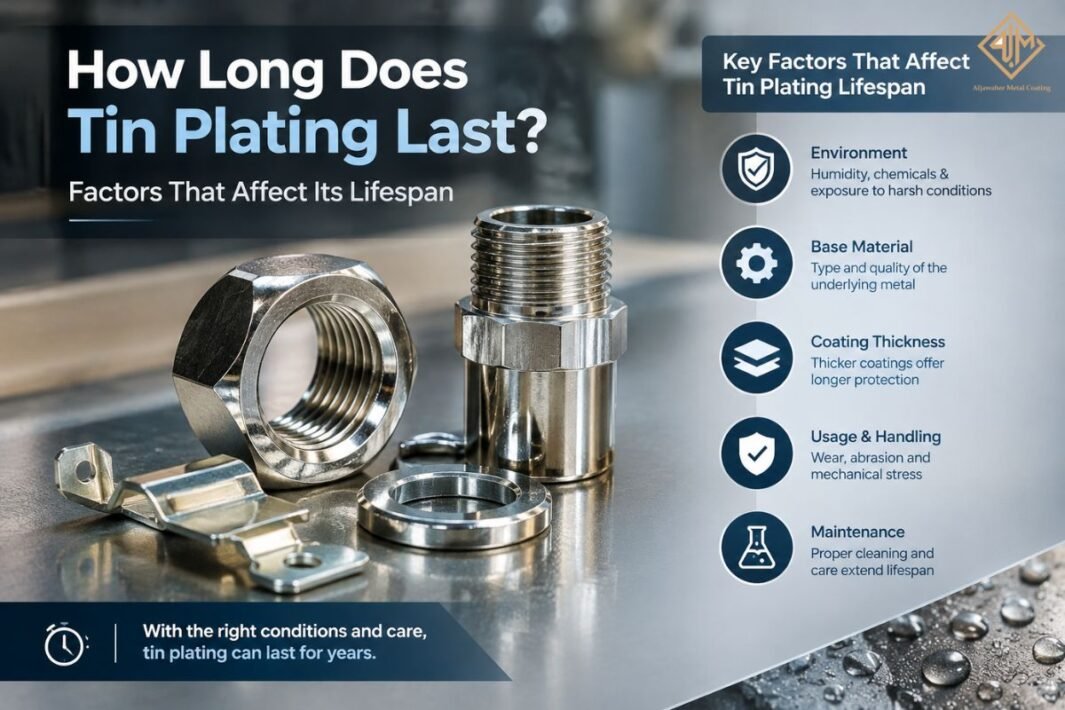
Before you start tin plating your parts in Dubai, one question pops up quickly: how long will coated parts be useful? Tin plating claims popularity due to its anti-corrosion properties and its ability to remain easy to solder and work with many elements. However, it is important to note that the durability of tin plating is not guaranteed. Factors such as thickness, environment, surface preparation, and handling impact the performance of plated parts.
This guide is aimed at explaining what tin plating actually is, how long it is expected to last, and what factors define its durability. Moreover, it will cover the specifics of conditions in the UAE and share some tips that will ensure prolonged durability of the coating of tin plates. Aljawaher metal coating provides quality services to commercial and industrial clients on a daily basis, therefore the provided information is based on personal experience and knowledge of the topic.
Key takeaways
- Tin coating typically works for a number of years or even decades, depending on the surrounding area and thickness of the coating.
- High levels of humidity, salt content in the air, dust, and heat of Dubai can affect the life span of tin coating; therefore, the specification should take into account local weather conditions.
- Regular cleaning, dry storage, and monitoring will help considerably increase the life length of tin coating.
- Choosing a supplier who has a lot of testing experience and control over all processes is one of the best options for obtaining reliable results.
What is tin plating and why is it used?
Tin plating refers to the process of applying a thin layer of tin to the base metal, which is typically steel, copper, or brass. The deposited layer provides a barrier to both the base metal and the ambient air and moisture it would otherwise come in contact with. Tin is soft and non-toxic and has been utilized for years in the food industry, electrical systems, and decorative hardware in general.
Tin is popular among manufacturers because of the following:
- Corrosion resistance in dry environment and under mild outdoor exposure Best soldering capabilities among metals used in electrical and electronic applications
- Non-toxic surface useful in food-contact applications
These properties make tin very useful but they are not sufficient to make it unbreakable. The second step is to learn the limits of the metal in order to make sure that one is making an informed decision when choosing its production specifications.
The lifespan of tin plating
Generally, tin plating remains effective for several years, but sometimes it can last decades, depending on the thickness of the coating, the base metal that has been plated, and the external conditions in which it is found. In most cases, dry indoor applications require little maintenance for years, while outdoor and salt-laden parts might need replacement much sooner. The quality of tin plating varies widely, so it is wise to undertake tests in real-life conditions in order to verify one’s expectations.
Tin plating services in Dubai do not usually break down completely at once. The protection it offers is slowly diminished over time due to the oxidation of the surface, wear and tear, or the presence of pinholes. The process can take a long time when in a clean and climate-controlled environment. Furthermore, if the part is exposed to damp, salty or chemically hostile conditions the protective process can speed up considerably.
Typical lifespan by application
The table below offers a rough estimate for the common uses of the plating process. The values are offered only as guidelines and not as absolute truth because the reality can differ greatly depending on the specifics of the environment and each use.
| Application | Typical Environment | Estimated Lifespan Range |
| Electronic connectors | Indoor, climate-controlled | Often 10 to 20+ years |
| Food and packaging cans | Sealed, indoor storage | Many years, depending on contents |
| Hardware and fittings | Indoor, occasional humidity | Roughly 5 to 15 years |
| Industrial machinery parts | Mixed, with oil and heat | Often 3 to 10 years |
| Outdoor or marine parts | Rain and salt air exposure | Often 1 to 5 years without protection |
Factors that affect tin plating lifespan
The lifespan of a coating depends on a number of factors. Some of them are set up during production and others rely on the way in which the part is stored and used after.
- Coating Thickness
The most critical specification control is thickness. A friction slip failure or exposure can lead to a very thin deposit wearing away. The thicker the layer, the more material against corrosion, but the more expensive and can have an impact on precision parts fit. Specifications should be based on the anticipated level of service and not on the lowest cost. Inquire about thickness and how it will affect the parts in their environment with your provider.
- Humidity and Moisture
The moisture that causes corrosion on tin plated surfaces is the main reason behind it. Oxidation is caused by condensation which remains on the surface for prolonged periods and experiencing consecutive wet or dry phases applies stress on the coating. Parts lying around unsealed windows, inside poorly ventilated shed, or in areas of constant contact with water corrode faster than parts stored dry. Moisture left inside a hole or gap, covered with dust or dirt could trigger corrosion in an easily forgotten place.
- Salt Air and Coastal Exposure
Salt creates chloride ions which are particularly corrosive. Water is trapped near the surface of salt deposits and hastens the process of pitting. Sea spray areas and all locations where sea spray contacts equipment should be considered high risk, even though the coating may appear intact. Regularly rinse and dry exposed sections will help make a difference over time in areas affected by salt damage.
- Heat and Temperature Cycling
Heat results in an increased reaction rate, and with time this means that thin layers will crack from repeated expansion and contraction. Parts located near engines, furnaces, and even sunlit areas will degrade faster than stationary, shaded parts. Although it tends to be ignored, temperature cycling can be as dangerous as long exposure to heat, as many parts will face the alternation of heat and cold on a regular basis.
- Base Metal and Surface Preparation
The coating is only as good on the object it is being applied to. A poor cleaning process, leaving oils on the surface, and allowing scale to remain on the surface are some of the reasons why adhesion fails. Galvanic corrosion can happen where there is a fault in the surface of the coating or if the base metal is corrosive. Therefore, it is very important to have the proper pre-treatment and one of the first things to consider while comparing providers.
Dubai’s climate and coating lifespan
Dubai has high summer temperatures, high levels of coastal humidity and airborne salt and fine dust. All of these will affect the life of a coating. Conditions should be considered when planning and designing the equipment because a component that would last a long time in a temperate inland city may wear out sooner here.
This does not imply that tin plating is not appropriate for the area. It indicates that the specification of the coated parts should be dependent on the local conditions. Many of the buyers who know this prefer to get a slightly thicker coating or closed storage areas or extra sealing in the event that equipment is used outdoors. The local problems are:
- Low night dewpoints along the coast allow surfaces to remain moist throughout the night.
- Fine airborne dust that is capable of scratching the surface and trapping moisture.
- Harsh summer weather which can cause oxidation and thermal stress.
Dust is a special concern. The fine particles stick to surfaces and retain moisture, forming small moist pockets where corrosion can start. This can be prevented by routine cleaning with proper, non-abrasive cleaning practices, and is one of the easiest maintenance practices to develop.
How can you extend the life of tin plating?
There’s a great deal that you can do to prolong the life of your tin-plated products. The following steps are practical and, for the most part are not done with specialised equipment.
- Choose the correct thickness for your application before placing your order, depending on the degree of exposure and handling.
- Store parts in dry, well-ventilated places and use desiccant packs if moisture is an issue.
- Use a neutral cleaner to gently clean surfaces and dry thoroughly to remove salt, dust, and residue.
- Regularly test coated parts for any discoloration, dull areas, or tiny pits.
- If the part is to be exposed to outdoor or marine environments, apply a proper sealant or protective coating.
- Avoid direct contact between dissimilar metals, as this will minimize galvanic corrosion.
Inspection is more important than most people realise. Forms of coating failure can be recognized early such as slight dulling or change in colour often long before a complete failure.
If you can catch them early they can be cleaned, touch-up or re-plated, before the base metal is compromised. A logbook of inspection dates and observations can show patterns, which can help you plan replacements accordingly.
How to choose Dubai tin plating services?
As much as thickness, the right provider is critical as lifespan is heavily dependent on process quality. If you are considering comparing the services of tin plating in Dubai, remember to consider the method through which they are done and how they are checked.
What to ask before you hire?
Here are some questions to ask before choosing a provider:
- What are the plating standards and range for them?
- What are the procedures they follow for preparing and cleaning surfaces prior to coating?
- Are they able to do adhesion or salt spray testing if requested?
- What are some of the quality controls they perform before delivery?
Records of testing are a good indicator of reliability of a process. Request sample reports and visit the facility to observe work practice. The provider which is transparent with their techniques tends to have a more consistent yield from one batch to the next.
Why does local experience count?
A team with experience in numerous projects in the region has witnessed the performance of coatings in the Dubai environment over time. That knowledge aids in decisions for practical matters like whether a standard thickness is sufficient or if a part requires extra sealing. Aljawaher metal coating provides application-specific advice that enables the client to select the appropriate coating that best fits its environment, instead of giving a one-size-fits-all solution.
While looking for the best metal coating company in Dubai, you should observe open communication with clients, written test reports, and a readiness to discuss the pros and cons of all available choices. Normally, a company that talks about real lifespans as well as the limitations of its own work earns more trust in the long run.
Conclusion
The longevity of tin plating can be predicted, however, specific factors influence its durability. The thickness of the coating, together with the type of environment, surface treatment, and maintenance, indicate how long the parts are going to be protected. Always take into consideration the conditions encountered by your products and keep track of their condition.
When trying to find the best option, contact Aljawaher metal coating, and it will help you choose a proper specification depending on your project and location. Do not hesitate to share your expectations with us, and we will find the best solution for your components. In terms of effective overall performance, you should opt for the metal coating company that can clearly explain the process and provide confirming testing results.
Frequently asked questions
Unprotected outdoor tin plating is susceptible to last only a limited period, particularly close to the ocean. Use thicker layers or sealants instead.
Yes. Thicker layers prevent abrasion and corrosion for a longer time. So, choose the thickness as per your environment and use of the parts you are working with.
Yes, it is possible using mild cleaning products and soft cloth. Avoid strong acids and steel wool as they will abrade the coating.
Dull spots, pitting, flaking, and white or green deposits are signs of urgent attention needeed.