-
aljawahermetalcoating
- September 9, 2026
- Comments (2)
What Is Copper Plating and How Does It Work? A Complete Guide
Table of Contents
- Key takeaways
- What is copper plating?
- How does copper plating work?
- What are the main methods of copper plating?
- Why do industries use copper plating?
- What metals can be copper plated?
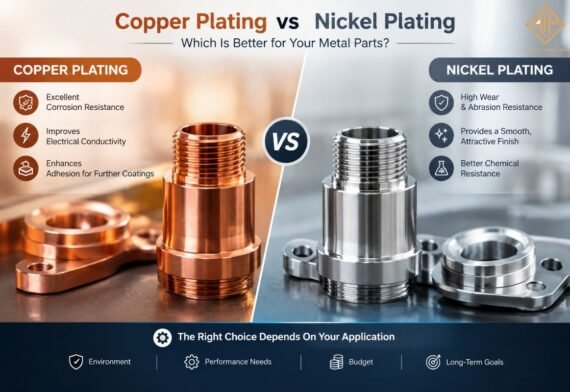
- Copper plating vs other metal coatings: key differences
- What does copper plating cost in Dubai?
- How to choose copper plating services?
- Why choose Aljawaher Metal Coating?
- Conclusion
- Frequently asked questions
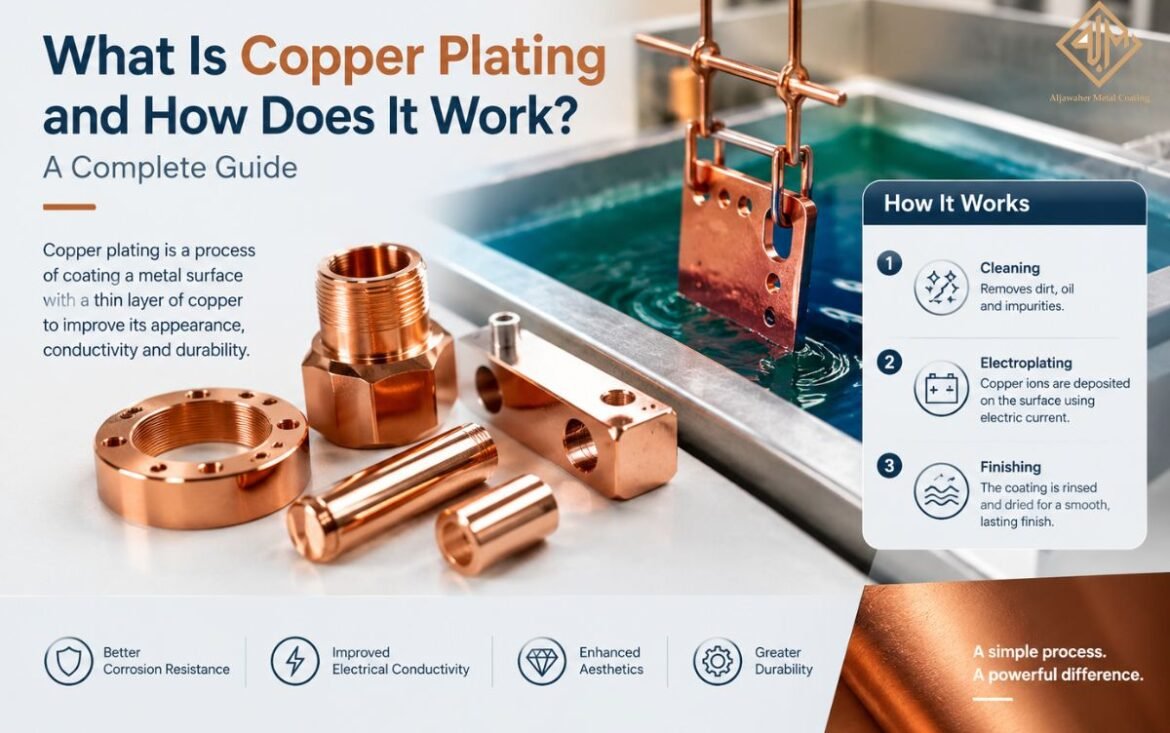
Copper plating is a finishing procedure where a thin and uniform coating of copper is applied to a different metal, typically via an electroplating process. A piece is submerged in a copper sulfate solution, where an electric current helps extract copper ions from the electrolyte, with copper getting deposited on the surface as a smooth metallic coating.
However, workshops apply it to improve conductivity, prepare metal for the next plating process using nickel or chrome, provide some anticorrosion properties, and restore the look of an old component. If you are looking for copper plating in Dubai, the process is universal. What differs is the level of bath control, current density, and efficiency in pre-treatment cleaning at a given shop.
Key takeaways
- Copper plating is a process of attaching a layer of copper to a metal surface by passing electricity through the copper and other metals.
- Copper provides good conductivity, corrosion resistance, and bonding with nickel and chrome layers.
- Yet, pre-treatment and bath management outweigh the equipment when it comes to the quality of the coating.
- Copper plating in Dubai makes the need for transparency and correct dealing with metals even more essential.
What is copper plating?
Copper plating is a process of applying a thin metal coat to various materials through electrochemical means. Under this method, a piece of a workpiece made of steel, brass, or zinc alloy is immersed in a solution containing saturated copper ions in a bath device. The application of an electric current causes the copper ions to translocate from the solution or from the anode onto the surface of the part being subjected to the copper plating because of the principle of electrolysis.
However, the thickness of copper layers imparted to the base materials can range from a few micrometers to significantly larger values to meet the requirements for special coatings. Copper adheres well to most of the substrates. The important reason why copper plating is deployed is that it can form a good bond with most metals.
How does copper plating work?
The basic setup involves a plating tank, an electrolyte solution, a power source, and the parts themselves.
- Surface preparation- The metal is cleaned, degreased, and often acid-dipped to strip oxidation. Skip this step, and you get plating that peels within weeks.
- Electrolyte bath- The part goes into a solution, most commonly copper sulfate or copper cyanide, depending on the base metal and finish required.
- Current application- A DC power source connects the part (cathode) and a copper anode. Copper ions travel through the solution and deposit onto the part’s surface.
- Rinsing and inspection- Once the coating reaches the target thickness, the part gets rinsed, dried, and checked for evenness, adhesion, and pitting.
Furthermore, this looks straightforward. In practice, the finish quality comes down to bath temperature, current density, and how long the part stays submerged. A workshop with sloppy process control produces plating that looks fine on day one and flakes off within a month.
What are the main methods of copper plating?
There isn’t one way to copper plate something. The technique will vary based on the size, shape and end use of the part.
- Acid copper plating: copper sulfate solution is used, produces a bright and smooth surface, and is widely employed in the decorative and general industrial applications.
- Cyanide copper plating: As a strike layer for excellent adherence, particularly prior to additional plating of zinc die-cast parts.
- Electroless copper plating: No electricity needed. Useful for non-conductive materials such as plastics, a chemical reaction deposits the copper instead, and is common in the manufacture of PCB.
- Copper flash plating: A thin, rapid plating of copper that is used primarily as a strike coat or base coat before a nickel and/or chrome coating is applied.
In most copper plating in Dubai workshops, the copper plate is used for standard jobs and, when a part requires a stronger bond before a second finish is applied, cyanide copper is used.
Why do industries use copper plating?
Copper plating is not only for looks. It applies practical applications:
- Enhances electrical conductivity: copper is a good conductor and in electrical or electronic applications, plated components offer improved performance.
- As a primer: nickel and chrome are not always compatible with steel or zinc and copper provides the middle ground.
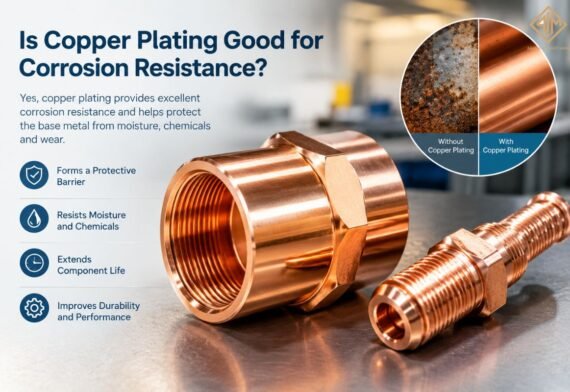
- Increases the corrosive resistance of the metal: If copper plating is applied in a way that is properly sealed or layered, it will reduce the rate of rust and oxidation.
- Replaces worn parts: Older automotive or antique fittings can be re-plated.
- Lowers friction in certain mechanical components: the softness of copper aids in certain bushings and bearings.
Most of the demand for this type of work comes from automotive workshops, furniture hardware manufacturing, electrical component suppliers, and antique restorers.
What metals can be copper plated?
Copper takes well to most common base metals, though not every combination behaves the same way.
| Base Metal | Compatibility | Common Use Case |
| Steel | Excellent | Automotive parts, tools, fasteners |
| Brass | Excellent | Decorative fixtures, hardware |
| Zinc die-cast | Good (needs cyanide strike first) | Furniture fittings, small components |
| Aluminum | Fair (requires special pre-treatment) | Lightweight industrial parts |
| Stainless steel | Difficult (needs activation step) | Specialized applications only |
Moreover, aluminum and stainless steel are trickier because their natural oxide layers resist adhesion. A shop that skips the extra pre-treatment steps on these metals is asking for a coating that won’t hold.
Copper plating vs other metal coatings: key differences
People often ask how copper plating stacks up against chrome, nickel, or gold. Here’s the short version:
- Copper vs Nickel: nickel is harder and more corrosion-resistant on its own, but copper is the better base coat and costs less.
- Copper vs Chrome: chrome gives a mirror-bright, scratch-resistant surface, but it’s almost always applied over a copper-nickel base rather than alone.
- Copper vs Gold: gold plating is used for conductivity in high-end electronics and jewelry finishing, while copper is the cheaper, more practical everyday choice.
In most multi-layer plating jobs, copper isn’t competing with these finishes at all. It’s working underneath them.
What does copper plating cost in Dubai?
Pricing depends on part size, base metal, required thickness, and order volume. Small batches of hardware or fittings cost less per piece than one-off custom jobs. Workshops offering copper plating services in Dubai typically quote based on:
- Surface area of the part
- Thickness of copper required, measured in microns
- Whether it’s a standalone copper finish or a base layer for nickel or chrome
- Order quantity, since bulk jobs bring the per-unit price down
Getting an exact number usually means sending part specifications or samples directly to the workshop rather than relying on a flat published rate. Finishes vary too much from project to project for that to work.
How to choose copper plating services?
Not every plating shop delivers the same quality. Before committing to a vendor, it’s worth checking a few things:
- Process transparency- Can they explain their bath type, current control, and pre-treatment steps?
- Turnaround time- Industrial clients often need fast batch processing without the finish suffering for it.
- Sample work or portfolio- Ask to see finished parts, not marketing photos.
- Handling of different base metals- A shop experienced only with steel may struggle with zinc die-cast or aluminum.
- Compliance and waste handling- Plating involves chemical baths, so proper effluent treatment matters, both legally and otherwise.
Therefore, a workshop that answers these questions clearly, without vague reassurances, is usually the safer bet.
Why choose Aljawaher Metal Coating?
Aljawaher Metal Coating has handled copper, nickel, chrome, gold, and silver plating work across Dubai for a mix of industrial and decorative clients. What separates a good workshop from an average one in this trade comes down to process discipline more than anything else: clean pre-treatment and controlled bath chemistry, batch after batch.
If you’re comparing options for the best metal coating company in Dubai to handle a copper plating job, the questions worth asking are the same ones covered above. Aljawaher works across steel, brass, and zinc die-cast components, and takes on both standalone copper finishes and copper as a base layer for nickel or chrome. For businesses that need copper plating in Dubai regularly rather than as a one-off, that kind of consistency tends to matter more than price.
Small batch or ongoing production, the risk with plating work is always the same: inconsistent finishes and failed adhesion. Picking a shop with a track record among the best metal coating companies in Dubai names in this space is mostly about avoiding that risk.
Conclusion
Copper plating looks simple from the outside, but it depends entirely on getting the fundamentals right: clean surface prep, controlled bath chemistry, steady current. Skip any of those and the coating fails fast, no matter how good the equipment looks.
If you’re evaluating copper plating services in Dubai for an upcoming project, whether it’s one restoration piece or an ongoing production batch, ask the workshop direct questions about their process before you hand over parts. Aljawaher Metal Coating works to those standards on every copper, nickel, chrome, and gold plating job that comes through the shop, and can walk through specifications for your next batch.
Frequently asked questions
A properly applied copper coating can last years, especially when sealed or layered under nickel or chrome. Lifespan drops sharply if pre-treatment or bath control is poor.
Yes, through electroless copper plating, which uses a chemical reaction instead of electric current since plastic doesn’t conduct electricity on its own.
Not entirely. Copper oxidizes when exposed to moisture and air over time, which is why it’s often sealed or coated with a top layer like clear lacquer or nickel.
“Plating” usually refers to electrochemical deposition. “Coating” is broader and can include painted or sprayed copper finishes with no electric process involved.
Yes. Copper naturally darkens and develops a patina when exposed to air and moisture. A protective topcoat slows this down significantly.
Rusted parts need thorough stripping and cleaning first. Plate over corrosion and you just trap it underneath, which causes the coating to fail early.
It depends on the purpose. Base coats before nickel or chrome are often just a few microns, while decorative or functional copper finishes can run much thicker.
Generally no, unless it’s specifically certified and sealed for that use, since copper can react with acidic foods. Stainless steel or food-grade coatings are the safer choice there.
Look for even color, no bubbling or peeling at the edges, and a smooth surface with no pitting. Poor adhesion usually shows up within weeks, not months.
Copper fills in minor surface imperfections and bonds more reliably to steel and zinc than chrome or nickel would on their own. That gives the final finish better adhesion and a smoother look
Comments (2)
Copper Plating Uses: 15 Common Industrial Applications
[…] sourcing copper plating in Dubai for an upcoming production run means finding a provider who understands both the process and your […]
How Effective Is Copper Plating Against Corrosion?
[…] Copper plating in Dubai works well in a coating system or in some controlled environments. […]