-
aljawahermetalcoating
- September 25, 2026
- No Comments
What Metals Can Be Chemically Etched?
Table of Contents
- Key takeaways
- How does chemical etching actually work?
- Metals that etch well (and why)
- Metals that are difficult or risky to etch
- Choosing the right etchant for the metal
- Applications across industries in Dubai
- Cost and turnaround factors
- Common mistakes to avoid
- Wrapping up
- Frequently asked questions
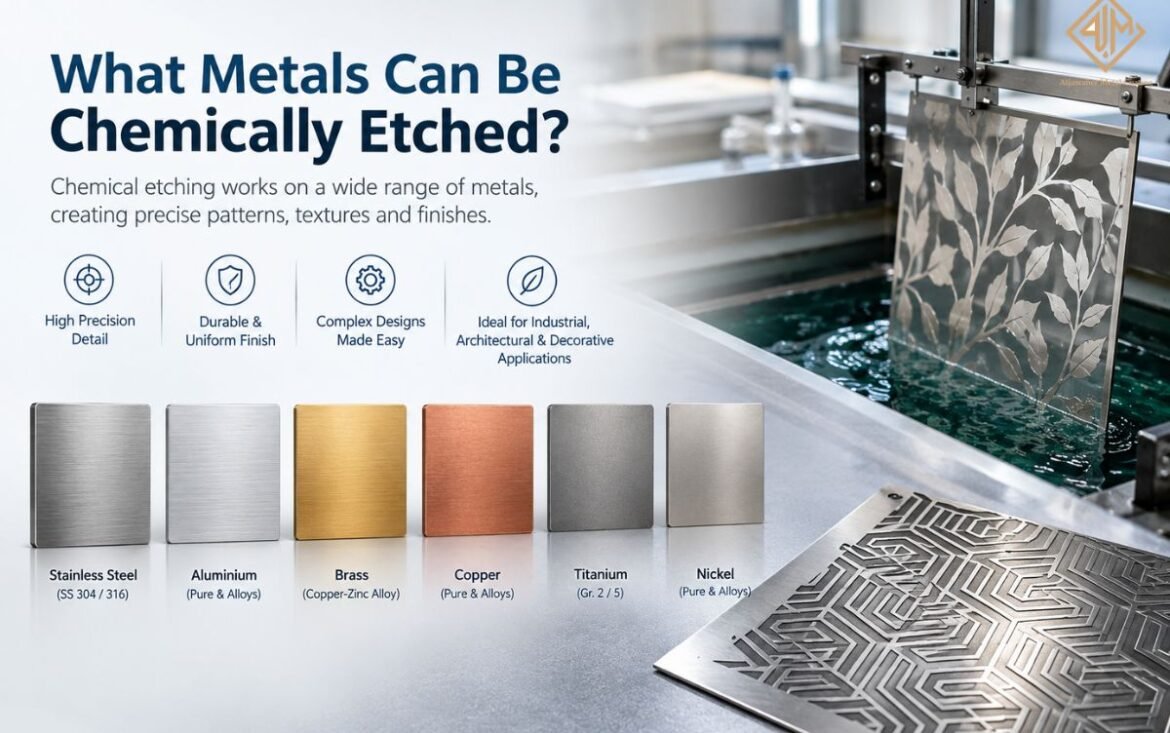
Chemical etching can be applied to nearly all forms of industrial metals, but some metals are more cooperative than others. Metals such as copper, brass, bronze, stainless steel, aluminium, nickel and nickel-based alloys react with commonly used etchants, such as ferric chloride, in a reliable and predictable manner.
On the opposite end of the spectrum, titanium, tungsten, and gold need more complex chemistries and process parameters to obtain the desired results. When you’re assessing different types of chemical etching services in Dubai, keep in mind that the metal’s properties will determine your choice of an etchant and the extent of the etch.
Key takeaways
- Commonly, ferric chloride is used to etch metals such as copper, bronze, brass, nickel, and aluminum.
- For etching both titanium and gold, a specific type of chemistry should be used, which not all etching facilities possess.
- Some other factors affecting the results of the etching process, apart from chemistry, are grain structure and thickness.
- By choosing the appropriate etchant and metal grade, one can minimize any potential waste, as well as avoid the occurrence of such defects as under-etching or over-etching.
How does chemical etching actually work?
Chemical etching (also called photo etching) removes metal through a chemical reaction instead of cutting, stamping, or burning it away. A photoresist film goes onto the metal sheet, gets exposed to UV light through a design mask, then is developed. Whatever resist wasn’t exposed washes off, leaving bare metal exactly where you want material gone. The sheet then goes through an etchant, by spray or by dipping it in a tank, and the exposed metal dissolves while everything under the resist stays put.
However, that’s the appeal of it, really. No cutting tool is pressing into the metal, so there’s no burr, no mechanical stress, and none of the heat-affected zone you’d get from laser cutting thin gauges. The catch is that the metal has to actually cooperate with the etchant chemically, and that’s where things get interesting, because not every metal wants to play along.
Metals that etch well (and why)
A handful of metals are genuinely easy to work with:
- Copper and copper alloys (brass, bronze): The easiest of the bunch. Ferric chloride dissolves copper at a steady, predictable rate. Brass behaves almost as well, though the zinc content sometimes leaves slight unevenness across the grain.
- Stainless steel: A common choice in Dubai for signage, architectural panels, and nameplates, mostly because it holds up in the local climate. Ferric chloride etches it fine, but you need a stronger concentration or added acid than you’d use on copper, since stainless is built specifically to resist this sort of attack.
- Aluminium: Etches reasonably well, though at a different pace than copper alloys. The oxide layer on its surface needs proper prep first, or the etch comes out patchy.
- Nickel and nickel alloys: Popular for precision components and decorative work. Nickel reacts to ferric chloride, just more slowly, so the timing needs adjusting rather than borrowed from a copper job.
- Mild steel and carbon spring steel: Etches without much fuss. Common for signage, tags, and mechanical parts where fine detail matters more than corrosion resistance.
- Silver: Etches cleanly and shows up a lot in jewellery, though it’s rarely used at industrial scale because of cost.
What connects these metals is chemistry, not price or hardness. Copper, brass, nickel, and most steels have an electron structure that lets an oxidising agent like ferric chloride strip material off the surface in a controlled way. As the reaction runs, the solution fills up with dissolved metal, and the etch rate slows on its own. That’s part of why the process stays so consistent once it’s dialed in.
Metals that are difficult or risky to etch
A few metals don’t cooperate at all:
- Titanium- Strong, light, and corrosion-resistant, which is exactly why it resists most etchants too. It needs aggressive chemistry, often built around hydrofluoric acid derivatives, and only a limited number of facilities handle it safely.
- Gold- Chemically stable enough that it needs specialised etchants, often cyanide- or iodine-based, which most general metal finishing shops avoid keeping on site because of how they need to be handled and disposed of.
- Tungsten- Hard and chemically stubborn. Needs niche etchants and a lot more time in the tank.
- Certain hardened or tool steels- Not impossible, but if the heat treatment left an uneven grain structure, the etch rate across the surface can be inconsistent.
For a shop offering general chemical etching services in Dubai, copper, brass, stainless, aluminium, and mild steel are routine work. Titanium or gold jobs usually get quoted separately, and sometimes referred elsewhere, since the chemistry and safety setup involved are a different scale of operation entirely.
Choosing the right etchant for the metal
There’s no single etchant that works for everything. Ferric chloride covers the widest range of metals and is easier to dispose of than harsher acids, which is why it’s the default, but the concentration shifts depending on what’s going into the tank.
| Metal | Common Etchant | Typical Concentration Note |
| Copper | Ferric chloride | Diluted, faster reaction |
| Brass/Bronze | Ferric chloride | Diluted, slightly slower than copper |
| Stainless steel | Ferric chloride + HCl | Full strength or with acid boost |
| Aluminium | Ferric chloride or alkaline etch | Requires oxide layer prep |
| Nickel | Ferric chloride | Slower rate, longer immersion |
| Titanium | Specialised fluoride-based etchants | Handled by specific facilities only |
Furthermore, get the concentration wrong and you either under-etch (a shallow, incomplete pattern) or over-etch (the resist gets undercut and fine detail blurs). Experienced operators run a sample piece before committing a whole sheet, and that’s really the difference between a rough job and precision work.
Applications across industries in Dubai
Dubai’s climate and pace of construction put corrosion resistance and fast turnaround high on the list. You’ll find chemical etching used for:
- Architectural signage and building nameplates, usually on stainless steel or brass
- Decorative metal panels and cladding details on interiors
- Electrical and electronic components, often on copper or nickel
- Automotive trim and branding elements
- Industrial nameplates and equipment tags that need to survive heat, dust, and humidity without fading
Because a lot of these applications also need a decorative or protective finish afterward, plating and coating usually follow right after etching in the production line.
Moreover, Aljawaher Metal Coating works with etched components across several of these finishes, applying chrome, nickel, gold, or brass plating once the base etching is done. That plating step is often what decides how the part looks and holds up long term.
Cost and turnaround factors
A few things move the price of an etching job more than people expect:
- Metal type- Copper and brass are cheaper to process than stainless or nickel, since they need less time in the tank and burn through less etchant.
- Sheet thickness- Thicker material needs longer immersion or a stronger solution, and that slows everything down.
- Design complexity- Finer detail needs tighter photoresist control, but complexity doesn’t multiply cost the way it would with mechanical cutting.
- Batch size- Etching tanks handle several sheets at once, so bigger runs bring the per-piece cost down.
- Finishing requirements- If plating or coating comes after, that’s a separate cost layer worth budgeting for upfront rather than tacking on later.
For anyone researching the best metal coating company in Dubai for a job that needs both etching and finishing, it’s usually cheaper to source both from one workflow than to shuttle parts between separate vendors. Handling and transport between the two steps adds its own delay, and that adds up.
Common mistakes to avoid
- Assuming every metal etches at the same rate- Reuse a copper timing on stainless steel, and you’ll likely end up under-etched.
- Skipping surface preparation- Oxide layers, oils, and residue on aluminium especially lead to a patchy etch.
- Ignoring etchant exhaustion- Ferric chloride slows down as it fills up with dissolved metal. Reuse it without adjusting, and you’ll get inconsistent depth across a batch.
- Picking the wrong metal for the environment- Mild steel etches beautifully but rusts fast in humid coastal air unless it’s coated afterward. Worth flagging before production starts, not after the parts are already sitting outside.
Wrapping up
Almost any metal can technically be chemically etched, but the ones worth doing at commercial scale are copper, brass, bronze, stainless steel, aluminium, and nickel. They respond predictably to standard etchants without needing exotic chemistry. Titanium, gold, and tungsten are a different category altogether, workable, but only through specialised processes that cost more and take longer.
Matching the right metal to the right etchant from the start, and being realistic about thickness and finish, is what separates a clean production run from a stack of reworks.
Frequently asked questions
Copper, since it reacts quickly and predictably with ferric chloride and gives clean results without much process adjustment.
Yes. It needs a stronger etchant concentration than copper alloys, but it etches reliably and is common for architectural and industrial signage work.
The same corrosion resistance that makes titanium valuable also makes it resist most standard etchants, so it needs specialised fluoride-based chemistry instead.
It works best on thin to medium gauges. Very thick sheets need much longer immersion, which can start affecting edge precision.
For complex, high-volume, thin-gauge parts, often yes, since cost doesn’t scale with design complexity the way it does with cutting-based methods.
Close, but not quite identical. Aluminium’s oxide layer needs more careful prep, so fine detail retention can be a touch less consistent than brass.
It saturates with dissolved metal and starts etching slower and less evenly, which is why keeping an eye on solution condition matters for consistent batches.
Often, yes, especially mild steel or aluminium in humid conditions. A lot of facilities offering chemical etching services in Dubai pair the process directly with plating or coating for that reason.