-
aljawahermetalcoating
- June 23, 2026
- No Comments
How Chrome Plating Works: Step-by-Step Industrial Process Explained
Table of Contents
- Key Takeaways
- What is chrome plating?
- Chrome plating works process explained
- Types of chrome plating
- Benefits of chrome plating
- Industrial applications
- Industry insight example
- Wrapping up
- Frequently asked questions
Key Takeaways
- Chrome plating is a protective coating of chromium that is electroplated.
- The durability of a coating depends on the surface preparation and proper cleaning.
- Chrome plating enhances hardness, corrosion protection and aesthetics.
- Chrome plating is used in the industries to prolong the life of equipment and decrease maintenance expenses.
Chrome plating is a common industrial metal finishing process that involves the electroplating of a thin film of chromium over a metal surface to enhance its strength, corrosion resistance, beauty, and abrasion resistance. This process includes surface preparation, cleaning, electroplating, quality inspection, and finishing. The chrome plating process is still one of the most dependable coating processes today as industries continue to require longer-lasting and aesthetically pleasing parts.
However, the knowledge of the process assists businesses in selecting the appropriate chrome plating solution for industrial, automotive, marine, and decorative applications when they are seeking professional chrome plating services in Dubai.
What is chrome plating?
Chrome plating is a technique of coating a base material with the metal chromium by electroplating.
Why is chrome plating used?
Chrome plating is widely used because it:
- Enhances corrosion resistance
- Improves surface hardness
- Minimises wear and friction
- Creates a shiny, attractive finish
- Extends component lifespan
Moreover, chrome-plated components are used across various industries, including automotive, construction, aerospace, marine, and heavy engineering, for their functional and aesthetic purposes.
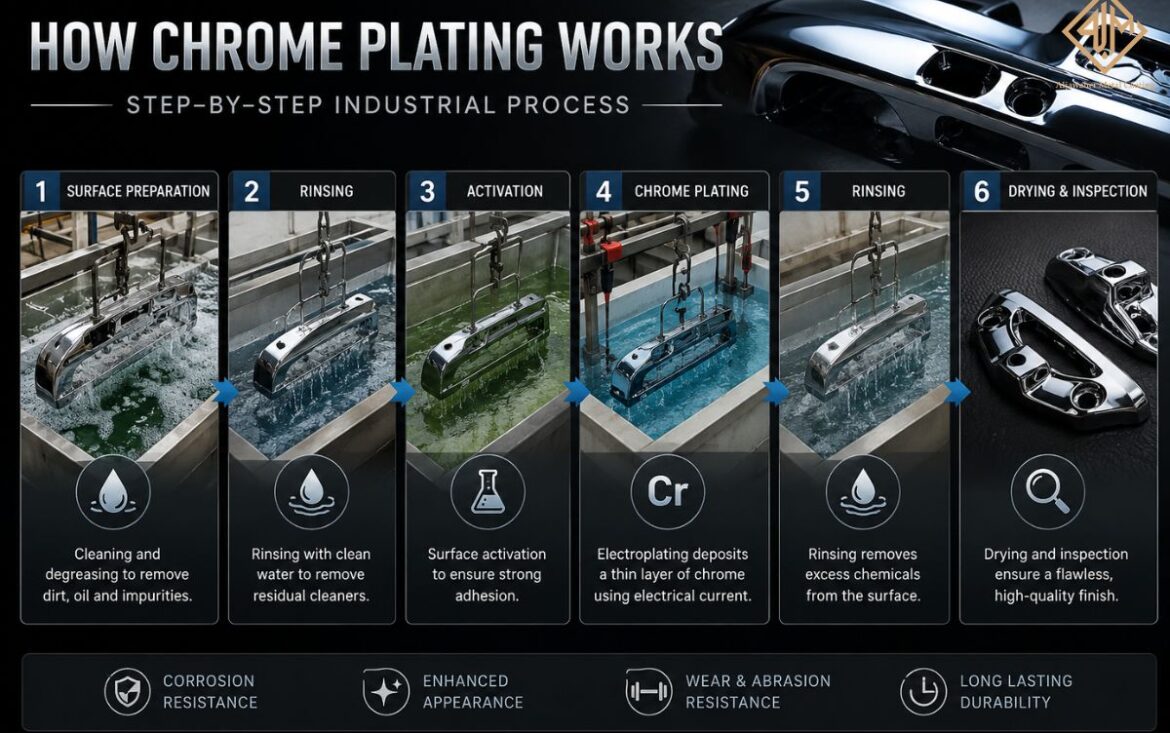
Chrome plating works process explained
To obtain consistent results in the chrome plating process, meticulous precision and quality control are needed.
1. Surface Inspection
Technicians check the metal part before you start plating for the following:
- Rust
- Scratches
- Surface defects
- Existing coating damage
All imperfections need to be rectified before proceeding to the next phase.
2. Surface Preparation
Proper preparation is critical for coating adhesion.
Some of the following may be used in this stage:
- Grinding
- Polishing
- Sanding
- Buffing
The objective is to form a uniform and smooth surface which enables the chromium to bond well.
3. Degreasing and Cleaning
Oil, grease, dirt or contaminants can be present in industrial components.
Parts are cleaned with the following:
- Chemical cleaners
- Alkaline solutions
- Ultrasonic cleaning systems
Therefore, better plating quality is achieved with a contaminant-free surface.
4. Acid Activation
The metal is cleaned and then dipped in an acid solution.
This step:
- Removes oxidation
- Activates the surface of the metal
- Improves chromium adhesion
There is a risk of premature failure of the chrome layer if the chrome is not activated properly.
5. Electroplating Process
This is the principal phase of chrome plating.
| Component | Function |
| Chromium Solution | Contains chromium ions |
| Cathode (Workpiece) | Receives chromium coating |
| Anode | Completes electrical circuit |
| Power Supply | Generates electrical current |
Furthermore, plating baths are filled with chromium ions, and as the current flows through the solution, chromium ions attach themselves to the metal surface, forming a tough, protective coating.
6. Rinsing and Neutralisation
After plating, parts are completely washed out.
This step helps:
- Remove residual chemicals.
- Prevent contamination
- Improve coating quality
Neutralisation can also be done to achieve stability of the final surface.
7. Polishing and Finishing
The plated component is polished to achieve the desired finish.
Depending on requirements, the final appearance can be the following:
- Mirror-like
- Satin
- Decorative
- Industrial-grade
8. Quality Inspection
Each part is tested to ensure that:
- Coating thickness
- Adhesion strength
- Corrosion resistance
- Surface uniformity
Aljawaher metal coating is one of the reputable providers that has quality standards to guarantee its consistent performance in industrial applications.
Types of chrome plating
1. Hard Chrome Plating
For industrial equipment and machinery.
Benefits include:
- High wear resistance
- Reduced friction
- Longer service life
2. Decorative Chrome Plating
Mainly used for enhancing appearance.
Common applications include:
- Automotive trims
- Furniture fittings
- Architectural hardware
Decorative chrome plating is a favoured option for many companies looking for chrome plating services in Dubai, as it not only enhances the appearance but also serves as an effective means of corrosion prevention.
Benefits of chrome plating
- Longer Equipment Life
Chrome plating extends the life of components by keeping them from wearing out.
- Corrosion Protection
The chromium coating protects from moisture and environmental effects.
- Improved Surface Hardness
Heavy usage and abrasive conditions are prevented by a chrome coating.
- Enhanced Appearance
A reflective finish provides an elegant and professional appearance.
- Lower Maintenance Costs
Businesses can save money in the long run due to the use of durable coatings.
Industrial applications
The following are typical applications for chrome plating:
- Automotive components
- Hydraulic cylinders
- Marine equipment
- Construction machinery
- Industrial rollers
- Manufacturing tools
- Architectural metalwork
Additionally, the strength of durability and operation efficiency in industries keeps making chrome plating a desired finish.
Industry insight example
A manufacturing plant in a high-humidity environment had continuous corrosion problems on the manufacturing rollers. There was a need for frequent repairs, resulting in downtime and maintenance costs.
The rollers after the professional chrome plating have got excellent corrosion resistance and wear protection. The equipment needs to undergo fewer maintenance actions, thereby enhancing operational efficiency and minimising replacement costs.
This example showcases the importance of businesses turning to Aljawaher metal coating when looking for long-lasting metal finishing solutions. While the company is known for its trust and is one of the options for the best metal coating company in Dubai, quality control and good process execution still play a crucial role when it comes to long-term results.
Wrapping up
Chrome plating is much more than a decorative finish. It’s a highly engineered industrial process which helps to improve the durability, resistance to corrosion, wear performance and lifespan of the component. The surface preparation, electroplating and the final inspection stage of the process are all crucial steps in ensuring a high-quality production.
Aljawaher metal coating offers a reliable metal finishing solution that can help you achieve long-lasting performance and professional-grade results for your industrial and commercial applications. Call their staff now to speak about your project and the coating solution that is ideal for you.
Frequently asked questions
Chrome plating enhances corrosion resistance, surface hardness, durability and appearance and helps to prolong the life of metal parts.
Life span will vary, depending on operating conditions, coating thickness, and maintenance. When properly applied, industrial chrome plating can endure for extended periods of time.
Yes. Hard chrome plating is a common practice on industrial machinery due to its ability to enhance performance and minimise wear in harsh environments.
The chrome plating will provide a protective barrier over the base metal, which will greatly decrease the chance of rust or corrosion.
Check for experience, quality control measures, inspection standards, industry knowledge, and successful projects in the past. Existing providers like Aljawaher metal coating usually offer consistent outcomes and are preferred by businesses.