-
aljawahermetalcoating
- July 30, 2026
- Comment (1)
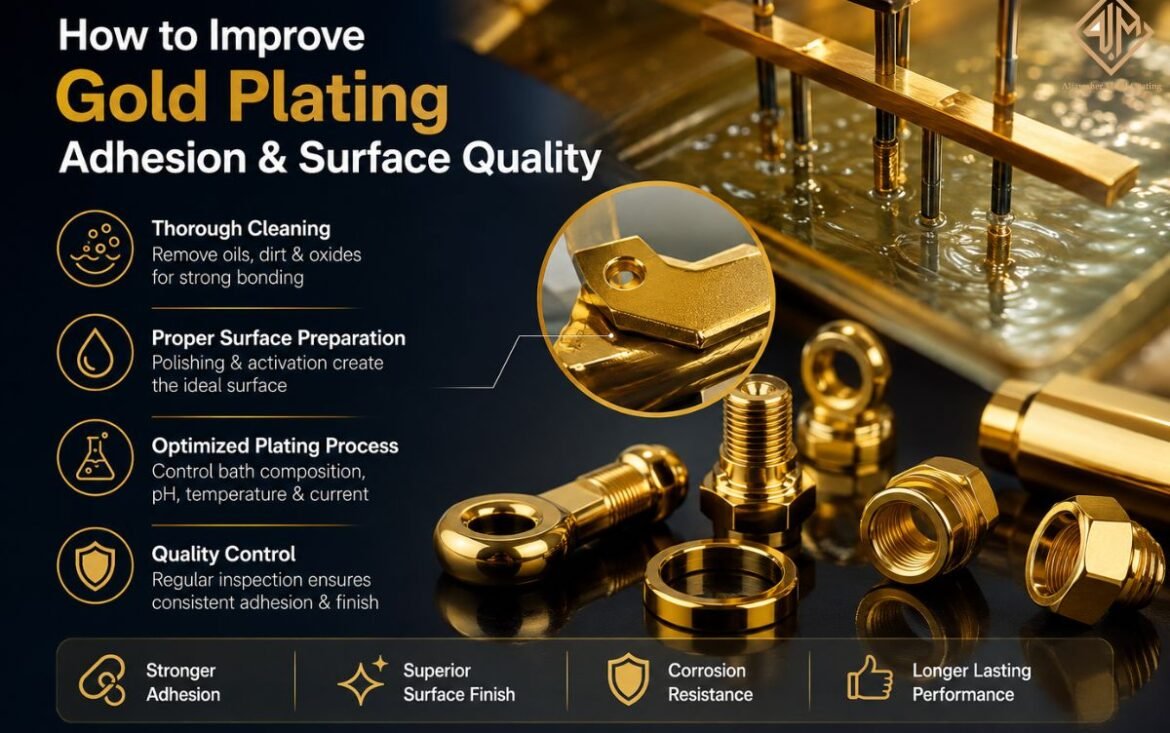
How to Improve Gold Plating Adhesion and Surface Quality
Table of Contents
- Key takeaways
- Why does adhesion quality matter?
- Common causes of poor adhesion
- Surface preparation basics
- Choosing the right plating process
- Post-plating care tips
- Signs of professional quality work
- Choosing a trusted provider
- Getting consistent results at scale
- Wrapping it up
- Frequently asked questions
Key Takeaways
- Clean surfaces bond better. Cleaning is the single biggest factor in strong gold plating adhesion.
- Bath temperature and current settings decide whether the final surface looks even or patchy.
- A little maintenance goes a long way in keeping plated pieces looking new
- An experienced gold plating in Dubai provider saves you from paying twice for the same job
Gold plating brings brilliance and protective features to jewelry, fittings, and different kinds of parts. However, if the adhesion fails or the coating is not even, the plating may not last long, sometimes only for several weeks. If you are considering gold plating Dubai, you should know what makes the coating stay on and even. That is very important whether you are performing the process by yourself, or have a small shop, or work with a professional. Below are the factors that affect gold plating, which errors are the most common and that you should check before giving your article to be plated.
Why does adhesion quality matter?
Adhesion refers to how well the gold layer adheres to the metal surface. If adhesion is not strong enough, the layer can flake off in weeks instead of lasting for years. This problem goes beyond a visual one because when the gold layer lifts, the metal gets exposed, leading to various kinds of corrosion and discoloration.
There is also a visual aspect related to this. If the layer is applied correctly, it stays flat and reflects light evenly. Poor adhesion, however, makes the surface of the metal look cloudy even though the gold layer might have been applied correctly.
Most of the complaints that people who run a gold plating service in Dubai face come from adhesion issues. Get the adhesion right and everything downstream tends to hold up.
Common causes of poor adhesion
Most adhesion failures come down to a short list of avoidable mistakes:
- Inadequate cleaning – Leftover oils, dust, or old polish residue stop the gold from bonding
- Skipping the base coat – Many metals need a nickel or copper strike layer first
- Wrong bath temperature – Too hot or too cold and the plating bonds unevenly
- Incorrect current density – Too much current burns the surface; too little leaves it spongy and weak
- Old or contaminated solution – A dirty bath drags down quality no matter how careful you are otherwise
- Rushing through steps – Shortcuts almost always show up in the finished piece
If your plating keeps failing, it’s usually one of these, not bad luck.
Surface preparation basics
Most adhesion problems get decided at the prep stage, before any gold ever touches the metal. Skipping or rushing this part is the single most common reason plating doesn’t stick.
A solid prep routine usually looks like this:
- Degreasing to strip off oils and fingerprints
- Mechanical polishing to smooth scratches and pits
- Ultrasonic cleaning for detailed or textured pieces
- Acid dipping or activation to open the surface
- Complete rinsing after each step
Residual grease weakens plating, so cleaning is important to avoid having to rework parts later.
Choosing the right plating process
Not every gold plating method suits every job. The right choice depends on what the item is, how it’ll be used, and how much wear it needs to survive.
| Plating Method | Best For | Durability | Typical Use |
| Flash gold plating | Decorative items, low wear | Low | Costume jewelry, quick refresh |
| Standard electroplating | Everyday jewelry, fittings | Medium | Rings, watches, fixtures |
| Heavy gold plating | High-use industrial parts | High | Connectors, automotive parts |
| Gold vermeil | Sterling silver base items | Medium-High | Fine jewelry pieces |
A lot of disappointment with plating comes from picking the wrong method, not bad execution. A ring worn every day needs a much thicker layer than a decorative piece that sits on a shelf most of the time.
Post-plating care tips
Good plating can go bad quickly without proper care practices. Here are a few tips to follow:
- Keep plated objects away from strong scented products and chemicals
- Store your plated objects in a separate place so they don’t interact with other metals
- Use only soft cloths to clean plated products
- Remove plated jewelry before showering, swimming, and exercising
- Have it checked regularly to find and fix problems before they become serious issues
Similar plated items that are treated differently can show different results and usage after some time.
Signs of professional quality work
Not sure whether a plating job was done right? Look for these:
- Even, consistent color across the whole surface
- No bubbling, pitting, or rough patches
- A smooth reflection, not a cloudy or dull one
- Edges and corners fully coated, not thin or bare
- A finish that survives gentle rubbing without flaking off
Furthermore, if a piece looks uneven or starts flaking soon after plating, something went wrong earlier in the process, usually in prep or bath conditions.
Choosing a trusted provider
If you don’t have in-house equipment, working with an established provider is the more sensible route. A reliable gold plating service in Dubai brings consistent quality control and experience across different metals and finishes, which is hard to replicate on your own.
Before hiring anyone, it’s worth checking:
- How many years of experience they have with different metals
- Whether they can show sample work or past projects
- How clear their pricing and turnaround estimates are
- Whether their equipment covers both prep and plating
- How willing they are to walk you through their process
Aljawaher Metal Coating has built a name among UAE clients for handling both small jewelry batches and larger industrial coating orders, with real attention paid to how well the gold bonds and how it looks once finished. Businesses that need predictable results tend to stick with providers like this rather than gamble on an unproven provider, since one bad batch can affect an entire product line.
When people search for the best metal coating company in Dubai, what they usually want isn’t a single good result; it’s consistency across every order. Aljawaher Metal Coating has leaned into that, which matters most to repeat clients and industrial buyers who can’t afford variation from batch to batch.
Getting consistent results at scale
For workshops handling multiple orders, consistency matters as much as individual quality. Plating one piece well is one thing. Getting the same result across fifty or a hundred pieces is a different challenge entirely.
A few things help maintain that:
- Standardized cleaning checklists used for every batch
- Regular checks on bath chemistry and concentration
- Equipment calibrated on a set schedule
- Staff trained to follow the same steps each time
- Records kept of the settings used for each metal type
This is another spot where an established provider like Aljawaher Metal Coating has an edge. Scaling quality plating takes systems that most small or one-person operations simply haven’t built yet.
Wrapping it up
To achieve better gold plating adhesion, it is a matter of applying a few simple habits: thorough cleaning of the surface, proper conditions of the bath, conformity of the process to the task, and care for the item after plating. Failing to follow just one of these steps will sooner or later result in visible peeling, dullness, or discoloration.
Whether you will do plating yourself or look for gold plating in Dubai to take care of the whole job for you, it is enough to learn these basic principles to form proper expectations and recognize quality work when you see it. If you want a finish that would remain in good condition for quite some time, you should check with the supplier of your choice about his process, experience, and previous work before placing an order.
Frequently asked questions
It is usually caused by inadequate cleaning prior to plating, a missed base coat, or a dirty bath that prevents the gold from bonding correctly.
2 to 5 years with proper care and handling. It’s mainly a matter of plating thickness, how often the item is worn, and maintenance.
It’s fine for pieces you wear infrequently, but everyday jewelry requires a heavier, more resilient coating that flash plating simply isn’t capable of providing.
Yes. The old layer gets stripped off first, and the base metal needs a thorough clean and inspection before the new gold layer goes on.
Silver, brass, and copper take gold plating well without much extra work. Stainless steel needs more preparation before it bonds properly.
Bath temperature too high or low, solution too weak, or surface residue remaining are the common offenders. Any one of these will prevent the formation of a smooth, reflective surface.
Dust it off with a soft cloth, keep it away from moisture and chemicals, and store it separately so it doesn’t rub against other pieces.
Inquire about their experience, if they have any sample work available, what plate thicknesses they offer, the turnaround time, and the process for surface pretreatment

1 Comment
Custom Gold Plating Solutions: Thickness, Finish & Uses
[…] is why a universal technique of gold plating in Dubai does not bring good results. A sterling silver ring and an aluminium advertising panel will […]