-
aljawahermetalcoating
- August 14, 2026
- No Comments
Decorative Chrome vs Industrial Chrome Plating: What’s the Difference
Table of Contents
- Key Takeaways
- What does decorative chrome plating actually do?
- What is industrial chrome plating built for?
- Decorative vs industrial chrome: side-by-side comparison
- How does the plating process differ?
- Common mistakes when choosing a chrome finish
- Expert insight: picking the right coating for your part
- Final thoughts
- Frequently asked questions
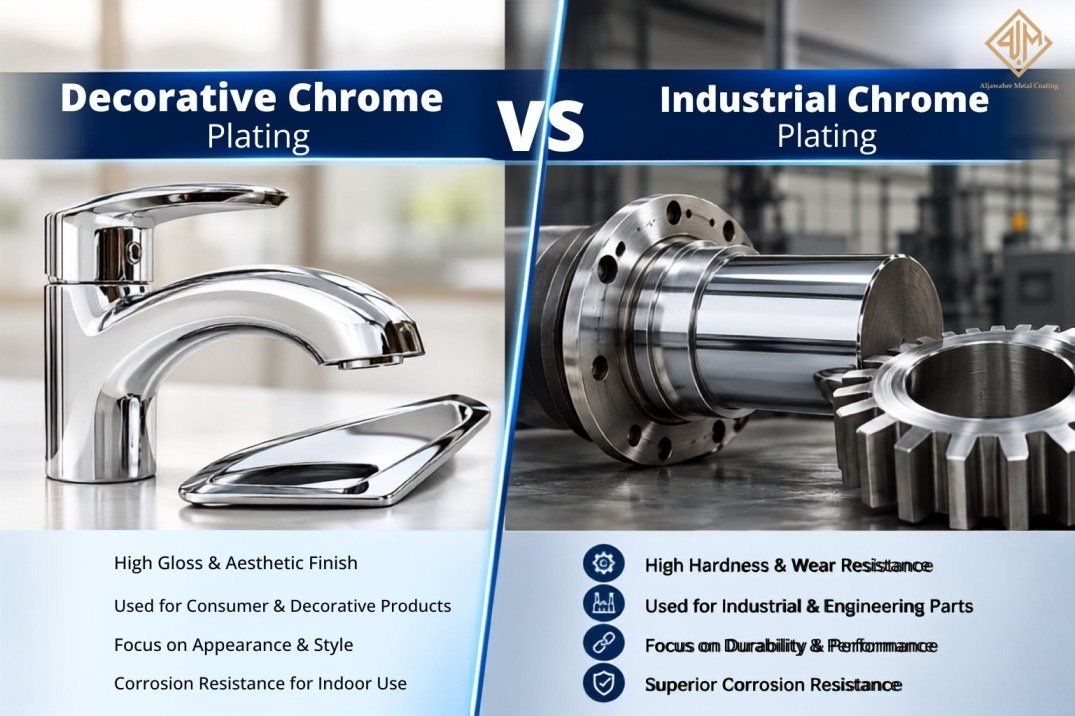
Decorative chrome plating is a type of plating that comes in a very thin layer of less than 0.5 micrometres on top of a layer of nickel, providing a bright, shiny surface on metallic components. Hard chrome plating comes in a much thicker layer, varying from 25 microns to 250 microns, and can be applied directly on steel or any kind of metal for better protection from mechanical stresses and friction. Hence, one is meant to provide a great visual effect while the other one is meant to serve its function.
Key Takeaways
- The decorative chrome is a very thin layer, only 0.2 to 0.5 microns thick, over a nickel plating, and is mostly used for aesthetics and light corrosion protection.
- The industrial chrome is a relatively thick layer, anywhere from 25 to 250 micrometres thick, and is designed for purposes such as wear resistance, hardness, and repair of damaged surfaces.
- The two methods of deposition use different bath compositions, lengths of plating, and quality assurance processes and cannot be mixed.
- Using the wrong type of chrome for your needs may lead to excessive wear, flaking, and financial loss.
What does decorative chrome plating actually do?
Decorative chrome is the finish you notice on car bumpers, bathroom fittings, furniture legs, and signage frames. It’s not there to survive abrasion. It’s there because polished chrome looks clean and holds its shine longer than bare metal or paint.
The process almost always starts with a layer of nickel plated onto the base metal. The chrome sits on top as a very thin protective and reflective skin, typically 0.2 to 0.5 microns thick. The nickel underneath does most of the corrosion-resisting work; the chrome layer mainly stops the nickel from tarnishing and gives that bright, mirror-like look clients associate with a quality finish.
Moreover, this is where most people looking for the best metal coating company in Dubai land first: automotive dealerships wanting showroom-ready trim, interior fit-out contractors finishing hardware, and furniture manufacturers who need a shine that survives UAE humidity and heat without discoloring.
What is industrial chrome plating built for?
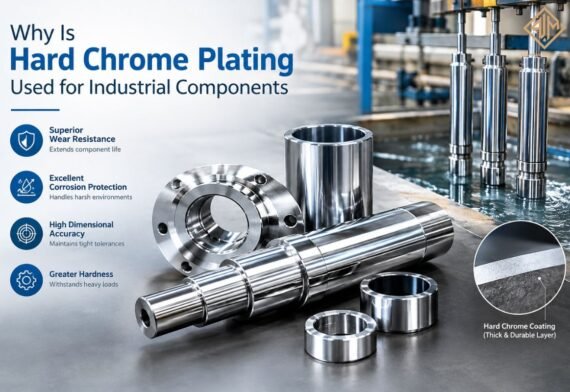
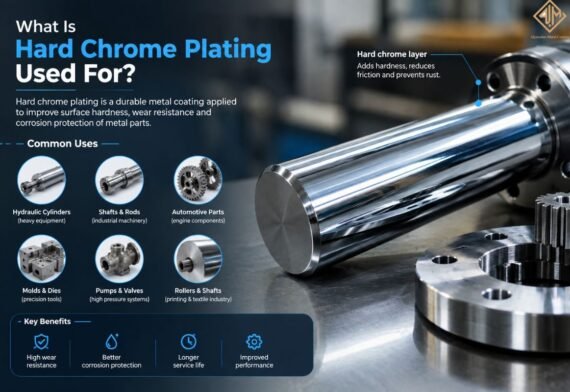
Industrial chrome, often called hard chrome or engineering chrome, solves a different problem entirely. It goes on parts that face constant friction, pressure, or wear: hydraulic cylinder rods, mold cavities, printing rollers, pump shafts, machine tooling.
Here, the chrome layer isn’t decorative at all. It’s applied directly onto steel, often without a nickel base, and built up to a thickness of 25 to 250 microns depending on the application. That thickness is what gives hard chrome its main advantage: high surface hardness, typically in the 65 to 70 HRC range, along with low friction and strong resistance to abrasion and galling.
Therefore, hard chrome also gets used to rebuild worn parts. A shaft that’s lost a few micrometres of diameter over years of use can often be re-plated back to its original tolerance instead of being scrapped, which is why it shows up so often in heavy manufacturing, oil and gas equipment, and precision engineering shops across the UAE.
Demand for this kind of coating has been climbing across the region. The Middle East and Africa hard chrome plating market was valued at roughly USD 0.8 billion in 2024 and is projected to grow to USD 1.2 billion by 2033, driven by infrastructure and industrial expansion. Decorative chrome is the largest global category by revenue: the worldwide decorative chrome plating market was valued at nearly USD 12.5 billion in 2024 and is projected to reach roughly USD 19.2 billion by 2033, driven primarily by demand from the automotive and consumer goods sectors.
Decorative vs industrial chrome: side-by-side comparison
| Factor | Decorative Chrome | Industrial (Hard) Chrome |
| Purpose | Appearance, mild corrosion resistance | Wear resistance, hardness, dimensional repair |
| Typical thickness | 0.2-0.5 microns | 25-250 microns |
| Base layer | Usually nickel-plated first | Often applied directly to steel |
| Surface hardness | Moderate | High (65-70 HRC range) |
| Common uses | Auto trim, fittings, furniture, signage | Hydraulic rods, molds, shafts, rollers |
| Plating time | Shorter | Longer, due to buildup required |
| Cost driver | Surface area and polish quality | Thickness and precision tolerance |
Decorative chrome is measured in fractions of a micron. Industrial chrome is measured in tens or hundreds of microns. That one number explains most of the difference in cost, process, and durability between the two.
How does the plating process differ?
Both processes use electroplating, running an electric current through a chromic acid bath to deposit chromium onto the part, but the setup changes depending on the goal.
For decorative work, the part is usually polished and buffed before plating, then nickel-plated, then given a fast chrome flash. Bath temperature and current density get tuned for a smooth, bright finish rather than thickness.
For hard chrome, the part goes through longer plating cycles, sometimes many hours, to build the required thickness. Masking has to be more precise since only specific wear surfaces need coating, a shaft’s bearing surface for instance, not the whole part. After plating, hard chrome often needs grinding or honing to hit exact dimensional tolerances, something decorative chrome rarely requires.
This is also where a company’s experience with chrome plating services in Dubai starts to matter. Bath chemistry has to be adjusted for local water quality and workshop conditions, and an undertrained operator can under-plate or over-plate a part without anyone noticing until it fails inspection.
Common mistakes when choosing a chrome finish
- Specifying decorative chrome for a wear part looks fine at delivery, then fails within weeks under load.
- Over-specifying hard chrome for a cosmetic part adds cost and plating time for no functional benefit.
- Ignoring the base metal is a common slip. Cast iron, aluminum, and steel all need different pre-treatment before chrome will adhere properly.
- Skipping thickness verification leaves “chrome plated” meaning almost anything, from 2 microns to 200.
- Choosing a vendor on price alone often means the quote skips masking precision or post-plating grinding, and that shows up later as flaking or dimensional drift.
Expert insight: picking the right coating for your part
If a part touches another moving surface under load- a rod, a shaft, a mold- it almost always needs hard chrome, no matter how it’s meant to look. If a part just needs to look premium and survive normal handling and weather, decorative chrome does the job for a fraction of the cost.
Worth knowing: consumer electronics has become a real driver of decorative chrome demand, now estimated at around 25% of overall chrome plating market share globally. That’s pushed plating shops to get better at thin, uniform finishes on smaller, more delicate components, not just bumpers and fittings.
However, when in doubt, ask your plating provider two questions: what thickness do I actually need, and what’s the part’s working environment? Those two answers settle most decorative-versus-industrial decisions.
Final thoughts
Decorative and industrial chrome plating solve different problems, and mixing them up is one of the more expensive mistakes a project can make. Decorative chrome buys you shine and light protection. Industrial chrome buys you years of mechanical durability. Getting the specification right upfront saves rework, downtime, and money.
If you’re weighing your options for chrome plating services in Dubai, work with a shop that handles both decorative and hard chrome and will tell you honestly which one your part needs, not just quote you a price. Aljawaher Metal Coating works across both categories for clients who want a straight answer before they commit.
Frequently asked questions
Decorative chrome is a thin cosmetic layer for shine and light corrosion resistance. Industrial chrome is a thick functional layer built for wear resistance and mechanical durability under load.
Decorative chrome is typically 0.2 to 0.5 microns thick, applied over a nickel base layer that handles most of the corrosion protection underneath.
Industrial chrome typically ranges from 25 to 250 microns, depending on the part’s function, with thicker layers used for heavy wear or dimensional restoration.
Technically yes, but it’s costly and slow for parts that don’t need the extra thickness. It’s rarely the practical choice for a purely cosmetic finish.
The chrome layer itself resists tarnishing well, but if the nickel base or the substrate gets damaged, corrosion can start underneath and eventually lift the chrome.
Local humidity, heat, and water quality all affect plating outcomes. The best metal coating company in Dubai adjusts bath chemistry and process controls for these conditions.
Decorative chrome can last years with normal handling. Industrial hard chrome, applied correctly, can outlast the original part surface by a wide margin under load.
Generally yes, since it needs significantly longer plating time to build thickness, plus post-plating grinding or honing to meet dimensional tolerances.
Yes. Hard chrome is commonly used to rebuild worn shafts and rods back to their original dimensions instead of scrapping the part.
Ask whether the part faces mechanical load or friction. If yes, it needs hard chrome. If it’s mainly cosmetic, chrome plating services in Dubai for decorative finishing will suffice.