-
aljawahermetalcoating
- July 2, 2026
- No Comments
Chrome Plating Thickness Standards and Specifications Explained
Table of Contents
- Key Takeaways
- What is chrome plating thickness?
- Why do thickness standards matter?
- Standard chrome plating thickness
- Chrome plating thickness specifications
- How is thickness measured?
- Factors that affect thickness
- Benefits of correct thickness
- Industry insight example
- Bottom line
- Frequently asked questions
Key Takeaways
- The durability, corrosion resistance, and service life of chrome plating are directly related to its thickness.
- There are two standards for thickness to be utilized for decorative and industrial applications.
- Precise measurement of thickness maintains uniformity of coatings and performance.
- Choosing an experienced coating specialist helps achieve reliable, cost-effective, and long-lasting results.
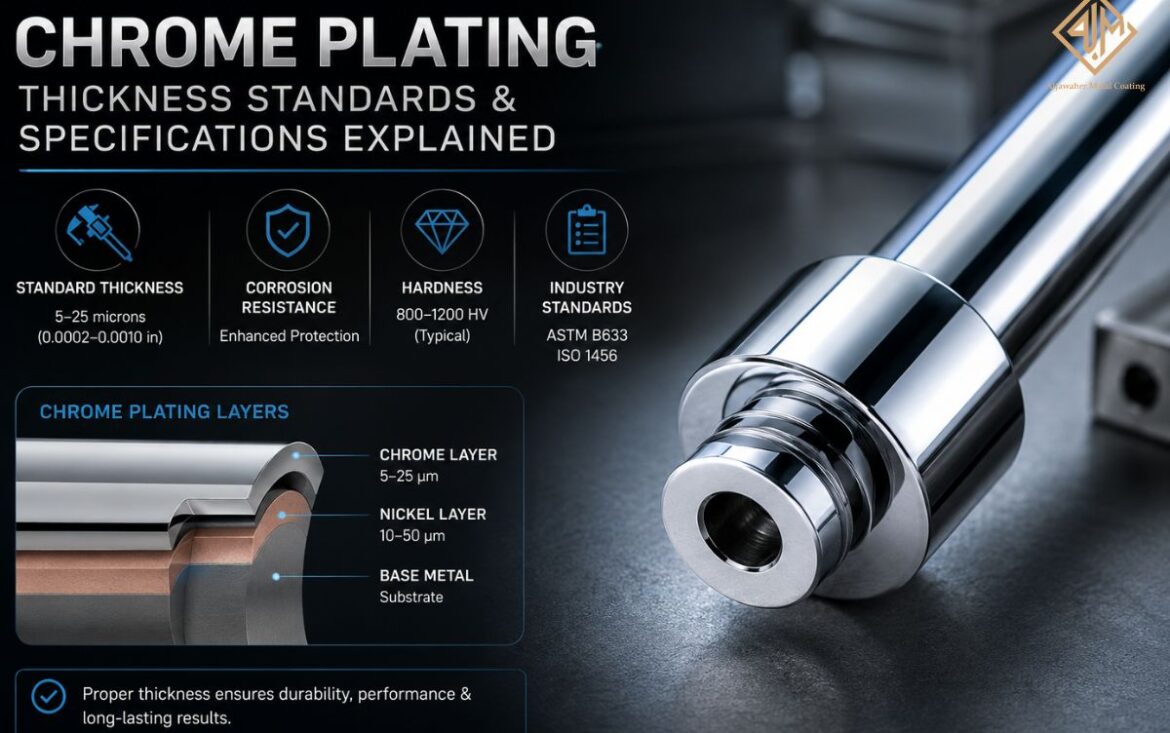
The thickness of chrome plating is the amount of chromium deposited on the metal surface in the electroplating process. The properly selected thickness is crucial since it has a direct impact on the durability, protection from corrosion and wear, and appearance of the product. The recommended thickness for each application, whether decorative or industrial, helps to achieve optimal performance and longevity of the product.
However, it is crucial for businesses to be aware of these standards before choosing a coating solution to ensure that they receive reliable chrome plating in Dubai. Aljawaher Metal Coating delivers high-quality products that meet industry requirements in each project and provides long-lasting protection for various metal components.
What is chrome plating thickness?
Chrome-plated thickness is the thickness of the chromium layer applied on a metal surface that is measured. It’s typically quantified in the following:
- Microns (µm)
- Microinches (µin)
The thickness of the component will vary based on its application. For decorative use, a thinner coating is needed, and for industrial use parts that are subjected to heavy wear, a thicker coating is required.
Decorative vs. Hard Chrome
| Application | Typical Thickness |
| Decorative Chrome | 0.25–1 micron |
| Engineering Chrome | 10–25 microns |
| Hard Chrome | 25–500+ microns |
Therefore, choosing the right thickness will ensure a balance of appearance, durability, and performance.
Why do thickness standards matter?
There’s more to chrome plating than meets the eye. Every coated component behaves as expected when subjected to real operating conditions due to industry standards.
Correct thickness helps the following:
- Improve corrosion resistance
- Increase wear resistance
- Reduce surface friction
- Extend equipment lifespan
- Improve dimensional accuracy
- Reduce the cost of maintenance over a longer period of time.
Furthermore, if the thickness is less than that recommended, the coating might wear down very fast. If it is too thick, it can crack, peel, and/or change dimension.
Standard chrome plating thickness
The specifications vary with different industries, depending on the operating environment.
1. Decorative Chrome
Decorative chrome can be found on things like:
- Automotive trims
- Furniture fittings
- Household fixtures
- Interior decorative parts
Usually between 0.25 and 1 micron thick for an attractive finish with moderate protection.
2. Hard Chrome
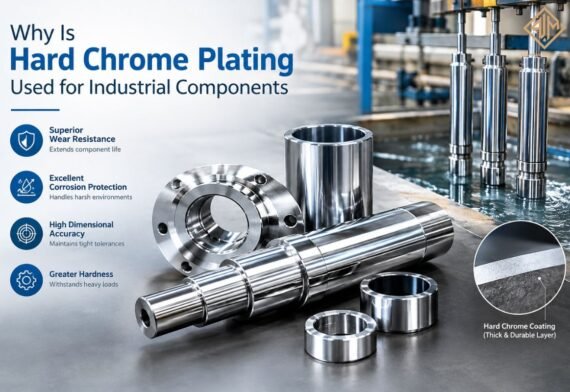
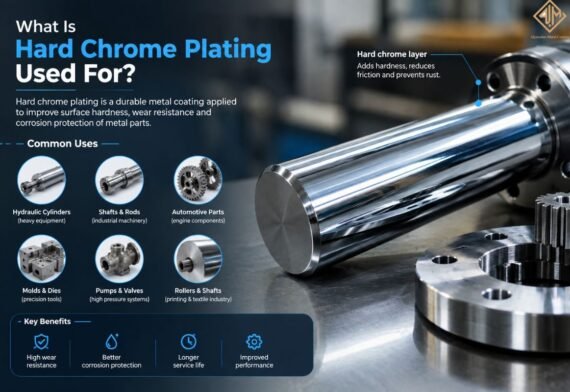
Under constant wear conditions, hard chrome is applied.
Examples include:
- Hydraulic cylinders
- Industrial rollers
- Machine shafts
- Mold components
- Heavy equipment parts
Moreover, the thickness is normally 25 to 500 microns, depending on the applications.
The professional chrome plating services in Dubai assess each part separately to establish the best thickness of chrome for it.
Chrome plating thickness specifications
The necessary specifications for chrome-plated surfaces are determined by the component’s purpose, service conditions, and applicable industry standards. The engineer typically chooses a coating thickness based on wear resistance, ability to protect from corrosion, precision dimensions, and anticipated longevity.
| Application | Typical Thickness | Common Specification |
| Decorative Chrome | 0.25–1 µm | Bright finish, light corrosion protection |
| Automotive Components | 0.5–2 µm | High-gloss appearance with improved durability |
| Industrial Rollers | 25–75 µm | High wear resistance and smooth surface finish |
| Hydraulic Cylinders | 25–100 µm | Excellent abrasion and corrosion resistance |
| Shafts & Machine Parts | 50–250 µm | Heavy-duty industrial performance |
| Moulds & Dies | 10–50 µm | Better release properties and surface hardness |
| Heavy Engineering Equipment | 100–500+ µm | Maximum wear protection for demanding environments |
How is thickness measured?
It is integral that measurements be accurate in order to ensure quality assurance.
Common methods for testing are:
- Magnetic Thickness Gauge
A fast, non-destructive technique for a wide range of plated components.
- X-Ray Fluorescence (XRF)
Delivers extremely accurate measurements without harming the surface.
- Microscopic Cross-Section Testing
Reserved for situations where a laboratory verification is necessary for accurate results.
Therefore, a good manufacturer will do several checks during the manufacturing process to guarantee that the thickness is uniform throughout the surface.
Factors that affect thickness
There are a number of factors that will affect the final thickness of the chrome plating.
- Base Material
Metals react differently when being electroplated.
- Current Density
The effect of electrical current on the surface of chromium deposits.
- Plating Time
The longer the plating time, the thicker the coatings.
- Surface Preparation
Good adhesion of coatings can be achieved by proper cleaning and polishing.
- Application Requirements
Thicker coatings are typically required for industrial equipment than for decorational applications.
Additionally, these variables are carefully calibrated by skilled engineers to ensure uniformity and quality in accordance with the customer’s specifications.
Benefits of correct thickness
The correct chrome plating thickness provides quantifiable benefits.
- Better Wear Resistance
Thicker industrial coatings are able to resist constant friction and heavy mechanical loads.
- Improved Corrosion Protection
Appropriate thickness provides better protection from moisture, chemicals, and exposure to the environment.
- Longer Equipment Life
Well-plated components will stay in operation for more time and reduce the frequency of component replacement.
- Lower Maintenance Costs
Repair and downtime are less over the product’s life due to durable coatings.
- Better Surface Finish
When thickness is controlled properly, the product will look smooth, uniform, and professional.
While price is a factor for businesses looking for the best metal coating company in Dubai, they also look for a company that provides quality control, precise thickness testing, and conformity to international standards.
Industry insight example
Unexpected maintenance occurred regularly for a manufacturing company running hydraulic cylinders. Initial inspection showed the chrome thickness was not within specification for heavy-duty use.
The cylinders had a marked increase in wear resistance and fewer maintenance shutdowns after the upgrade to a properly engineered chrome plating solution. This practical example demonstrates that not only is the right thickness a quality choice but also a cost-efficient investment.
Projects at Aljawaher Metal Coating start with the knowledge of the operating environment, and the most suitable plating thickness is recommended. This can provide reliable performance without the extra coating costs for customers.
Bottom line
The thickness of chrome plating is one of the most critical issues when it comes to the performance, lifespan, and reliability of metal parts. By matching standard specifications, each coated part will provide the correct level of protection, durability, and appearance.
From finishing to industrial coatings, an expert service provider can make a difference. Aljawaher Metal Coating, a trusted supplier and the best metal coating company in Dubai, provides precision-engineered coating solutions with strict quality control to ensure that businesses can maximize the value of each component.
Frequently asked questions
The thickness of decorative chrome is generally 0.25 to 1 micron, while the thickness of hard chrome is generally 25 to 500 microns according to the needs of the industry.
Proper thickness increases wear, corrosion protection, durability, and function of the components.
It can be accurately measured by magnetic gauging, XRF testing, or microscopic cross-section analysis.
No. It can crack, lose adhesion, or lead to dimensional deviations if it is too thick. It is best to use it at the thickness that is suitable for the application.
Consider the operating environment, expected wear, corrosion exposure, and engineering requirements. Working with experienced specialists like Aljawaher Metal Coating ensures the correct specification is selected.