-
aljawahermetalcoating
- August 1, 2026
- No Comments
Can Silver Plating Prevent Corrosion and Wear?
Table of Contents
- Key Takeaways
- What is silver plating and how does it work?
- How does silver plating resist corrosion?
- Does silver plating actually reduce wear?
- Industries that rely on silver plating
- Silver plating vs other protective coatings
- Factors that affect plating performance
- Common mistakes to avoid
- Choosing the right silver plating service
- Expert recommendations for longer-lasting results
- Conclusion
- Frequently asked questions
Key Takeaways
- Silver plating offers anti-corrosion but may become tarnished in humid environments after a while.
- The low friction properties make silver plating a perfect choice for electrical contacts and movable parts.
- The quality of plating depends on thickness and proper procedures used to guarantee the durability of the covering.
- Choose a reputable silver plating service provider.
Silver plating may help to inhibit corrosion and reduce wear, but only when applied properly and in an environment where it is appropriate. It will not solve all your issues. Silver reacts to sulfur in the air and tarnishes, and a coating that’s too thin or poorly bonded wears through faster than most people expect. But for electrical parts, industrial equipment and precision parts, it is one of the more reliable methods to extend the life of a part.
This is a frequent question from those considering other coatings over silver, such as those in manufacturing and electronics. The simple answer is it depends on the application, the environment the part is installed in, and the quality of the plating work. What’s important is where silver works, where it doesn’t and what to look at before selecting a provider.
What is silver plating and how does it work?
Silver plating is a procedure in which a lightweight coating of silver is given to the surface of other metals like copper, brass, or iron. The metal is dipped into a specific solution wherein silver particles are dissolved. The current is then applied, and silver particles are attracted to the metallic surface, thus covering it evenly with a smooth coating of silver.
The thickness can therefore vary from a few microns up to 25 or even more depending on the function of the part. Thicker layers will resist wear better, but are more expensive and will take longer to apply.
Why do manufacturers choose silver over other metals?
The metal’s electrical and thermal conductivity is superior to all other metals, and as a consequence, it is used much more in the realm of jewellery and tableware. Of course, it is also naturally antibacterial, and it is just as easy to solder with it, hence the reason for using it in connectors, switches and busbars so frequently.
How does silver plating resist corrosion?
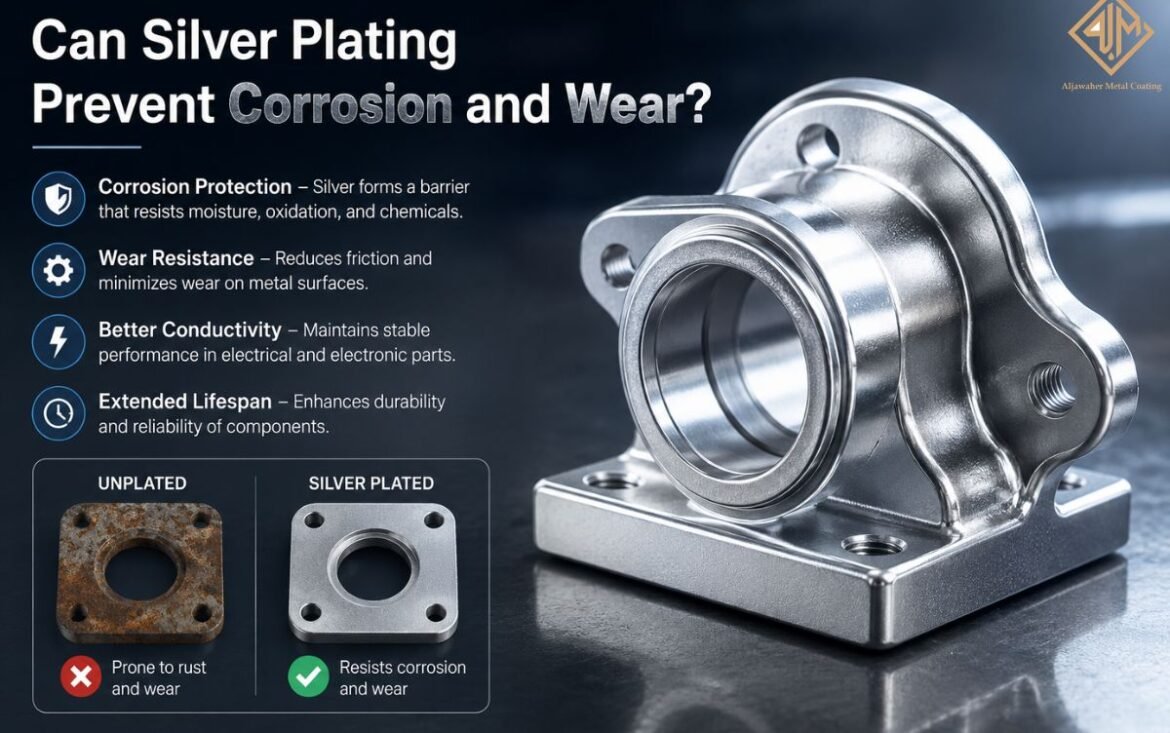
The silver plating acts as a coating which prevents the base metal from coming into contact with oxygen and moisture as well as any other elements which may be harmful to the base metal. In contrast to iron and steel, silver doesn’t rust; as long as the plating remains intact, it will provide protection to the material inside.
However, it is not corrosion-resistant. Silver is attracted to sulfur compounds in the air and will form silver sulfide, the black/brown tarnish that you’ve seen on old silverware. In general, this is cosmetic and does not affect the part. However, on electrical contacts it can increase resistance and begin to impact conductivity over time.
Where does silver plating perform best against corrosion?
- A humid environment with controlled humidity for indoor industrial space
- Electrical enclosures and switchgear.
- Marine-adjacent equipment combined with a protective topcoat.
- Pieces that are frequently touched or assembled.Items that are often handled or assembled.
In outdoor, or industrial areas where high sulfur levels exist, silver plating is usually not long-lasting unless a topcoat is applied to repel tarnish.
Does silver plating actually reduce wear?
Yes, and this is the place where it gets paid for. Silver’s coefficient of friction is low, which helps to reduce mechanical wear between two metal surfaces when they rub or slide against each other. That’s one of the reasons why connectors, switches, and sliding contacts which are cycled thousands or millions of times rely on it.
Silver is also soft and will conform slightly to pressures, allowing it to fill small gaps on the surface for better contact. But it works both ways: if the part is extremely thinly plated and has a high friction/load, then it will wear sooner than a harder coating in the same location.
Real-world example
In an electrical setting which operates without many moving parts, you can get a 10 micron thick plate of busbar connector that can last for years with almost no measurable wear. Place that 10 microns on something such as a slip ring (where the load is friction and constant), and it may require re-plating much sooner.
Industries that rely on silver plating
Silver plating turns up in more places than people expect, mostly because of its conductivity, corrosion resistance, and low friction.
- Electrical and electronics – connectors, switches, relays, busbars
- Aerospace – parts that need high conductivity and low friction
- Automotive – electrical terminals and specialty connectors
- Industrial manufacturing – machine parts under repeated contact cycles
- Marine and offshore equipment – with added protective sealing
In Dubai, businesses that build or maintain equipment in these categories often go looking for a specialized metal coating company, since local humidity and heat push corrosion along faster than it would in a drier climate.
Silver plating vs other protective coatings
Silver, nickel, gold, or tin: the right choice comes down to what the part is actually for.
| Coating Type | Corrosion Resistance | Wear Resistance | Conductivity | Typical Use Case |
| Silver Plating | Good (tarnishes with sulfur exposure) | Good, especially for low-friction contacts | Excellent | Electrical contacts, connectors |
| Nickel Plating | Very good | Excellent | Moderate | Structural and mechanical parts |
| Gold Plating | Excellent | Good | Excellent | High-reliability, low-maintenance contacts |
| Tin Plating | Moderate | Moderate | Good | Solderable components, budget applications |
Gold doesn’t degenerate because it doesn’t oxidize, making it more corrosion-proof. However, gold is far more favorable than silver when it comes to costs. Silver is cheaper, and it provides excellent electrical conductivity and satisfactory durability at the same time, which is why silver plating is so popular in many cases.
Factors that affect plating performance
A handful of variables decide whether silver plating actually delivers, or fails early.
- Coating Thickness
Thicker layers hold up longer under stress, but they cost more. Getting the thickness right for the specific part is one of the more important calls in the whole process.
- Base Metal Preparation
Sloppy cleaning or weak pre-treatment leads to poor adhesion. When the plating doesn’t bond right, it flakes or peels much sooner than it should, no matter how good the silver itself is.
- Environmental Exposure
Humidity, airborne pollutants, and sulfur-heavy gases all speed up tarnishing. Parts used near the coast or in heavy industry need extra protection.
- Plating Process Quality
Uneven current during electroplating leaves thin spots on the surface, and those wear through faster than the rest of the coating.
Common mistakes to avoid
- Picking plating thickness on price alone, without factoring in the mechanical load the part will actually see
- Skipping proper surface prep, one of the biggest reasons coatings fail early
- Assuming silver plating means zero maintenance, when a bit of periodic cleaning still helps
- Using silver plating in high-sulfur environments without a protective topcoat
- Going with a provider who doesn’t test adhesion and thickness before handing the part back
Therefore, most of these come down to one thing: working with a plating provider who actually understands the application instead of running everything through the same process.
Choosing the right silver plating service
Plating providers vary more than you’d think, even ones running similar equipment. The gap usually comes down to process control, quality checks, and whether they’ve actually worked in your specific industry before.
When you’re vetting a silver plating service in Dubai, ask how they test thickness and adhesion, and whether they can meet standards like ASTM B700. Providers who can actually explain their quality control process, instead of just handing you a quote, tend to be the ones whose work holds up.
Aljawaher Metal Coating handles electrical, industrial, and precision component plating, built around tight thickness control and proper surface prep. If you’re weighing silver plating in Dubai, that kind of transparency about the process is usually what separates a coating that lasts from one that doesn’t.
Expert recommendations for longer-lasting results
A few things hold up consistently across different applications:
- Match the coating thickness to the actual load, mechanical or electrical, the part will face. Don’t default to whatever’s standard for the industry.
- Ask for adhesion and thickness testing reports instead of judging quality by how the part looks.
- Add a protective anti-tarnish topcoat for anything going into humid or sulfur-heavy conditions.
- Check on high-cycle parts, like connectors and slip rings, periodically rather than waiting for them to fail.
- Choose the best metal coating company in Dubai with real experience in your industry. Aerospace, automotive, and electronics all have different tolerances, and that matters.
None of this is complicated. It’s just easy to skip, and skipping it is usually why a silver-plated part doesn’t last as long as it should.
Conclusion
Silver plating can prevent corrosion and cut down on wear, but only when it’s matched to the right job and applied with real process control behind it. It’s not a fix for everything. High sulfur exposure or heavy mechanical load calls for extra planning, whether that’s a thicker coating, a protective topcoat, or switching to a harder base coating altogether.
For electrical parts, connectors, and precision components, silver plating service in Dubai still holds up as one of the more dependable options out there, largely because nothing else matches its conductivity while still cutting wear this effectively. What decides the outcome isn’t the silver. It’s how well the plating job was actually done.
Trying to figure out if silver plating fits your components? Aljawaher Metal Coating can look at your application and recommend the right thickness, process, and protective measures for the long run. Get in touch to talk through your project and get a plating spec built for your industry.
Frequently asked questions
No. It greatly reduces the rate of the oxidation of the base metal, but the silver may tarnish with exposure to sulfur. No, that’s not structural, but that’s mostly cosmetic.
It depends on the thickness and the use of the coating but a good application on a properly maintained part can last several years under moderate conditions.
Since gold is not subject to oxidation, it does not tarnish. For most uses, silver has better performance and a lower cost.
Yes, but typically an outdoor or high humidity environment will require a topcoat to help minimize tarnish.
This is silver sulfide created from the sulfur in the air. This is a normal response and not the result of a failed coating.
Yes. The reason silver gets used in sliding electrical contacts and connectors that are cycled frequently is because of its low coefficient of friction.
It is variable, but typically, industrial electrical components range in size from 5 to 25 microns, depending on the mechanical and electrical requirements.
A light tarnish can be easily removed. Plating that is worn or pitted is often best suited for re-plating.
It can be effective but most of the time, thick plating or a harder undercoating is required for high-load components.
Be sure to find a provider who can provide documentation of thickness and adhesion testing, has experience working in your industry, and is candid about the process and standards.