-
aljawahermetalcoating
- August 7, 2026
- No Comments
Brass Plating vs. Bronze Plating: Which Metal Finish Is Right for Your Project?
Table of Contents
- Key takeaways
- What is brass plating?
- What is bronze plating?
- Composition differences that matter
- Durability and corrosion resistance
- Appearance and finish quality
- Cost comparison
- Best applications for each
- Common mistakes to avoid
- How to choose the right option?
- Conclusion
- Frequently asked questions
Key takeaways
- Brass plating creates a warm, gold-like finish from a copper-zinc alloy.
- Bronze plating has greater resistance, especially useful for outdoor and coastal environments.
- Brass plating is relatively cheap and useful for decorative, signage, and interior projects.
- Make your choice based on the appearance, surroundings used for the plating process, base metal, and necessary durability of the coating.
Pick up two metal fittings that look nearly identical, and you can usually tell them apart by weight and tone. Chances are one’s brass-plated, the other bronze-plated. Both use electroplating to bond a thin metal layer onto a base piece, but the alloys behave differently once they’re sitting on that surface, and that shows up in the finish, the lifespan, and the price tag.
This piece walks through what actually separates brass plating from bronze plating, past the obvious color difference. If you’re specifying fittings for a build or sourcing hardware for a project, getting this wrong costs more to fix later than it does to get right upfront.
What is brass plating?
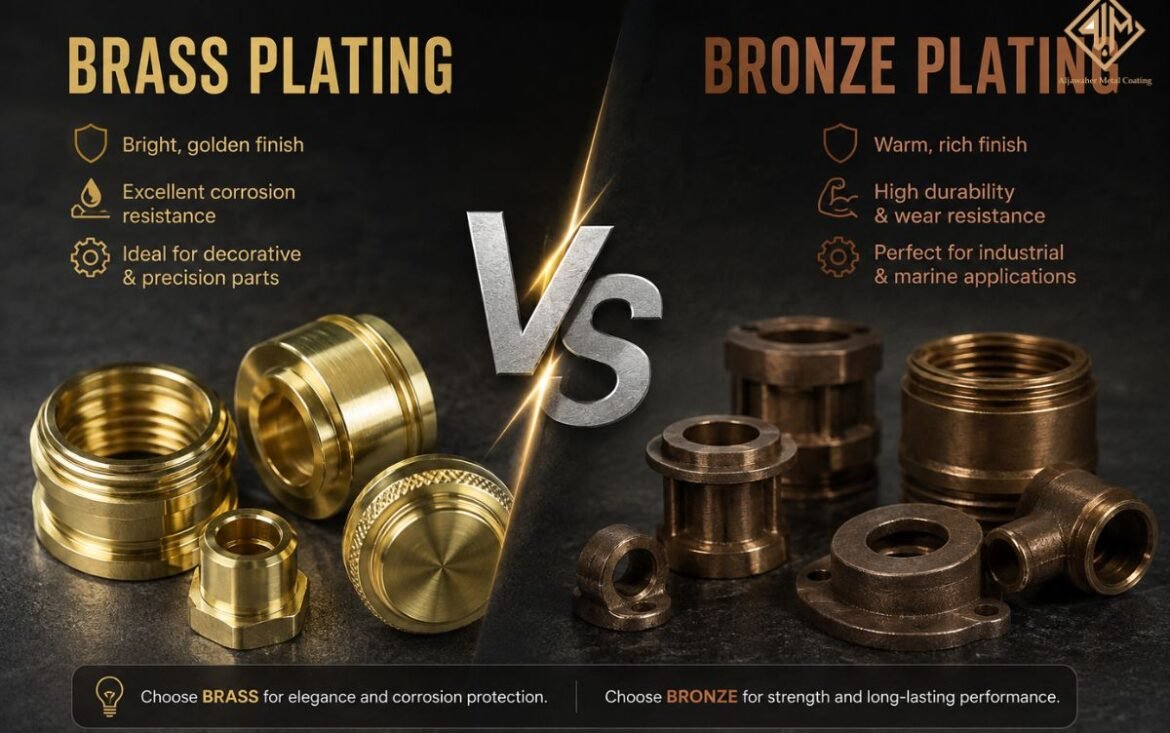
Brass plating puts a thin layer of brass, a copper-zinc alloy, onto a base metal through electroplating. The piece goes into an electrolyte bath loaded with brass ions, and an electric current draws those ions onto the surface until they form an even coating.
However, zinc is what gives brass its bright gold look, which is why it’s used to imitate solid gold or brass hardware for a lot less money. You’ll find it on door handles and hinges, light fixtures and lamp bases, decorative screws, musical instrument parts, and automotive trim.
Interior fit-out companies in the region ask for brass plating in Dubai a lot, especially for hotels, retail spaces, and homes where a warm gold tone fits the design brief.
What is bronze plating?
Bronze plating runs the same electroplating process but swaps zinc for tin. That tin content changes both the color and the mechanical behavior of the finished layer. Rather than bright gold, you get a deeper, slightly reddish-brown that most people associate with antique or industrial hardware.
Bronze has a longer track record in structural and marine work because tin bronze holds up better against saltwater than most alloys. That’s why boats, restored historic buildings, and outdoor sculptures still use it. As a plated finish specifically, people choose it less for the price and more for how well it resists wear and the aged, heavier look it gives off.
Composition differences that matter
The alloy is where this whole comparison starts, and it drives everything else: color, hardness, how the coating holds up over time.
| Property | Brass Plating | Bronze Plating |
| Base Alloy | Copper + Zinc | Copper + Tin |
| Typical Color | Bright gold | Reddish-brown, antique |
| Hardness | Moderate | Slightly higher |
| Tarnish Resistance | Moderate (needs sealing) | Better in humid/marine air |
| Common Zinc/Tin % | 5–40% zinc | 3–20% tin |
| Cost | Lower | Higher |
Zinc is cheap and reactive, which keeps brass plating affordable but also means it tarnishes faster without a topcoat. Tin is denser and resists oxidation better, so bronze plating costs more and takes longer to apply, but the finish lasts longer once it’s on.
Durability and corrosion resistance
For anyone plating something that actually needs to function, not just look good, this is usually what settles the decision.
Therefore, brass plating does well indoors, in dry and stable conditions. It’s not built for constant moisture. Without a clear lacquer or sealant, it’ll oxidize and lose its shine within months in humid air. In Dubai specifically, where most plated fittings live indoors and humidity is manageable inside buildings, a properly sealed brass finish can go years without visible wear.
Bronze plating was practically made for exposure. Tin forms a more stable oxide layer on the surface, one that protects the metal underneath instead of eating into it the way unsealed brass does. That’s the whole reason bronze still shows up on marine hardware, outdoor statues, and any architectural piece that sits in rain or coastal air.
Neither finish lasts forever without upkeep. Both need cleaning now and then, and a protective coating helps if the piece gets handled a lot or sits outside. Skipping that step is probably the single biggest reason plated finishes fail early.
Appearance and finish quality
Color is what people notice first, but the finish itself has more going on than tone.
Brass plating gives a sharp, reflective shine that looks new and polished, and it holds up under camera lighting, which is part of why retail displays, signage, and hospitality interiors use it so often.
Bronze plating stays matte to satin even after polishing, and it picks up a natural patina over time. Designers working on restorations or industrial-style interiors often want exactly that. If a client wants hardware that looks like it’s been sitting there for decades, bronze gets you there without waiting decades. The best metal coating company in Dubai will be helpful for you.
Cost comparison
The price gap comes down to raw materials and how long the process takes.
- Brass plating runs cheaper because zinc costs less than tin, and the plating bath works at lower temperatures with shorter cycles. That adds up fast on large orders.
- Bronze plating – costs more per kilogram in raw tin, and getting a consistent bronze tone usually means tighter control over the bath chemistry and current. That pushes the price up per piece, more so on larger or more detailed items.
If you need a gold-toned finish across a big batch and budget matters, brass is the practical choice. If the piece has to survive rough conditions and the extra cost is worth it, bronze earns its price.
Best applications for each
Brass plating fits:
- Interior fittings like door hardware, cabinet pulls, and light fixtures
- Decorative pieces meant to pass for solid brass or gold
- Retail and hospitality spaces with controlled humidity
- Large production runs where cost per unit matters
Bronze plating fits:
- Outdoor or marine hardware
- Restoration work that needs an authentic aged look
- Architectural pieces exposed to weather
- Anything where a matte, antique finish is the actual goal
Common mistakes to avoid
- Skipping the sealant on brass- An unsealed brass-plated surface dulls faster than most people expect, especially in humid rooms like kitchens or bathrooms.
- Assuming bronze plating means solid bronze- It’s a thin surface layer over a base metal. It won’t carry the weight or structural properties of an actual solid bronze casting, and treating it like one leads to disappointment.
- Ignoring how the base metal takes plating- Steel, brass, and zinc die-cast parts all react differently in the electroplating bath. Skip proper surface prep, and you end up with patchy or peeling results.
- Choosing based on color alone- A gold finish that looks great in a showroom shot might not survive outdoors. Match the finish to where the piece is actually going to live.
How to choose the right option?
Three questions cover most of it. Where’s the piece going? Indoor and dry, brass plating works fine. Outdoor or humid, go with bronze. What’s the budget per unit? Plating in bulk, brass saves real money. What look do you actually want? Bright and polished means brass. Aged and matte means bronze.
Still not sure? A brass plating service in Dubai that can look at your base material and end-use environment before you commit will save you a redo later.
Conclusion
Brass and bronze plating solve different problems even though the process behind them is basically the same. Brass gets you a bright, affordable gold finish that works well indoors and for decorative pieces. Bronze gives up some of that shine in exchange for real resistance to weather and time, which matters once a piece leaves a climate-controlled room.
Getting the composition, preparation, and sealing right is what decides whether a finish lasts or needs redoing within a year. If you’re sourcing brass plating in Dubai for an upcoming project, working with a team that understands both the metallurgy and the local climate helps. That’s the kind of work Aljawaher Metal Coating has been doing across hospitality, retail, and industrial fit-outs in the region.
Frequently asked questions
No. Brass plating uses copper and zinc, which looks close to gold but doesn’t share gold’s composition or its resistance to tarnish once unsealed.
Bronze usually outlasts brass in humid or outdoor settings because of tin’s oxide layer. Brass holds up fine indoors as long as it’s sealed properly.
Most metals take brass plating with the right surface prep, though steel, zinc die-cast, and copper alloys are the most common and reliable choices.
Interior brass-plated pieces here usually need a clear lacquer sealant, particularly in kitchens, bathrooms, or buildings near the coast.
Yes. Tin costs more than zinc, and the bronze plating process needs tighter control, both of which push the price up.
Look for in-house electroplating facilities, real quality checks, and a track record across both decorative and industrial jobs.
Yes, though it still develops a matte patina over time even after polishing. That’s just how tin bronze behaves.
A visible project history, straightforward pricing, and the option to test a sample piece before running a full batch.
Usually that comes down to poor surface prep, not the plating process itself, when it’s done by someone who knows what they’re doing.
Slightly, by adjusting the zinc or tin ratio, but both alloys have a natural range and won’t shift dramatically outside it.