-
aljawahermetalcoating
- July 7, 2026
- Comment (1)
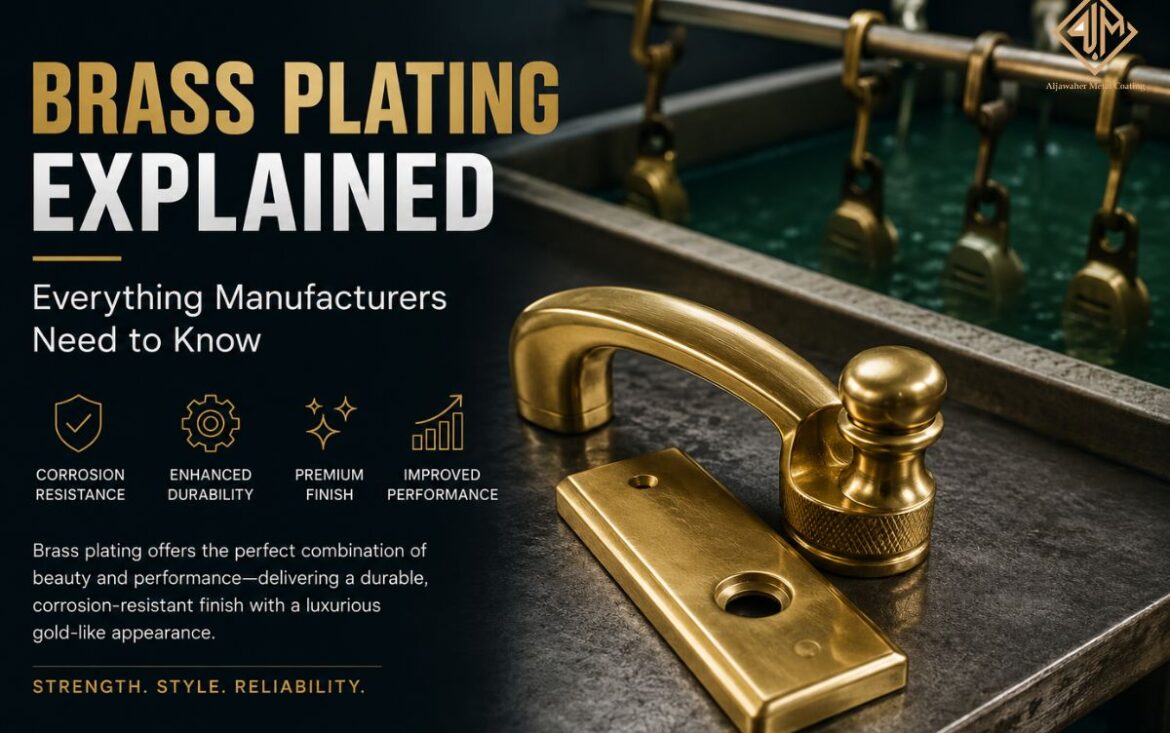
Brass Plating Explained: Everything Manufacturers Need to Know
Table of Contents
- Key Takeaways
- What is brass plating?
- Why do manufacturers use brass plating?
- How does the brass plating process works?
- Key benefits of brass plating
- Common industrial applications
- Choosing the right brass plating partner
- Manufacturing success example
- Conclusion
- Frequently asked questions
Key Takeaways
- Brass plating is a process of coating metal with a layer of brass.
- It helps to enhance the looks, durability, corrosion resistance, and conductivity.
- It is used in the automotive, electrical, decorative, and industrial industries.
- By selecting a reputable plating company, you can be certain that the work will be of high quality, perform well, and provide a long life.
Brass plating is a plating method used to coat an object with a thin film of the metal brass to enhance its durability, conductivity, corrosion resistance, and appearance. Brass plating is used by manufacturers in many industries to improve the quality of their products while keeping the costs within a budget.
Brass plating can be applied to a wide range of products, from decorative hardware to electrical parts, automotive components, and industrial machinery, providing a versatile and effective way to enhance the performance and aesthetic appeal of any material. Partnering with a professional coating service in Dubai can help achieve consistent quality, long-lasting protection, and finishes that are industry-approved.
What is brass plating?
Brass plating is an electroplating process in which a layer of brass such as copper and zinc alloy is electroplated on a base metal like steel, iron, copper, or zinc.
Why is it used?
Brass plating is applied to manufacturers to
- Improve surface appearance
- Increase corrosion resistance
- Enhance electrical conductivity
- Prepare surfaces for further finishing
- Extend product lifespan
However, the surface after the operation looks like solid brass with much lower material consumption, which is a cost-effective solution for manufacturing.
Why do manufacturers use brass plating?
Durability and appearance are key factors in today’s competitive manufacturing world and in customer satisfaction.
Brass plating offers a good combination of functionality and aesthetics for many industry applications. Brass plating in Dubai is a cost-effective process that can enhance the appearance and durability of metal parts and components, making them more appealing and resistant to corrosion.
Moreover, plated components tend to last longer when used in harsh environments that might cause moisture, wear, or oxidation to affect the performance of the untreated metal.
How does the brass plating process work?
There are a number of precisely controlled steps that take place in the brass plating process.
1. Surface Preparation
The metal is cleaned of the following:
- Oil
- Dirt
- Rust
- Oxidation
Strong adhesion can be achieved with the proper cleaning.
2. Pre-Treatment
The surface is first treated with special chemicals, which prepare the surface and make its coating as uniform as possible.
3. Electroplating
The component is placed in a plating solution that contains the ions of the metal being plated. The surface is coated with a controlled layer of brass by an electric current.
4. Finishing and Inspection
The component is then polished, tested, and inspected to ensure coating quality and thickness.
Aljawaher Metal Coating companies implement a rigorous quality control program to ensure that the product is consistently coated on industrial parts.
Key benefits of brass plating
- Enhanced Appearance
Brass plating provides a high level of brightness, giving the product a gold-like appearance and making it more attractive and valuable.
- Better Corrosion Resistance
The plated layer protects the base metal from moisture and oxidation and from environmental damage.
- Improved Conductivity
Brass-coated electrical components are generally good conductors for different industrial applications.
- Cost Efficiency
Manufacturers achieve the appearance and benefits of brass without the expense of producing parts entirely from brass.
- Increased Product Life
The protective coating can help to improve the longevity of parts by preventing or minimizing wear and surface degradation.
Common industrial applications
Brass plating is applicable to various industries.
1. Decorative Hardware
- Door handles
- Furniture fittings
- Architectural accessories
2. Electrical Components
- Connectors
- Switches
- Terminals
3. Automotive Industry
- Trim components
- Fasteners
- Specialty fittings
4. Industrial Equipment
- Machine parts
- Precision components
- Mechanical assemblies
Furthermore, in a world where manufacturing standards are constantly changing, businesses seeking durable and attractive metal finishes continue to demand high-quality brass plating service in Dubai.
Choosing the right brass plating partner
Not every plating company is created equal.
When choosing a brass plating company, manufacturers should consider:
| Factor | Why It Matters |
| Industry Experience | Ensures technical expertise |
| Quality Control | Guarantees consistent coating results |
| Modern Equipment | Improves precision and efficiency |
| Custom Solutions | Supports unique project requirements |
| Turnaround Time | Reduces production delays |
The Aljawaher Metal Coating customer-focused service, advanced coating technologies, and quality finishing solutions have made them a trusted brand for many businesses.
However, when selecting the best metal coating company in Dubai, it’s essential to opt for a provider with a track record of excellence, as their experience can significantly influence the performance and reliability of the products they offer.
Manufacturing success example
A decorative metal hardware manufacturer was having problems with surface tarnishing and customer complaints about the appearance of the product.
The company experienced the following after using professional brass plating services:
- Improved corrosion resistance
- Enhanced product aesthetics
- Reduced warranty claims
- Higher customer satisfaction
- Longer product lifespan
Therefore, the correct surface finishing solution can directly affect the quality of the product and brand reputation, as shown in this example.
Conclusion
Brass plating continues to be one of the top metal finishing solutions available to manufacturers who want to provide durability, corrosion protection, conductivity, and aesthetics. The process provides functional advantages and maintains a cost-effective operation in a range of applications from decorative hardware to industrial machinery.
By partnering with expert suppliers like Aljawaher Metal Coating, manufacturers can benefit from constant quality, superior product functionality, and lasting value. For businesses that need consistent brass finishing services, it is essential that they work with a trusted and experienced coating specialist to ensure their product quality and customer satisfaction.
Talk to Aljawaher Metal Coating and learn about your unique manufacturing needs and the tailored brass plating services we can provide.
Frequently asked questions
Brass is a plated alloy that is used to enhance the properties of metallic parts such as appearance, resistance to corrosion, conductivity, and durability.
Brass plating is more durable, wear-resistant, and provides a higher-quality finish than a traditional paint coating in many industrial applications.
Use, environmental conditions, and coating thickness all affect the lifespan. With the proper care, high-quality plating will last many years.
Brass plating is used in a number of industries such as electrical, automotive, manufacturing, architectural hardware, and industrial equipment.
Check out experience, certifications, quality, modern equipment, and past project success.
1 Comment
Brass Plating on Steel, Copper, and Zinc Alloys Guide
[…] you’re sourcing brass plating in Dubai, decorative or industrial, ask about bath chemistry and substrate-specific pre-treatment before you […]