-
aljawahermetalcoating
- November 5, 2026
- No Comments
How to Prevent Tin-Plated Parts from Corroding

Corrosion-resistant tin plating is effective but not completely resistant to it. A tin layer is formed on top of it, which protects from corrosion but may be damaged by humidity, salt air, acidity, and contact with other metals. To prevent corrosion of tin-plated items, control humidity levels while storing them; use appropriate coating thicknesses; do not touch with bare hands; keep away from other metals that may react together; check on coatings periodically. This guide explains all of them for protecting parts during assembly until installation.
Key takeaways
- Moisture, chlorides, and galvanic contact are the primary causes of corrosion of tin coatings, so these should be controlled first.
- Use plating thickness that reflects the service environment, rather than the minimum plating thickness.
- Select a supplier that has proven quality systems and confirm performance by test reports, not verbally.
- Collaborate with a Best metal coating company in Dubai that will also provide you with inspection support and proof of all batches.
Why do tin-plated parts corrode?
Tin is a tough, solderable finish that inhibits the effects of daily use on copper, brass, and steel. It naturally develops its surface oxide, which is the main source of protection. Corrosion can start rapidly, particularly in humid or salty environments, when the layer is scratched, contaminated, or chemically attacked. Knowing the causes is the first step to preventing damage.
What causes corrosion on tin coatings?
The protective layer is comprised of various factors that make it weaker:
- Water and water droplets that sit on the surface for extended periods of time
- Salt from salt air, sea spray, or from cleaning.
- Vapors from other industrial processes that are acidic or contain sulfur or sulfites
- Any galvanic contact with more active metals like aluminium or zinc.
Each factor reacts to the surface in a different way. The presence of moisture generates a thin electrolyte layer, and chlorides may be able to work through the oxide to create small pits. Consequently, a part may appear fine on the outside, but be badly corroded on the inside. Unfortunately, it is not easily recognized, and so, prevention is very important.
Which environments carry the highest risk?
Not every habitat is alike. The table below lists some standard settings and the protection that is typically associated with each one.
| Environment | Main Corrosion Driver | Risk Level | Recommended Protection |
| Dry indoor storage | Low humidity | Low | Standard packaging |
| Coastal or port areas | Salt spray | High | Sealed packaging with desiccants |
| Industrial plants | Acid vapors and dust | Medium to high | Ventilated storage and protective lacquer |
| Hot, humid climates | Condensation | High | Climate-controlled storage |
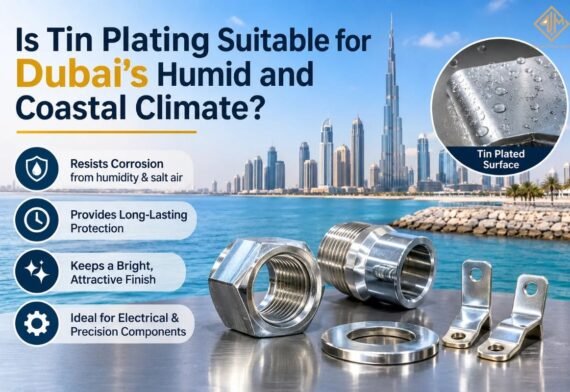
Corrosion is a major problem for manufacturers and fabricators in the Dubai region and the wider Gulf region due to high humidity and salty air. These conditions are anticipated first, and a lot of rework is avoided. All storage, packaging, and service life decisions must be made based on local conditions.
How does humidity speed up tin corrosion?
Humidity is important because it is the process of condensation, which happens with temperature changes, even within an air-conditioned building. The water film can form in a matter of minutes when a part is removed from a cool store and placed in warm, moist air. When that film is left on for hours, it allows for the conditions of oxidation and pitting to occur.
Below about 50% relative humidity, coupled with a gradual acclimatisation of parts before opening the packaging, this risk can be significantly reduced.
How does plating thickness affect corrosion resistance?
Thickness of the plating is one of the most important factors determining corrosion performance. The thicker the tin, the longer it will take to expose the underlying base metal. The thickness should never be selected by guesswork and depends upon the service environment and applicable specification. The right thickness in the beginning means that there will be no painfully discovered failures down the road.
Typical thickness ranges by application
Usually thickness is expressed in micrometers (µm). General ranges are shown in the table below, but engineering drawings and the applicable standard will always prevail.
| Application | Typical Tin Thickness | Expected Protection |
| Electrical contacts and connectors | 1 to 3 µm | Solderability and low contact resistance |
| General hardware and brackets | 5 to 8 µm | Moderate corrosion resistance |
| Outdoor or marine components | 8 to 15 µm | Extended protection in harsh conditions |
Why thin plating fails early
On thin coatings, pinholes can form during plating, allowing moisture to reach the underlying metal. Unless magnified, it’s hard to tell if a part is going to corrode unless it has been pre-visualized through a thorough analysis. Asking your supplier for thickness measurement reports on every batch greatly reduces this risk. Documented measurements provide evidence, not assumptions.
How do you choose a reliable tin plating service?
When you select the appropriate supplier, your parts will last or not. A reliable supplier should be able to provide documented process controls, reliable thickness measurement, and communicate with you about what substrate and surface preparation they will be using. Request samples and test reports, and don’t make a big purchase just based on an advertising brochure; a short trial does more than an advertising brochure.
Certifications and process controls
Before signing a contract with any tin plating services Dubai provider, make sure they can display proof of their quality system. Seek out these attributes:
- Evidence of quality management, including ISO 9001 certification.
- Compliance with recognized standards such as ASTM B545 for electrodeposited tin coatings.
- Written and audited pre-plating cleaning and activation steps
- X-ray fluorescence (XRF) testing or some alternative method of thickness testing.
- Remove and eliminate traceability from raw material to finished batch
Repeatable processes are demonstrated in certificates, which do not guarantee quality. Request the current certificate and verify that the scope includes the plating that is required.
Questions to ask before you order
A brief chat with a supplier will give you a lot of information regarding their abilities. Try to think of the following questions:
- What are the base metals and alloys that you are commonly plating?
- How are the thickness and porosity of each batch verified?
- Have any similar parts been tested for salt spray and humidity?
- How do you package for exports or long-term storage?
- How fast do you act on a Nonconformance Report?
Be mindful of the specificity of the answers. Unspecific answers are a sign of poor process control.
Evaluating reputation and facilities
Online reviews are a great starting point for finding the best metal coating company in Dubai, but they’re not comprehensive enough. If possible, go to the facility and check the equipment and cleaning lines, and have a direct discussion with the technical team about parts you need to clean. A competent supplier will admit their limitations and be able to suggest alternatives if a coating is not suitable for the application.
How should you store and handle tin-plated parts?
Proper storage reduces parts damage before parts are even delivered to the customer. Errors in handling, such as coming into contact with bare hands, can result in salts and oils from the skin, which can initiate corrosion. Good practice consists of controlled humidity, clean packaging, and gloves, and is noticeable over time if they are consistently applied.
Storage conditions that work
Keep parts in a clean, dry location with relative humidity about 50%. Do not place them on concrete floors,, as they may give off moisture; use pallets or shelving. To store longer periods, use vapor corrosion inhibitor (VCI) paper or bags which give off protective compounds around the parts. Ensure proper airflow through the storage area, to prevent moisture building up in corners or around outside walls.
Packaging materials compared
The appropriate packaging will vary based on the length of time the parts are expected to be stored and the route the parts will follow. Common options are compared in the table below.
| Packaging Option | Best Use | Strength | Limitation |
| Standard polyethylene bags | Short-term indoor storage | Low cost, easy to use | Does not block moisture fully |
| VCI paper or bags | Medium to long-term storage | Releases corrosion inhibitors | Needs a sealed environment to work well |
| Foil barrier bags with desiccant | Export and sea freight | Strong moisture barrier | Higher cost per unit |
| Rigid containers with foam inserts | Sensitive connectors | Prevents scratching | Bulkier and more expensive |
Handling practices on the shop floor
For parts to be kept clean from receipt to dispatch, follow these steps:
- Wear clean nitrile or cotton gloves whenever touching plated surfaces.
- Replace metal racks with plastic or padded trays.
- Ensure that components are not in contact with each other.
- Make sure that every container is marked with the date it was made to promote first-in, first-out.
- Inspect every container for damage before shipments leave the facility.
Keeping areas clean is equally important as following processes. Dust, oil mist, and residues can collect on storage parts; therefore, ensure your working area is tidy and plated components are separated from raw materials. Small daily actions can help avoid damage from storage.
How can you maintain tin plating in service?
Regardless of how well a part is plated, it requires care after it is installed. This regular upkeep helps to prolong the lifespan, especially when the area is exposed to the outdoors or is an industrial environment, where dirt and chemicals may accumulate. The aim is to get rid of the contaminants before they can start as corrosion sites, and mild cleaning with regular inspections will normally be sufficient.
Throughout the UAE, several engineers are searching for a reliable tinned Dubai engineer to provide maintenance coating, touch-up, and rework services. A supplier that is aware of local climate conditions can be more accurate with service intervals than a generic service interval can be.
Cleaning without damaging the surface
Use a pH-neutral detergent and a soft, lint-free cloth. Be sure to not use abrasive pads, steel wool, or strong acids as they may remove the tin and reveal the underlying metal. Thoroughly rinse with deionized water and dry the part immediately to avoid water spots.
Managing contact with dissimilar metals
Tin will burn up more rapidly if it is in contact with another more noble metal, such as stainless steel or copper. Apply insulating washers, non-conductive gaskets, or sealants to the joint. Before assembly, check the metals in a galvanic series chart to determine which ones are safe to use in your operating area.
Repairing minor damage
In many cases, simple scratches can be fixed with an appropriate touch-up procedure after cleaning and preparation. If the damage reveals a lot of the base metal, the part is typically more easily stripped and replated than patched, because a patch will not last as long as the re-plated surface.
Common mistakes that cause early corrosion
A lot of the corrosion problems are not due to the coating, but due to avoidable mistakes. Be alert to these typical problems:
- Holding parts in containers that don’t allow air to circulate and cause condensation.
- Use of household chemicals that contain chlorides or bleach.
- Putting together parts made out of tin-plated metal with steel bolts in wet conditions
- Neglecting to check the thickness of the material and accepting the manufacturer’s specifications
- Allowing parts to be exposed during shipping in humid or coastal areas.
With a written procedure, each error is easily avoidable. Record your storage, cleaning, and assembly procedures and educate all who use the parts. None of any given product is more important to the protection of coatings than consistency in the workshop.
How do quality inspections catch early corrosion?
Inspection identifies issues before components are shipped from the factory or service. Frequent tests will ensure that the coating will not fail in subsequent testing. A combination of visual observation, thickness measurement, and salt spray testing provides the best indication, and each provides a different form of risk.
Common inspection methods
- Inspect by visual method for discoloration, staining, or pitting under good lighting conditions
- X-ray fluorescent thickness measurement for accurate, non-destructive thickness measurement.
- Testing for pinhole leaks or exposure of base metal (porosity testing)
- Accelerated corrosion exposure by salt spray test.
As you look through your choices, the legitimate tin plating services in Dubai ought to be part of their regular services and not an extra. Request that test results be provided with every delivery, for audits and warranties.
Understanding testing standards
The thickness and quality of the tin coatings are specified in standards like ASTM B545, and salt spray tests are typically conducted in accordance with the ASTM B117 standard. Make copies of these reports and store them with all your project records. In the case of failure many years later, these records indicate what the part was supposed to meet, and they can be used to quickly trace the cause of the failure.
Documenting results for future reference
Good records make inspection a learning instrument. Monitor the thickness measurement, test results, and environmental parameters for each batch. Patterns will emerge over time, revealing which suppliers, packaging, or storage methods are best, and make appropriate adjustments.
Wrapping up
The key to protecting tin-plated parts is to know where corrosion begins and take correct action before it happens. Manage humidity and handling because these can cause damage; define correct plating thickness; test, don’t assume, quality.
Moreover, from sourcing components to scheduling maintenance, having a reliable tin plating in Dubai partner can be the deciding factor between parts that will endure and those that will fail prematurely. Aljawaher Metal Coating is available to discuss your particular needs.
Frequently asked questions
Most corrosion of tin in practice is caused by moisture, in combination with chlorides, or in contact with more noble metals. Most of these failures can be avoided by controlling the humidity and by separating dissimilar metals.
The normal thickness for general hardware is 5-8 microns, and for outdoor or marine hardware, it is 8-15 microns. Always read your engineering drawing and use the standard.
Visually inspect parts every 3-6 months in severe environments and after cleaning and chemical exposure. Inspection of parts may be reduced when in mild indoor environments.
If the corrosion is light, sometimes it can be cleaned and touched up; however, if it is deep pitting, it will most likely need to be stripped of the old plating and re-plated if it is to have a long life.