-
aljawahermetalcoating
- October 3, 2026
- No Comments
What Is Hard Chrome Plating Used For?
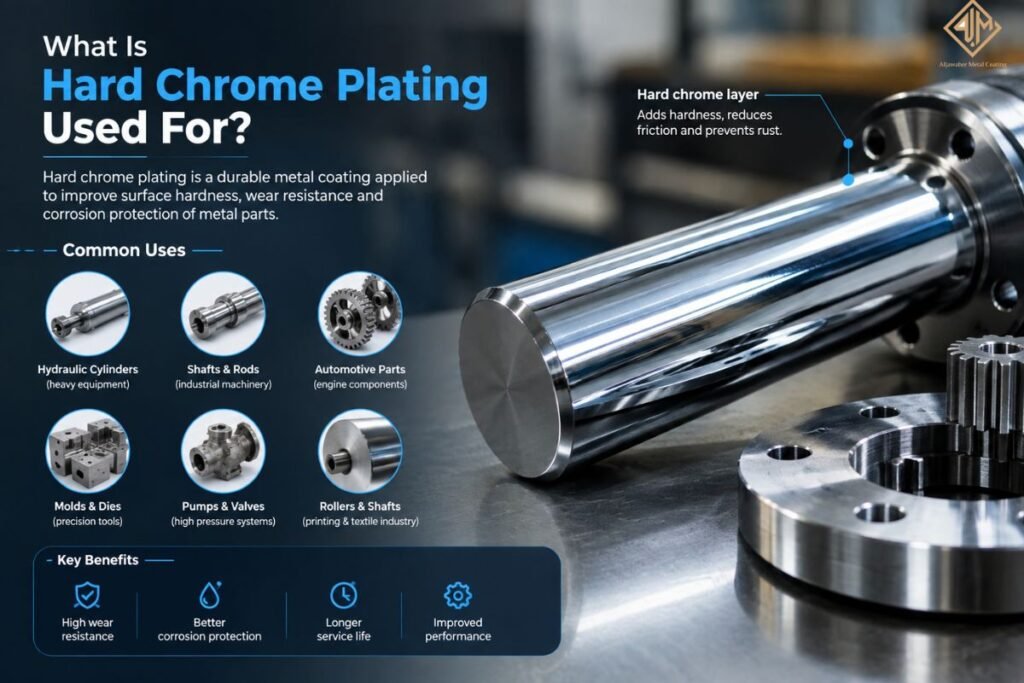
Table of Contents
- Key takeaways
- What is hard chrome plating?
- Where is hard chrome plating used?
- What properties make it so useful?
- What are its limitations?
- How does it compare with other options?
- What should you check before plating?
- When should a business consider it?
- How do you choose a plating provider in Dubai?
- Bottom line
- Frequently asked questions
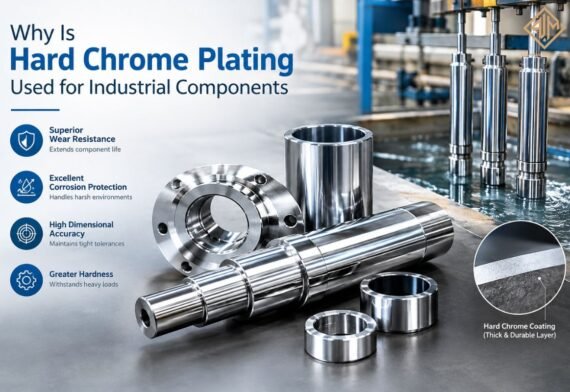
Hard chrome plating serves the purpose of prolonging the lifespan of industrial metal components. It involves the application of a tough chromium layer with low friction on hydraulic rods, shafts, rollers, moulds, dies, engine parts, etc., and the restoration of worn surfaces to their original size.
Decorative chrome is selected for aesthetic appeal. Hard chrome is selected for functional performance in safeguarding moving parts from wear degradation, friction, and, to some extent, corrosion at a cheaper cost than buying new parts. This guide leads the reader through the appropriate and inappropriate applications of hard chrome and contains some pertinent questions to ask before making an appointment for hard chrome plating in Dubai with a provider such as Aljawaher Metal Coating.
Key takeaways
- Hard chrome, a coating with the specific purpose of protecting its surface from physical wear, low-moving friction, and ensuring repair, contrary to other products, has no decorative role.
- It is applied to components such as hydraulic rods, cylinders, shafts, rollers, dies, and moulds.
- The efficiency of this coating depends on surface preparation, thickness of the coating, and final finish of the part.
- It is suitable for parts that constantly slide, rotate, or rub.
What is hard chrome plating?
Hard chrome plating is an electroplating process. The part sits in a chromic acid bath and acts as the cathode. When direct current runs through the solution, chromium deposits on the metal surface.
Therefore, you may also hear it called industrial, functional, or engineering chrome. The layer is much thicker than decorative chrome, and it is usually applied straight onto the base metal instead of over nickel.
A typical job runs in this order:
- Cleaning and degreasing the part
- Masking areas that should stay unplated
- Electrolytic etching to activate the surface
- Plating to the target thickness
- Rinsing, baking if the steel requires it, then grinding or polishing to final size
Where is hard chrome plating used?
Hard chrome goes on surfaces that slide, rotate, rub, or wear down. These are the main applications.
- Hydraulic and Pneumatic Components
Piston rods and cylinder parts pass through their seals thousands of times. Chrome gives the rod a smooth, hard surface that resists scoring, which also helps the seals last. If you only remember one use of hard chrome, this is it.
- Cylinders and Shafts
Hydraulic cylinder barrels, gear shafts, spindles, and pump shafts carry load while turning or sliding. Chrome cuts wear at the bearing and seal areas. When a journal is worn, it can often be rebuilt instead of scrapped.
- Rollers
Printing, textile, paper, film and packaging rollers have to stay smooth while the product keeps touching them. Chrome resists abrasion and can be polished to a set finish, which matters when the roller marks whatever runs over it.
- Moulds and Dies
Plastic injection moulds and forming dies deal with friction, heat, and sometimes aggressive resins. A chrome layer helps parts release cleanly and slows surface wear, so product quality holds for longer between repairs.
- Automotive Parts
You will find hard chrome on piston rings, valve stems, shock absorber rods, and fork tubes. Restoration and performance shops also use it to rebuild worn engine and transmission parts.
- Industrial Machinery
Pumps, compressors, extruder screws, press tooling, and heavy equipment shafts all use it. For many plants, chrome is as much a maintenance tool as a protective coating.
| Component | Main Problem | What Chrome Provides |
| Hydraulic rods | Scoring, seal wear | Hard, smooth sliding surface |
| Shafts and spindles | Journal wear | Wear resistance, size restoration |
| Rollers | Abrasion, surface marking | Durable, polishable face |
| Moulds and dies | Friction, release problems | Wear protection, cleaner release |
| Engine parts | Heat, friction | Hardness, low friction |
What properties make it so useful?
- How hard is hard chrome?
It is one of the hardest electroplated metals. Micro-cracked chromium typically measures about 800 to 1000 on the Vickers scale, harder than most hardened steels. That is why it holds up so well against abrasion.
- Does hard chrome resist wear and corrosion?
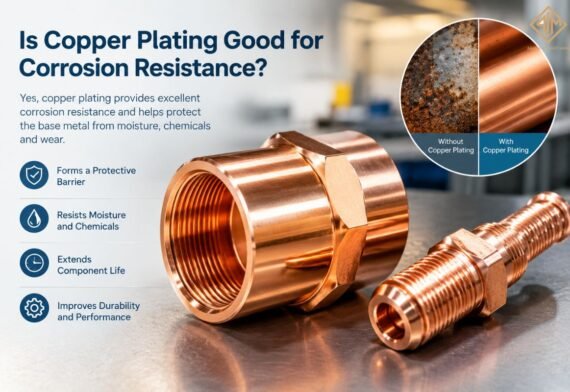
Wear resistance is excellent. Corrosion resistance is less clear-cut, because it depends on thickness and the structure of the deposit. Micro-cracks can let moisture reach the base metal, so a thin layer may not protect well in damp or salty air. In humid places like Dubai, or on parts used near the coast, thickness and an undercoat deserve some thought.
- Why is friction lower?
Chrome has a low coefficient of friction, so parts slide more easily and resist galling and seizing. Some chrome types are deliberately porous, so they hold oil, which helps on bearings and sliding surfaces.
- Can it restore worn dimensions?
This is its most practical strength. An undersized part can be built up with chrome and ground back to size. For a large rod or an expensive shaft, that often costs far less than buying new and keeps the machine down for a shorter time.
What are its limitations?
Hard chrome has limits, and you should hear about them before you commit.
- It does not level the surface- Roughness and defects in the base part show through, and thicker plating can make them more obvious. Good machining beforehand matters.
- It can be brittle- A thick or poorly controlled layer may crack under heavy impact or bending.
- Hydrogen embrittlement is a risk- High-strength steels can absorb hydrogen during plating, which is why a heat treatment after plating is normally used.
- Complex shapes plate unevenly- Chrome builds up on edges and corners, and deep recesses get thinner coverage.
- Environmental rules apply- Traditional processes use hexavalent chromium, which is toxic. Handling, ventilation, and waste disposal must follow regulations, so the plater’s compliance counts.
How does it compare with other options?
| Option | Best For | Main Trade-Off |
| Hard chrome | Wear, sliding, repair | Environmental controls, no levelling |
| Decorative chrome | Appearance on trim and fittings | Thin layer, little wear protection |
| Electroless nickel | Even coverage, corrosion resistance | Often less wear resistant than chrome |
| HVOF tungsten carbide | Severe wear and corrosion | Higher cost, specialist equipment |
Furthermore, thermal spray coatings like tungsten carbide are used on very demanding parts, and some companies switch to them for environmental reasons. Even so, hard chrome remains the standard choice for a large share of everyday industrial components.
What should you check before plating?
Most plating problems start before the part reaches the bath, so these four points are worth raising with your plater.
- Surface Preparation
The surface has to be clean, free of rust and oil, and properly machined. Any defect left behind can cause poor adhesion or visible flaws. Blasting and fine grinding are common preparation steps.
- Coating Thickness
Thickness depends on the job. Wear coatings are often a few dozen microns. Salvage work can need much more and is ground back to size afterward. More is not always better, since extra thickness adds cost and grinding time and raises the risk of cracking.
- Substrate Compatibility
Chrome bonds well to most steels, and also to stainless steel, copper alloys, and brass. High-strength steels need extra care because of hydrogen embrittlement, and cast iron and some other materials need a tailored process. Tell your plater the base metal and its heat treatment up front.
- Post-Plating Finishing
Chrome often comes out slightly rough, so most functional parts are ground or polished to final size and finish. If a hydraulic rod must meet a specific smoothness, say so before plating starts.
When should a business consider it?
Consider it when:
- A part wears out faster than it should
- Seals keep failing because the rod or shaft is scored
- A costly shaft or roller is worn but still structurally sound
- A mould or die loses quality because the surface has worn
- Replacing parts is causing downtime
- You want longer service life without redesigning the component
Moreover, a different coating may suit you better if the part takes heavy impact, has very complex geometry, or runs in conditions where chrome’s limits become a problem. A plating specialist from the best metal coating company in Dubai can usually tell you this from a drawing and a description of the duty.
How do you choose a plating provider in Dubai?
Many buyers start by searching for “hard chrome plating near me.” That makes sense, because location affects pickup, transport, and turnaround on heavy parts. But distance is only one factor.
When you compare the best metal coating company in Dubai for your project, look for:
- Clear process control and thickness checks
- Experience with your type of component
- Honest advice on whether chrome is the right choice
- Finishing capability, not just plating
- Compliance with environmental and safety rules
- Clear communication about timelines and scope
Aljawaher Metal Coating works with chrome, nickel, gold, silver, and brass plating in Dubai. That range means the conversation can start from what the part needs, instead of pushing one finish on every job.
Bottom line
Hard chrome plating technique has overcome some common and also expensive problems, such as worn rods, worn shafts, broken tools, broken rollers, and so on. Properly carried out, it prolongs the life of the part, reduces downtime, and saves money on purchasing the part.
But the success of the procedure is dependent on proper preparation, thickness, and finishing. Aljawaher Metal Coating is at the service of anyone who may need hard chrome plating services in Dubai to come in and assess whether chrome plating is needed or not and the type of chrome to be used.
Frequently asked questions
It offers superior wear resistance; reduces friction and restores worn dimensions on industrial components such as hydraulic rods, shafts, rollers, moulds and dies.
Hard chrome is thick and designed to serve a purpose. Decorative chrome is a thin layer used primarily as ornamentation for trim, fittings, consumer products, etc.
Partly. Results are based on coating quality and thickness, and thin coatings can allow moisture to penetrate through micro-cracks. Special protection might be required in harsh environments.
Often, yes. The worn area is built up in chrome and ground to size. That typically would be cheaper than a new shaft.
Common are steel, stainless steel, copper, and brass. If the base metal is different, some materials require special preparation; please inform your plater.
It varies according to the work. Coatings are typically in the range of a few dozen microns, and repairs may be significantly thicker prior to final grinding.
Most of the time. Typical functional parts will typically be ground and/or polished to achieve the correct surface finish and dimensions.
Traditional processes involve the use of hexavalent chromium, a substance that is harmful; therefore, regulations demand proper extraction, treatment, and disposal of the waste.
Well, this is dependent on load, speed, lubrication, environment, and thickness. It can be used to prolong the service life of parts beyond bare steel in a proper application.
Find a local company with experience in the area, process control, and the ability to finish. Send plans, the base material, and the problem you want to solve so they can suggest the solution.