-
aljawahermetalcoating
- September 17, 2026
- No Comments
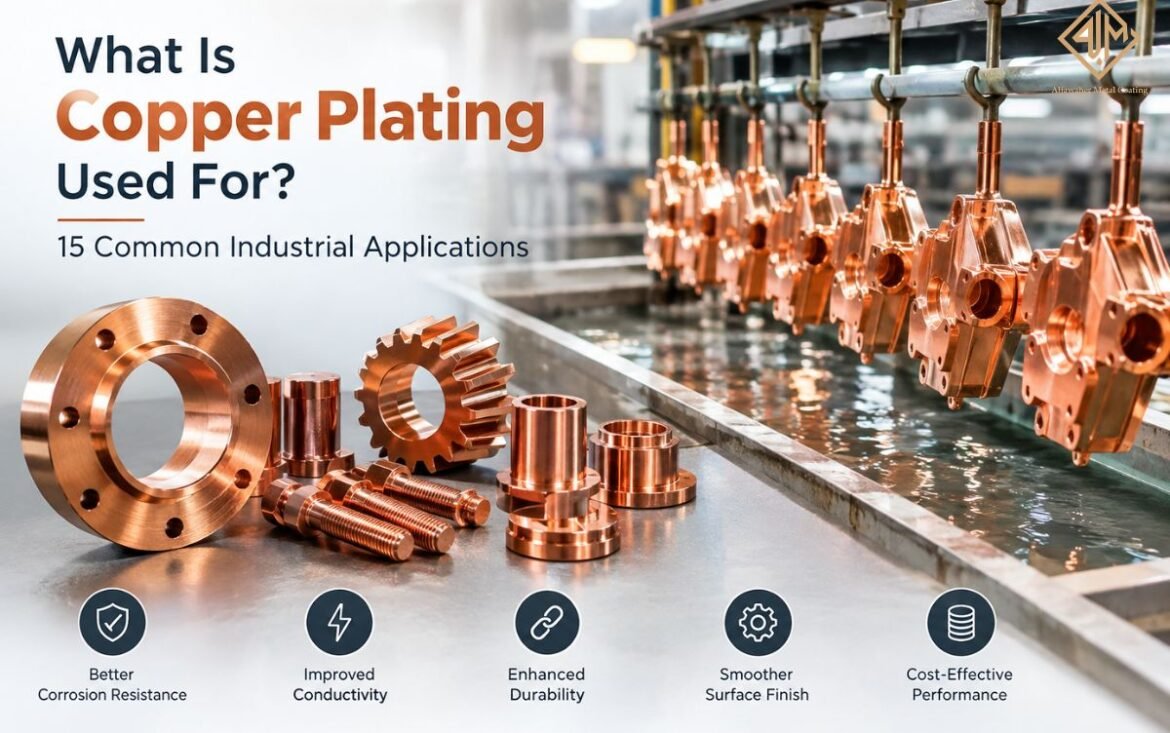
What Is Copper Plating Used For? 15 Common Industrial Applications
Table of Contents
- Key takeaways
- What is copper plating?
- How does the copper plating process work?
- 15 common industrial applications of copper plating
- Benefits of copper plating
- Limitations and considerations
- Copper plating vs other metal coatings
- Choosing a metal coating company
- Common mistakes to avoid
- Wrapping up
- Frequently asked questions
Copper plating is a process that applies a thin layer of copper through the process of electroplating onto another metal, usually steel, brass, or aluminum. The purpose is to improve conductivity and corrosion resistance and prepare the surface for whatever coating is to follow. From electronics to automotive, this process is utilized in several sectors and comes prior to nickel or chrome plating.
However, a majority of companies that want copper plating in Dubai are in need of particular components that have a high dependency on conductivity. The part that is placed in a copper sulfate solution wires up while the current supply creates the bonding between the copper ions and the metal surface. It is a widely used method across industries in the UAE due to its functionality and affordability.
Key takeaways
- Copper plating enhances conductivity, prevents corrosion, and promotes adhesion of coatings made of nickel and chromium.
- Various industries use copper plating, from electronics and automotive parts to plumbing and decorative fittings.
- Acid plating and alkaline copper plating are suitable for working with various base metals and applications.
- Copper plating services in Dubai have the capability to identify issues related to adhesion and thickness.
What is copper plating?
Copper plating deposits a thin, controlled layer of copper onto another metal’s surface through an electrochemical reaction. The base part, often steel, zinc die-cast, or brass, goes into an electrolytic bath loaded with copper ions. Run current through that bath, and copper particles migrate to the part’s surface, bonding as they land.
Two things make this finish worth using. Copper conducts electricity well, so it fits naturally into electrical and electronic parts. It also forms a smooth bonding surface, which is why shops use it as an undercoat before nickel or chrome rather than leaving it exposed as the final visible layer.
How does the copper plating process work?
The process runs through a few stages:
- Surface preparation – Cleaning removes oil, rust, or oxidation. Skip this step, and adhesion fails later.
- Activation – A mild acid dip readies the metal so copper ions can actually bond.
- Electroplating bath – The part goes into a copper sulfate or copper cyanide solution, depending on what metal it’s made of.
- Current application – Electrical current pulls copper ions onto the surface evenly.
- Rinsing and inspection – The part gets rinsed, dried, and checked for even thickness and finish quality.
Moreover, plating thickness runs from just a few micrometres for basic conductivity up to slightly thicker layers when copper is serving as a base coat for more plating on top.
15 common industrial applications of copper plating
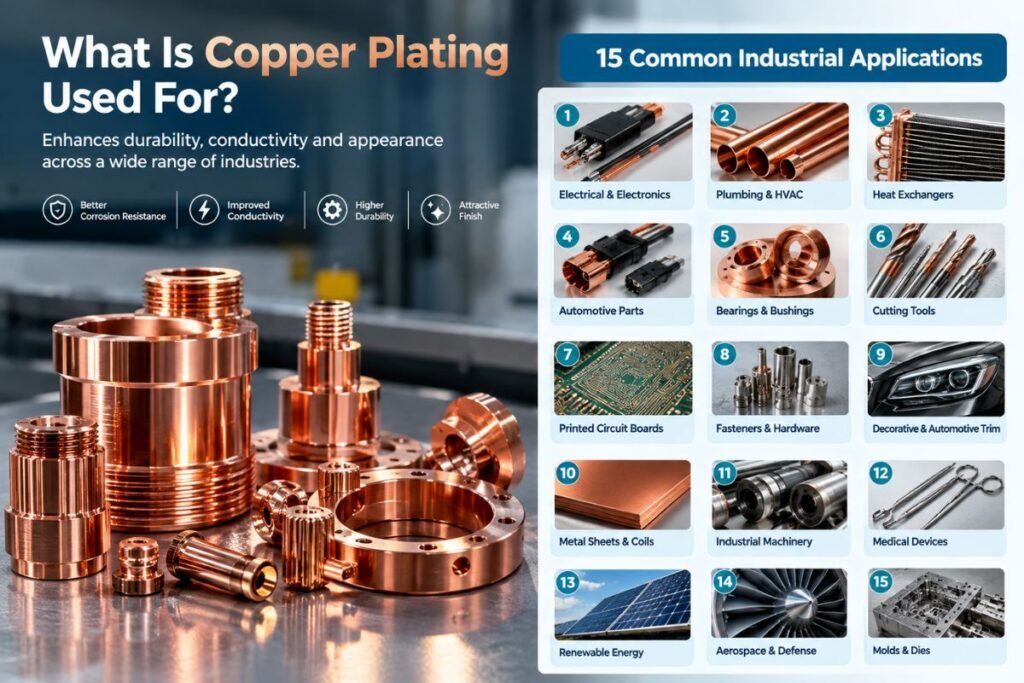
1. Electrical connectors and terminals
Switches, terminals, and wiring components rely on copper’s conductivity for a standard, dependable connection.
2. Printed circuit boards (PCBs)
The conductive pathways on nearly every PCB come from copper plating.
3. Automotive parts
Engine components, brackets, and electrical fittings get copper plated where corrosion resistance or conductivity matters.
4. Plumbing fittings
Valves and fixtures often get a copper base layer before the decorative finish goes on.
5. Bus bars and busbar connectors
Copper-plated bus bars carry high current loads in industrial electrical systems.
6. Base layer for chrome or nickel plating
Copper fills small surface imperfections, which makes it a common undercoat before the final finish.
7. Decorative hardware
Door handles, fixtures, and furniture hardware use copper as a base or an accent finish.
8. Steel wire and cable coating
Welding wire, grounding cable, and some communication cables use copper-coated steel wire.
9. Musical instrument components
Brass instrument parts sometimes get copper-plated before lacquering.
10. Firearms and ammunition components
Some ammunition casings use copper plating for corrosion resistance and smoother chambering.
11. Heat exchangers and radiators
Copper’s thermal conductivity makes it useful anywhere efficient heat transfer matters.
12. Jewelry and fashion accessories
Costume jewelry often uses copper as an undercoat beneath gold or silver finishes.
13. Industrial machinery parts
Gears, shafts, and fittings that need better surface bonding often start with a copper layer.
14. EMI/RFI shielding components
Copper’s conductive properties shield electronic housings from electromagnetic interference.
15. Molds and tooling
Applying copper to molds improves thermal conductivity and extends the tool’s working life.
Benefits of copper plating
Copper plating earns its place for a few practical reasons.
- Conductivity is the obvious one, and it matters most in electrical and electronic parts where current needs to flow cleanly.
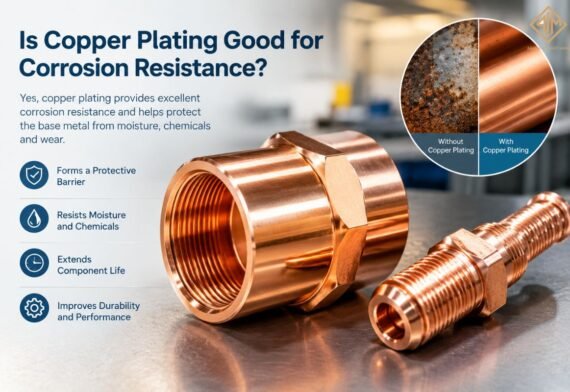
- Corrosion resistance is decent too, though only when the copper is sealed or topped with another layer.
- It also gives nickel, chrome, and other decorative coatings a smooth, bondable surface to stick to, which is half the reason it gets used at all.
- Cost is another factor; copper runs cheaper than nickel or chrome whether you’re using it alone or as a base.
- It’s ductile enough to absorb minor surface stress without cracking, which helps on parts that flex a little during use.
Limitations and considerations
Copper plating isn’t the right answer for every situation. Left unsealed, copper tarnishes when it hits air and moisture, so shops rarely leave it exposed outdoors or in humid conditions, which matters for parts dealing with Dubai’s heat and coastal humidity. It’s also softer than chrome, so anything facing heavy abrasion or mechanical wear needs copper only as a base layer, not the finish itself.
Therefore, thickness is where a lot of jobs go wrong. Too thin and corrosion resistance suffers. Too thick and it throws off dimensional tolerances on precision parts. That’s really the argument for using an experienced provider of copper plating services in Dubai instead of the cheapest quote: bath chemistry, current density, and part geometry all shift the outcome, and getting them wrong shows up later.
Copper plating vs other metal coatings
| Coating Type | Conductivity | Corrosion Resistance | Hardness | Typical Use |
| Copper Plating | Excellent | Moderate (needs sealing) | Low | Base layer, electrical parts |
| Nickel Plating | Fair | Good | Moderate | Mid-layer, decorative use |
| Chrome Plating | Poor | Excellent | High | Final decorative/functional layer |
| Zinc Plating | Fair | Good (sacrificial) | Low-Moderate | Fasteners, structural steel |
Furthermore, most multi-layer finishing systems stack these in order: copper first, nickel next, chrome last. Each layer does its own job rather than competing with the others.
Choosing a metal coating company
Plating shops don’t all handle copper the same way, and bath maintenance, rectifier calibration, and part racking all show up in the final result. Before committing to a provider, it’s worth asking a few direct questions: Do they have experience with your specific base metal, whether that’s steel, brass, zinc die-cast, or aluminum? What quality control checks do they run for thickness and adhesion? What’s their turnaround on industrial batch orders? And do they offer copper as a standalone finish, or only as a base layer for something else?
Aljawaher Metal Coating works across copper, nickel, chrome, gold, and silver plating for industrial and decorative jobs in Dubai, which is worth considering if your project needs copper combined with a secondary decorative or protective layer. When companies compare the best metal coating company in Dubai, consistency across large batch orders tends to matter more than how a single sample part looks, since industrial clients usually need the same result across hundreds or thousands of units.
Common mistakes to avoid
- Rushing or skipping surface preparation causes most plating failures.
- Any oil or oxidation left on the part before plating leads to peeling down the line.
- Using copper as a final visible finish outdoors is another one; without a protective top coat, it will tarnish and discolor.
- Base metal compatibility trips people up too, since not every metal accepts copper equally well, and zinc die-cast parts in particular need specific pre-treatment.
- Thickness specifications get overlooked as well, and assuming one “standard” thickness fits every application usually ends in premature wear or weak conductivity.
Wrapping up
Copper plating stays relevant in industrial manufacturing because it’s conductive, affordable, and works as a solid foundation under nickel and chrome. Whether you’re finishing electrical components, plumbing fittings, or decorative hardware, the surface preparation and bath chemistry are what separate a finish that lasts from one that fails early.
Therefore, sourcing copper plating in Dubai for an upcoming production run means finding a provider who understands both the process and your specific base metal, which saves rework and downtime later on.
Frequently asked questions
Not really on its own. It tarnishes when exposed to air and moisture, so outdoor parts generally need a protective top coat, like clear lacquer or a secondary metal layer.
That depends on thickness, base metal, and environment, but a properly sealed copper layer can hold up for several years indoors.
Yes, though the plastic needs a conductive base coating first before copper can be electroplated onto it.
Usually. Copper costs less as a base material, though the total price still depends on part size, batch volume, and whatever additional layers get added.
It smooths out minor surface imperfections and gives the final decorative layer something solid to bond to, which improves both adhesion and appearance.
Not in the way iron does, but it does oxidize, and left unsealed, it develops a dull or greenish patina over time.
Acid copper works on parts that already have a base layer, while alkaline (cyanide) copper bonds better directly to steel and gives stronger initial adhesion.
Look for a documented quality control process, real experience with your base metal, and the ability to handle small and large batch orders without inconsistent results.