-
aljawahermetalcoating
- September 5, 2026
- No Comments
Common Metals That Can Be Chrome Plated
Table of Contents
- Key takeaways
- What does chrome plating actually do to a metal surface?
- Steel: The most common base metal for chrome plating
- Brass: Why it’s a favorite for decorative chrome
- Aluminum: Possible, but it needs extra preparation
- Copper: Usually a middle layer, not the final finish
- Zinc die-cast parts: common in automotive trim
- Stainless steel: When chrome plating, it even makes sense
- Metals that don’t chrome plate well
- Common mistakes businesses make
- How to choose the right chrome plating provider?
- Final verdict
- Frequently asked questions
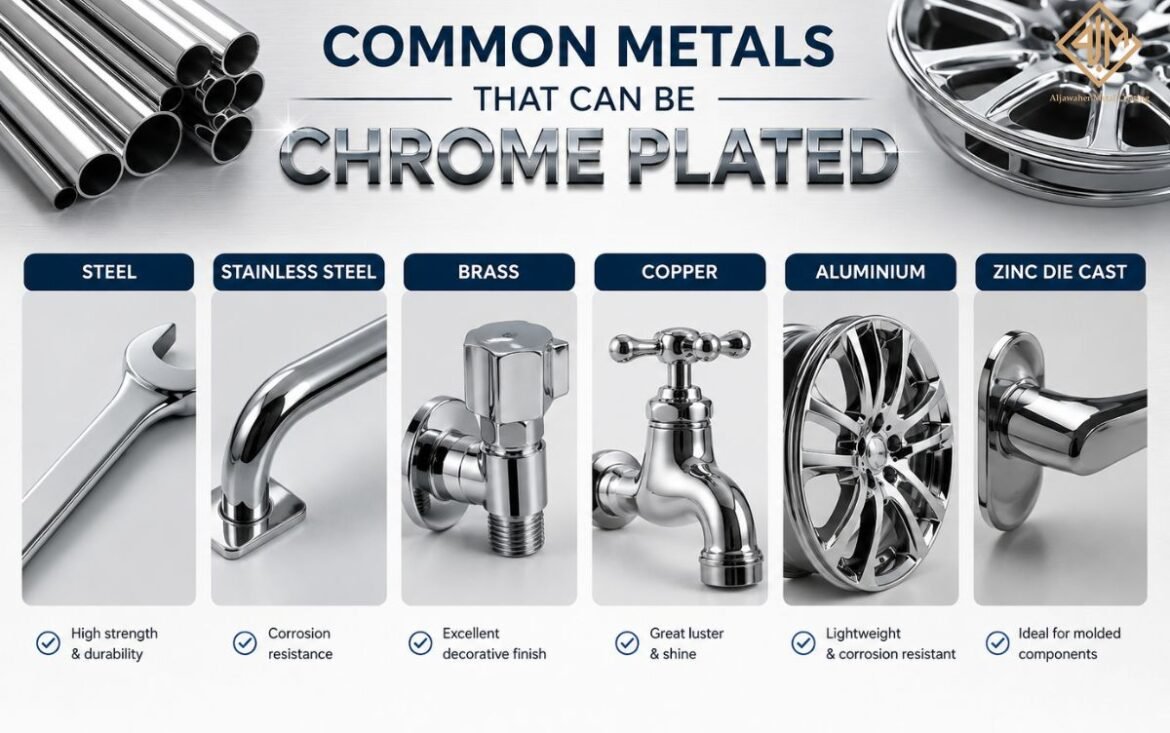
The metals with the highest demand for chrome plating services are steel, zinc die-cast alloys, brass, and copper. Steel is overall the best candidate for chrome plating since it has a high density and is easy to machine. Brass is often used for decorative fittings or bathroom fixtures because of its ability to hold detail in plating. While aluminum can be plated with chrome, it must first have a nickel or copper strike since otherwise chrome won’t adhere to it.
Therefore, copper itself is rarely used as the actual outside layer. It is used underneath as the layer that smooths out imperfections. Cast iron and certain plastics are seldom plated unless a specialized method is used. Before asking others for quotations, it is advisable to identify the material your part is made from. The material of your part determines everything but the price.
Key takeaways
- It is easy and secure to chrome plate aluminum with steel and brass, achieving a brilliant finish.
- Nickel or copper material needs to be placed on aluminum before chrome plating can happen.
- If zinc die-cast parts get a scratch, they start to corrode very quickly and thus need to be protected and handled with care.
- An experienced metal coating company in Dubai makes sure the metal they use for the coating is compatible before starting the process.
What does chrome plating actually do to a metal surface?
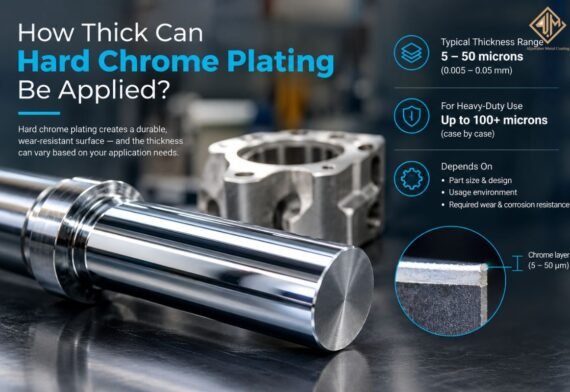
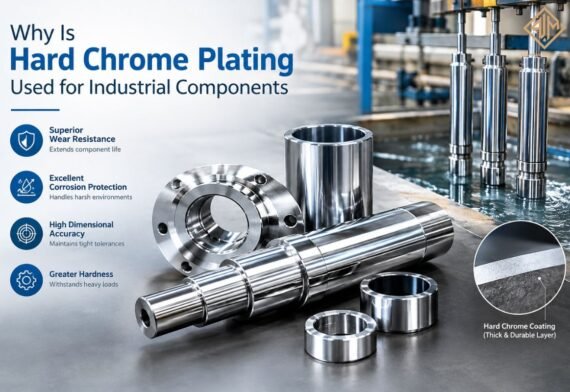
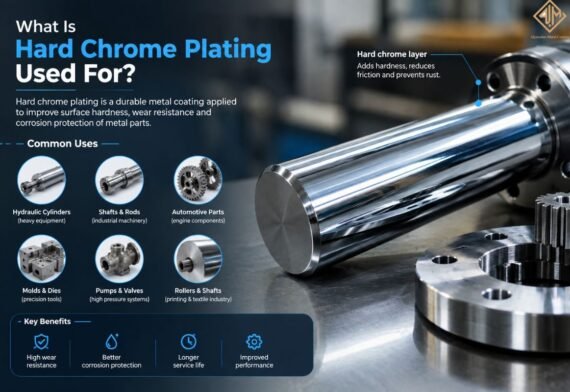
Chrome plating refers to the electroplating process. The items are put in a bath of chromic acid, and the current draws chromium ions from the bath and deposits them on the surface in a thin layer. Usually, the decorative chrome plating layer thickness varies between 0.1 and 0.5 microns. Industrial hard chrome plating, used everywhere, for example, on hydraulic cylinders and machine parts subjected to real wear, can reach a thickness of more than 0.05 mm if used for protecting hydraulic cylinders or machine elements.
Chrome doesn’t spend much time idle by itself. It is placed on an underlying nickel layer, which often lies above the copper layer, which, in turn, is directly applied on the base metal. Copper takes care of the small deformities on the surface, nickel ensures resistance against corrosion and provides the surface with brightness, and chrome provides the surface with the desired hardness, shine, and resistance against tarnishing.
Therefore, the meaning of the base metal is obvious. If the base metal does not accept either the copper or the nickel layer properly, the chrome finish will start cracking, bubbling, or peeling regardless of how well it was applied.
Steel: The most common base metal for chrome plating
Steel appears with chrome in many applications, including automotive parts, furniture frames, kitchen equipment, and industrial parts. Since copper and nickel layer well when chrome is applied, it’s very likely that automotive, furniture, and kitchen products will be made from steel.
But before mild and carbon steel can be plated, their surface needs to be clean (free from rust, oil, and scale). If the preparation step is skipped, the remaining contaminants in the metal will appear in the form of pitting under the chrome coating later on.
Moreover, because of its magnetic properties, steel helps control the electroplating process much more easily. Therefore, it becomes easier to apply chrome on steel parts of complex shapes that contain sharp edges or hard-to-reach places.
Here are some typical applications of chrome electroplating: automotive edges, plumbing fixtures, machine tools, and furniture frames.
Brass: Why it’s a favorite for decorative chrome
Ask any player which metal gives the most even, mirror-like chrome finish, and brass will invariably come up. Almost anything out there made of faucet handles, doorknobs, lighting fixtures, and bathroom hardware is made of brass underneath. Brass is very easy to machine into detail, while being stable enough to keep the plating process from warping.
One interesting feature is that brass doesn’t always require a separate copper strike, as it does include copper in its components. This means that it takes less time to plate brass than steel, although a good shop will test the exact metal grade of the current material anyway.
The downside of using brass is that it is more expensive than steel. This means brass is usually found in smaller decorative pieces rather than in larger structural items.
Aluminum: Possible, but it needs extra preparation
A lot of confusion starts here. People assume any metal can go straight into a chrome tank the same way, but aluminum forms an oxide layer almost the instant it hits air, and chrome won’t bond to that oxide layer directly.
To plate aluminum properly, a shop first strips the oxide through etching, then adds a zincate or nickel strike layer so the chrome has something stable to grip. Skip that step and the plating looks fine for a few months before it starts lifting at the edges.
That extra step costs time and money, which is why chrome-plated aluminum parts usually run more than a steel equivalent of the same size. Wheels, some automotive trim, and lightweight decorative fixtures are the most common aluminum items that go through the process.
Common mistake: treating aluminum like it plates the same way steel does. It doesn’t. Shops that skip the strike layer to save time end up with finishes that fail early.
Copper: Usually a middle layer, not the final finish
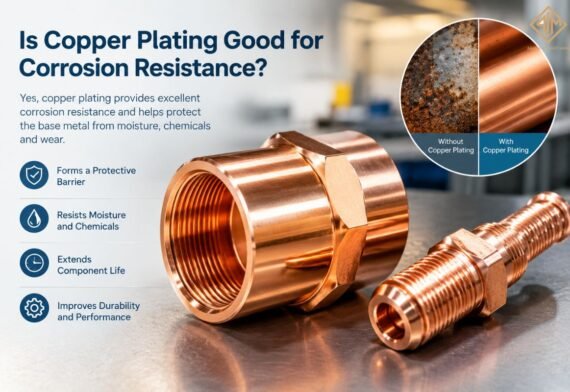
Copper rarely ends up as the finished chrome layer on its own. It’s more often the first coat applied to steel or zinc parts before nickel and chrome go over it, since copper fills microscopic surface pits and gives the layers above it a smoother base to sit on.
That said, polished copper items like plumbing fixtures or decorative pieces can be chrome plated directly if the surface is clean going in. The catch is that copper oxidizes fast once it’s exposed to air, so there’s a narrow window between polishing and plating where the part can’t sit around too long.
Zinc die-cast parts: common in automotive trim
Zinc die-casting alloys are used by car manufacturers for trim, door handles, and small parts. They are cheap and can easily be shaped to complex designs. But the problem with zinc is that it rusts quickly once the chrome plate is scratched or damaged.
Moreover, a pinhole that wouldn’t matter on a steel part can turn into visible corrosion on zinc within weeks, especially somewhere humid or coastal. Dubai’s mix of heat and coastal humidity makes this worth thinking about for anyone plating zinc parts meant to sit outdoors or on a vehicle.
Shops handling zinc die-cast typically run a copper strike before nickel and chrome. That copper layer isn’t just filling pits here; it’s also acting as a barrier that slows corrosion if the outer layers ever get compromised.
Stainless steel: When chrome plating, it even makes sense
This one throws people off. Stainless steel already resists corrosion on its own, so plating it isn’t about protection the way it is with regular steel. It’s almost always cosmetic, done to get a brighter, more mirror-like shine than stainless naturally has.
Additionally, it’s also harder to plate than mild steel. The same chromium oxide layer that makes stainless corrosion-resistant resists bonding with new plating, similar to the aluminum problem above. That means a specialized activation step is needed first, and not every shop offering general chrome plating services in Dubai has the equipment or the hands-on experience for stainless specifically.
Metals that don’t chrome plate well
A shop willing to tell you no is usually more trustworthy than one that says yes to everything.
- Cast iron with heavy porosity: trapped air pockets can cause plating to bubble later, even when the surface looks smooth going in.
- Untreated plastics: no conductivity, so a conductive base coat is required before any electroplating can happen at all.
- Lead and lead alloys: poor adhesion plus the handling and safety requirements involved rarely make it worth doing.
- Heavily rusted or pitted steel: still steel technically, but the damage needs full repair first, not a quick polish and a prayer.
Common mistakes businesses make
Clients who’ve had a bad plating experience before switching providers tend to describe the same few mistakes.
- Assuming every shop handles every metal equally well. Some specialize in steel and genuinely struggle with aluminum. Just ask what they work with most.
- Picking based on price alone without asking about the underlayer process. A cheaper quote sometimes means a skipped copper or nickel strike, and that shows up later as premature peeling.
- Not asking about plating thickness for the specific use case. Decorative chrome and hard industrial chrome need very different thicknesses. Getting it wrong wastes money either way.
How to choose the right chrome plating provider?
When you’re comparing chrome plating services in Dubai for a specific project, a handful of questions separate the shops that know what they’re doing from the ones guessing along:
| What to Ask | Why It Matters |
| What metals do you plate most often? | Specialization affects finish quality and consistency |
| Do you apply a strike layer for aluminum or stainless steel? | Skipping this causes early plating failure |
| What plating thickness do you recommend for my use case? | Decorative and industrial applications need different specs |
| Can I see finished samples on the same base metal as mine? | Proof of experience with your specific material |
| What’s your turnaround time for the volume I need? | Affects project planning, especially for bulk orders |
Therefore, a reliable best metal coating company in Dubai answers these without dodging, because the process genuinely changes by metal and by end use. Vague answers here are usually a reason to keep looking elsewhere.
Final verdict
The whole coating process and how durable the finish will be is dependent on the type of metal. The most common metals used for plating are steel and brass, which are typically easier to prepare and less expensive to plate. The preparation of aluminum and stainless steel requires additional preparation; not all shops do this the right way. As with other metal parts, zinc parts should be handled with care, as scratches will quickly lead to corrosion.
Understanding the type of metal before obtaining quotes can help save time and ensure coating success. Aljawaher Metal Coating can work on steel, brass, aluminum, and zinc die-cast components. They can also advise you on the appropriate underlayer process for the unique metal that you are going to plate with before you even start plating.
Frequently asked questions
Not really. It needs to be conductive and able to bond with a copper or nickel underlayer. Some materials (such as plastics and highly oxidized metals) require special preparation or are just not suited.
It is very quick to form an oxide layer in air, and chrome does not adhere to that layer directly. The chrome is applied over a zincate or nickel strike, which is applied first.
Depends on the job. Brass can beat steel in terms of decorative applications, steel in terms of structural or automotive components, primarily due to cost.
The decorative chrome thickness typically ranges from 0.1 micron to 0.5 micron. Industrial hard chrome, which is applied for wear resistance, is much thicker, depending on the application.
It can, but it is not as forgiving. Scratch the plating of a zinc piece, and corrosion is quicker than on a steel piece.
Mostly looks. It looks brighter and more reflective than the natural finish, and Chrome will not affect the corrosion resistance.
The finish may appear good initially. It typically flakes or bubbles after a few months as there is no solid foundation on which to stand.
Please request directly from the provider and clearly specify the alloy grade. A good Dubai metal coating company will evaluate it before making recommendations.
Yes, when the rust and pitting have been thoroughly repaired. Plating over the damaged steel only covers up the issue for a short time.
Coastal humidity and heat will accelerate corrosion if the plating is broken. This is one of the reasons why it’s important to have the right underlayers here rather than in the more arid climates.