-
aljawahermetalcoating
- September 3, 2026
- No Comments
Brass Plating Services: Industries That Benefit the Most
Table of Contents
- Key takeaways
- What does brass plating actually do?
- Automotive and transport parts
- Interior design, furniture and architectural fittings
- Signage, retail displays and branding
- Industrial machinery and precision components
- Brass plating vs other metal finishes
- Common mistakes businesses make
- How to choose a metal coating partner?
- Wrapping it up
- Frequently asked questions
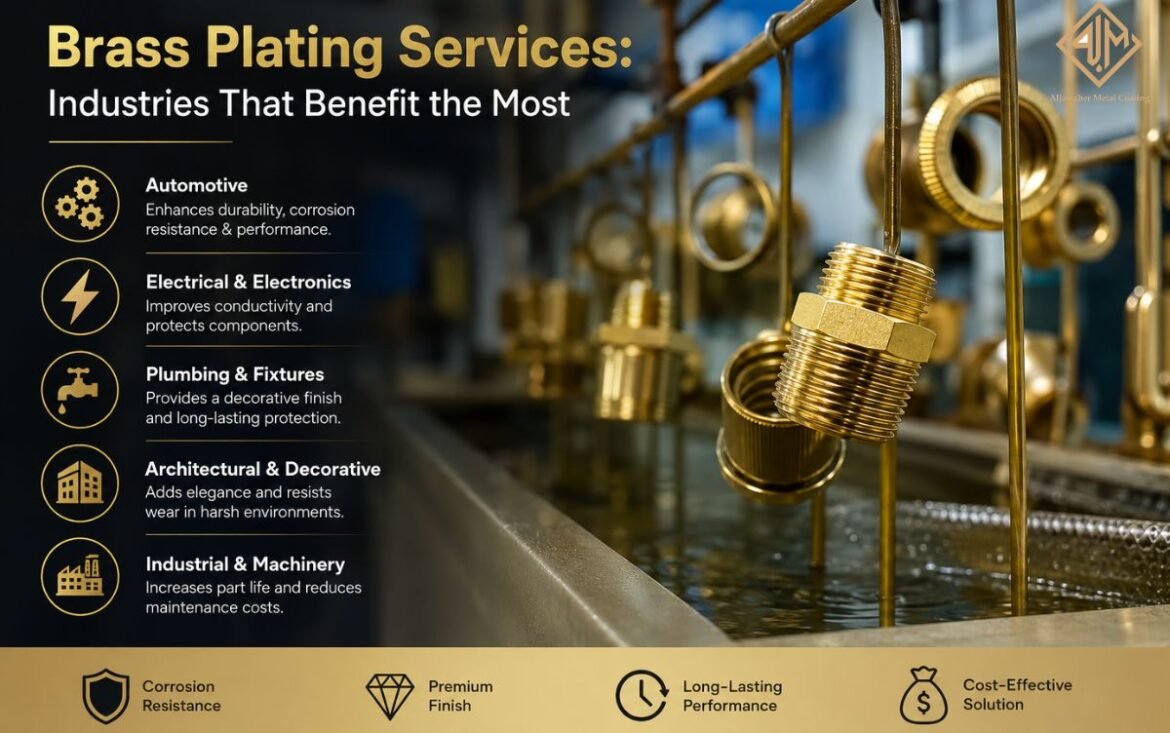
Brass plating is a method of applying a thin, decorative, and protective layer of brass onto another metal base. In Dubai, it’s primarily used by companies involved in auto repairs, furniture making and interior installations, sign manufacturers, and industrial machinery manufacturers. Since brass plating has good resistance to corrosion, can withstand heat and humidity, and gives the parts a beautiful golden finish without the costs associated with real brass, it is widely used in Dubai.
In terms of demand for electroplating, the automotive industry uses the process and accounts for 36% of worldwide production. Finally, you should think about the added expense of brass plating if your parts are prone to being exposed to the outside environment.
Key takeaways
- Brass plating is used in Dubai mostly in the automotive, furniture, signage, and machinery domains.
- Companies take up the plating option when they require protection from corrosion, well-decorated products, and durability.
- The commonest cause of brass plating defects is not the technique itself but poor surface preparation.
- A reputed brass plating service provider in Dubai will assess the coating and adhesion of the plate applied.
What does brass plating actually do?
Brass plating refers to an electrochemical process in which a particular part is placed in a brass-ion solution and subjected to an electrical current, which deposits a thin layer of brass over it. The base material underneath, generally metals such as steel, zinc, or aluminum, does all the structural work while the brass is only responsible for appearance and some level of corrosion resistance depending on how thick it is made.
However, plating has often been considered to be only a cosmetic treatment. This is not true. If plated correctly, a part made with electroplating will resist tarnish and light mechanical damage better than any unplated one and cost much less than a solid brass piece. The difference in price allowed plating to prevail and operate in various industries.
The challenges created by the climate in Dubai require increased consideration of corrosion resistance. The salt in the air close to the shore, coupled with high humidity levels in Dubai for several months of the year and constant changes in temperature from indoors to outside, hastens the corrosion of uncoated metals. This is one of the reasons behind the constant high demand for brass plating in Dubai in numerous industries.
Automotive and transport parts
Brass plating is still incredibly popular among automotive shops. The door handles, emblems, trim elements, and many engine fittings need to be plated because they are constantly touched and therefore affected by weather.
There are some things that people ignore about brass plating:
- Trim plated in brass is shinier than painted trim because the brass coating adheres to metal instead of just being an additional layer coating the surface.
- Brass plating is used extensively in the vintage car restoration industry in the UAE because many parts are no longer manufactured, and replacing the missing parts is nearly impossible.
- Fleets and commercial vehicle operators use brass-plated elements on their hardware that is exposed to the sun for years.
I have noticed shops that did not do plating on emblems to reduce costs, only to plate them again when the bare metal starts to show.
Interior design, furniture and architectural fittings
Brass plating is very prevalent in Dubai, although most people may not notice it. In fact, when they buy cabinet handles, door hinges, light fixtures, staircase railings, or bathroom fittings in a villa or other commercial establishment in Dubai, they are likely to end up buying the plated version and not the solid brass one.
This is so because the brass-toned look has been a trend in Dubai for many years and because plating allows for much lower costs than using solid brass. In hospitality projects or large villas, it is possible to require hundreds of fittings made from brass, which would not be affordable at an optimal cost when made from solid brass.
However, there is the issue with consistency. If the designer orders several batches of particular fittings, they will differ in a slight manner once installed. The solution is working with a reliable brass plating service in Dubai that uses the same process in every batch of the order and keeps the bath concentration and timing unchanged.
Signage, retail displays and branding
Brass finishes appear luxurious and high-end, which is why retail brands, hotels, and corporate offices have sought them for their signage. It is common to choose brass-plated components for reception signs, elevator plates, nameplates, and scrims made from acrylic and metal rather than raw metal components because the clients wish to achieve a finished product that will look great in photo shoots.
Although it may seem that there is no practical necessity for using this kind of material, it must be understood that signs are placed in an area with a lot of movement in any direction, and thus, they get scratched, touched, cleaned, etc. Raw metals perform poorly in such conditions; brass-plated versions remain shiny and impressive even after repeated cleaning cycles, which matter much more than people anticipate when they think of signs that will serve for five years and longer.
Industrial machinery and precision components
This is the least glamorous use case, but probably the most technical one. Machinery shops plate connectors, fittings, bushings, and small precision parts because brass offers good electrical conductivity alongside corrosion resistance, which matters for components that carry current or sit in electrical housings.
Precision tool manufacturers also plate parts that need low friction between moving surfaces. Brass is a softer, more forgiving metal for this than raw steel, which reduces wear on mating parts over time.
Thickness tolerance matters more here than in decorative work. A machinery part might need plating within a few microns of spec, since anything thicker can throw off fit in tight assemblies. Cutting corners on process control causes real functional problems here, not just cosmetic ones.
Brass plating vs other metal finishes
Clients often ask how brass compares to the other finishes offered by a metal coating shop.
| Finish | Best For | Corrosion Resistance | Typical Look |
| Brass plating | Decorative hardware, automotive trim, signage | Good | Warm gold tone |
| Chrome plating | High-wear industrial and automotive parts | Excellent | Bright silver, mirror finish |
| Nickel plating | Undercoat layer, electrical components | Very good | Soft silver-white |
| Gold plating | High-end fixtures, jewelry-adjacent hardware | Good (thin layer) | Bright yellow-gold |
Therefore, brass takes an ideal position. It is warmer and richer in design than chrome or nickel, but substantially more economical than gold plating on higher volumes. Hence, brass is a primary material used for interior fittings and automotive trim products.
Common mistakes businesses make
Most plating complaints trace back to a handful of avoidable issues, not the plating process itself.
- Skipping proper surface preparation- Oil, rust, or old coating left on a part before plating causes poor adhesion, and the brass layer peels or flakes within months. This is the single biggest cause of plating failure.
- Choosing thickness based on price alone- A thinner plate costs less upfront but wears through faster on high-touch parts. For anything handled daily, like door hardware, it’s worth paying for a slightly thicker layer.
- Assuming all brass plating looks the same- Bath chemistry and process control affect tone. Two shops can both call their output “brass plating” and produce noticeably different colors.
- Not asking about warranty or rework policy- Plating can fail even with good process control if the base metal has hidden flaws. A shop that stands behind its work will re-plate rather than argue about it.
How to choose a metal coating partner?
Not every shop offering plating services runs the same quality checks. A few questions are worth asking before you commit to a supplier:
- Do they test adhesion and thickness before releasing parts, or just eyeball it?
- Can they show a sample of previous work in a finish close to what you need?
- Do they handle your volume in-house, or subcontract the actual plating step elsewhere?
- What’s their turnaround for a standard batch versus a rush order?
Aljawaher Metal Coating built its process around answering these questions upfront rather than after a job goes wrong, which is really how it should work with any finishing partner, not just this one. If you’re comparing options, ask any prospective best metal coating company in Dubai for their quality control steps in writing, not just a verbal assurance.
Wrapping it up
Brass plating is popular in a number of industries. It is used in various industries, such as automotive workshops, interior fit-out, signage production, and machinery manufacturers.
But they have two primary objectives: a long-lasting surface and an appealing appearance. Any good company sees brass plating as a technical matter. When selecting a plating provider, they consider more than just the cost.
For a new project, you cannot simply pick any supplier without knowing what the thickness, finish, and turnaround time will be, as Aljawaher Metal Coating can help you understand these details before you select a supplier.
Frequently asked questions
When properly prepared and used, a properly plated brass surface will require touch-up or re-plating after 2-3 years in severe outdoor conditions and several years indoors.
Yes, if the thickness of the plating and the base metal preparation are properly completed. Thin, poorly prepped plating wears out more quickly in a hot, humid environment than a well-prepped plating.
Brass plating is performed with a copper-zinc alloy, which provides a warm gold finish at lower cost. Gold plating is done with real gold and is more expensive and is used for more prestigious or less substantial decorative items.
No, in general, old coatings must be removed first, as it will be difficult to adhere and will peel quickly.
The top four by volume and repeat orders are automotive, interior design and furniture, signage, and industrial machinery.
Ask the supplier for adhesion test results and plating thickness measurements. Quality cannot be determined by a visual inspection.
Yes, significantly. For that reason, this is the standard option for large fittings orders and is much cheaper than the materials used to produce the same finish.
Brass plating is a good conductor of electricity, hence its application to connectors, fittings in machinery, and electrical enclosures.
Ask them to test thickness and adhesion, have a rework policy, and demonstrate consistency with previous batches, rather than samples.
If the tarnish is light, it may be possible to buff it out. When there is deeper wear, showing the base metal, re-plating is required, not polishing.