-
aljawahermetalcoating
- August 27, 2026
- No Comments
How Long Does Silver Plating Last on Metal Surfaces?
Table of Contents
- Key takeaways
- What silver plating actually is?
- How long does silver plating typically last?
- What determines the lifespan of silver plating?
- Signs your silver plating is wearing out
- How to make silver plating last longer?
- Common mistakes that shorten plating life
- Silver plating vs other metal finishes
- Expert insight
- Getting it right the first time
- Conclusion
- Frequently asked questions
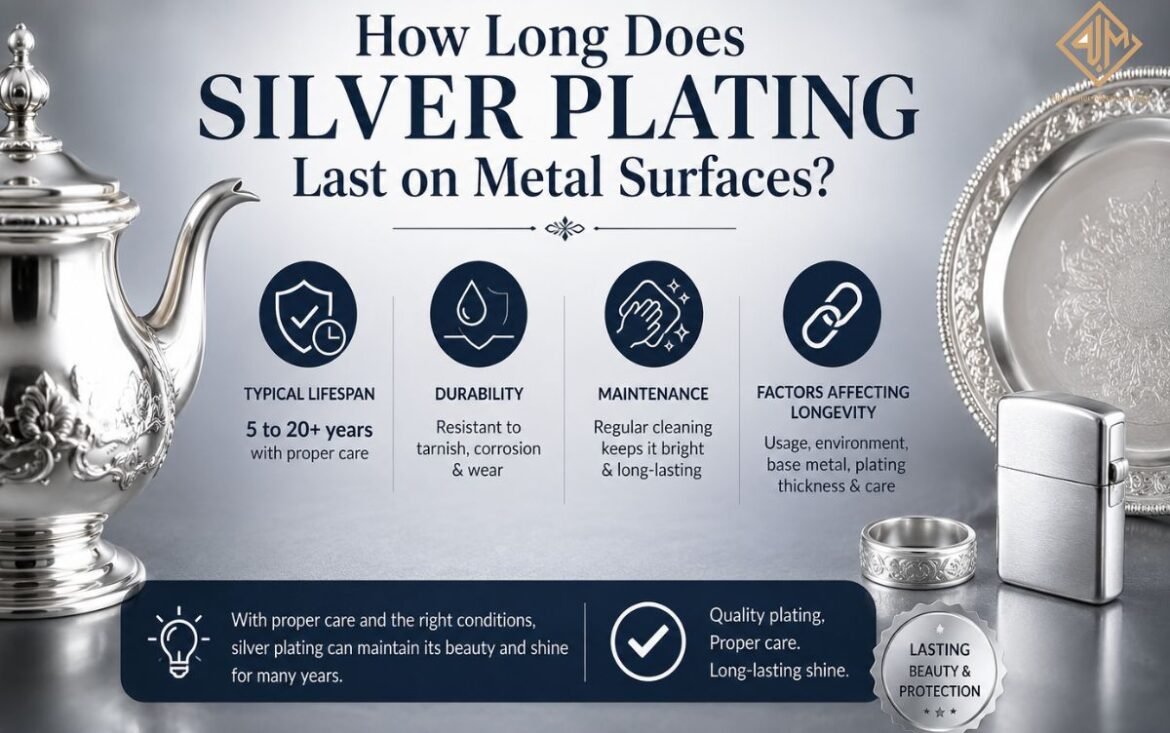
Silver plating typically stays intact for around one to fifteen years, and the truth of the matter is that which end of this range it falls under is contingent upon how thick the plating applied to it is, what the metal underneath it is, and the extent of moisture and handling strain the plated object is subjected to. A decorative layer applied in a very small thickness, around 0.5 to 1 micron, will start showing signs of copper or brass coming through already after several years of use.
Therefore, on the contrary, if the metal has a thickness of at least five microns, which is usually the case with commercial or industrial items, it will be able to survive ten or even more years of use. It is also worth mentioning that the environment has more impact than one can think.
Key takeaways
- Silver plating can last anywhere from 1 to 15 years, based on the thickness of the plating, its use, and its maintenance.
- Thicker silver plating gives a longer life and better resistance to tarnish.
- The heat and sand of Dubai make it more crucial that silver plating is applied correctly and cared for.
- Regular cleaning allows the prolonging of the life of silver-plated surfaces by two or three times..
What silver plating actually is?
Silver plating is the process of applying a thin layer of silver over a base material by using electricity to draw the silver ions from a solution onto the surface of the object. The result is something that looks like solid silver but comes at a fraction of the price since the amount of silver used is very minuscule.
Moreover, this is the main difference between silver plating and solid or sterling silver, which is silver all through. The former can be easily scratched, whereas the latter only tarnishes at the surface and is infinitely polishable without losing the quantity of the material. Keeping that in mind, you can guess the life of any object made of silver.
Most of the silver plating service in Dubai is done on cutlery, decorative elements, automobile trim, jewelry, and machinery, wherever the aspect of silver is required at a lower cost.
How long does silver plating typically last?
There’s no single answer here, but a realistic breakdown by use case looks something like this:
| Application Type | Typical Plating Thickness | Expected Lifespan |
| Costume jewelry | 0.25–0.5 microns | 6 months–2 years |
| Everyday cutlery | 0.5–1.5 microns | 2–5 years |
| Decorative fixtures | 1–3 microns | 5–10 years |
| Industrial/electrical parts | 3–10 microns | 10–15+ years |
| Fine tableware (heavy plate) | 5–10 microns | 10–20 years |
These numbers assume normal use. An heirloom tea set sitting in a display cabinet will outlive a set of everyday spoons even at the same plating thickness, simply because friction and washing do more damage than time alone.
What determines the lifespan of silver plating?
- Thickness of the Silver Layer
This is the one factor that outweighs everything else. Plating thickness is measured in microns, and each additional micron buys real wear resistance. A 0.25-micron flash plate is basically cosmetic and shows base metal fast. A 5-micron layer is a working coating that can take years of contact without complaint.
- Base Metal Quality
Silver doesn’t bond the same way on every surface. Copper and brass accept plating well, but over time they can cause bleed-through, where the base metal’s color starts creeping through the silver, usually at edges and high-friction spots first. A nickel-plated base underneath the silver tends to hold up longer, since nickel acts as a barrier layer between the two.
- Environmental Exposure
Humidity, salt air, sulfur compounds from rubber or wool or certain cleaning products, and temperature swings all speed up tarnish and wear. A humid coastal city is simply harder on plated surfaces than a dry inland one.
- Frequency of Use and Cleaning
Both neglect and over-cleaning shorten plating life, just in different ways. Skip cleaning long enough and tarnish builds up until it needs abrasive polishing, which strips away microns of silver each time. Clean too aggressively, or with the wrong product, and you get the same result faster.
- Quality of the Plating Process Itself
Surface prep matters as much as the plating itself. If the base metal isn’t cleaned, degreased, and sometimes pre-plated with nickel first, the silver won’t bond evenly, and weak spots show up right where wear starts first. This is a big part of why the best metal coating company in dubai you choose actually changes the outcome. Rushed prep work is invisible until the plating starts failing early, and by then it’s too late to fix cheaply.
Signs your silver plating is wearing out
- A yellowish or pinkish tint at edges or high-contact points, usually the base metal showing through
- Dullness that normal polishing doesn’t fix
- Small worn patches on handles, rims, or anywhere that gets frequent friction
- Tarnish that comes back within days instead of weeks
- Uneven color across the surface, which usually means the original plating wasn’t applied at a consistent thickness
Therefore, if polishing still brings the shine back, the plating’s fine. The real problem starts when polishing stops working, because there’s simply not enough silver left to bring back.
How to make silver plating last longer?
- Keep it away from rubber and wool. Both give off sulfur compounds that react with silver and speed up tarnishing, so a cloth-lined drawer or an anti-tarnish bag beats an open shelf every time.
- Clean with the mildest method that actually works. Warm water and mild soap handle most everyday tarnish just fine. Save the chemical dips and abrasive polish for occasional deep cleans, not routine maintenance, since every polish takes a little of the plated layer with it.
- Watch what it touches. Eggs, mustard, mayonnaise, and anything salty left sitting on plated cutlery for too long can accelerate tarnishing and even pitting.
- Handle by the base where you can. Skin oils and sweat contain compounds that react with silver over time, so less contact means less wear.
- Don’t wait too long to re-plate. Once the base metal starts showing through, the eventual re-plating job gets more involved, because visible corrosion has to be fully removed first before new silver goes on.
Common mistakes that shorten plating life
Dishwashers are probably the biggest one. Heat, harsh detergent, and constant contact with other utensils wear through thin plating fast. Choosing the cheapest plating option without asking about micron thickness is another. It looks identical to a proper job on day one and starts failing within months.
Furthermore, a lot of people also wait until an item looks genuinely bad before re-plating, instead of catching wear early when the fix is simpler. More plating failures than you’d think trace back to poor surface prep at the original job, not the plating itself. No amount of silver on top fixes a base metal that wasn’t cleaned and primed properly to begin with.
Silver plating vs other metal finishes
| Finish | Typical Lifespan | Maintenance Needed | Cost |
| Silver plating | 1–15 years | Moderate | Low–Medium |
| Chrome plating | 10–20+ years | Low | Medium |
| Gold plating | 1–10 years | Moderate | High |
| Nickel plating | 15–25 years | Low | Low |
Chrome and nickel tend to outlast silver because they’re more chemically stable and resist tarnish better. People still choose silver when the look, conductivity, or aesthetic matters more than raw durability, which is why it hangs on in tableware, jewelry, and certain electrical connectors even though it needs more upkeep than the alternatives.
Expert insight
Dubai throws a specific combination at plated metal: heat, low humidity indoors from constant air conditioning, high humidity outdoors, and fine dust in the air most of the year. Items that move between air-conditioned interiors and outdoor heat, like automotive trim or exterior fixtures, go through more expansion and contraction than anything kept in a stable environment. Over time, that can cause micro-cracking in the plating, which lets corrosion get started underneath.
However, if you’re sourcing silver plating in Dubai for commercial or industrial work, ask the provider directly what micron thickness they’re applying and whether there’s a nickel barrier layer underneath. Those two answers tell you more about how the plating will actually hold up than the price ever will.
Getting it right the first time
The decision that matters most happens before any silver touches the metal: picking a provider who takes surface prep and thickness seriously. Aljawaher Metal Coating works across chrome, nickel, gold, and silver finishing for clients who need plating that survives real-world conditions, not just a showroom. If you’re comparing options, ask any best metal coating company in Dubai on your shortlist what thickness they’d recommend for your specific use case, and why they’d recommend it.
Conclusion
A costume ring plated at 0.25 microns and an industrial connector plated at 8 microns go through the same process, technically, but they’re built for entirely different lifespans. Thickness, base metal, climate, and daily use all stack together to decide whether you’re looking at two years or twenty. If you’re in Dubai weighing plating options, ask about the specification before you compare prices. That’s usually where a finish that lasts and one that doesn’t part ways.
Frequently asked questions
Yes. Friction and washing gradually remove microns of the plated layer over time, and thinner plating goes first.
Yes. The old plating and tarnish get stripped, the base metal is re-prepped, and a fresh layer goes on through the same electroplating process.
It handles water fine day to day, but standing water and repeated dishwasher cycles will wear it down faster than almost anything else.
That’s usually the base metal, often copper or brass, starting to show through as the silver thins out in that spot.
For everyday items, aim for at least 1 to 3 microns. Industrial or heirloom pieces often go 5 microns or higher.
No, tarnish polishes off easily. Failure is when the base metal is actually visible because there’s no silver left there.
It can work, but outdoor exposure speeds up wear, so thicker plating plus a protective sealant is usually the smarter call.
Every few months for everyday pieces. Display items that rarely get touched can go a year or more between cleanings.
Sterling is solid silver alloy all the way through. Plating is a thin silver coating over something else, which is exactly why plating eventually wears through and sterling doesn’t.
Find a provider willing to talk micron thickness and base metal prep before they quote you a price. Those two things decide how long the finish actually lasts.