-
aljawahermetalcoating
- June 11, 2026
- No Comments
What Is Chrome Plating? Process, Types, Benefits, and Applications
Table of Contents
- Key Takeaways
- What is chrome plating?
- How does chrome plating work?
- Types of chrome plating
- Benefits of chrome plating
- Common applications
- Industry example: why businesses choose chrome plating?
- Why does choosing the right coating partner matter?
- Final thoughts
- Frequently asked questions
Key Takeaways
- Chrome plating puts a protective layer of chromium on metal surfaces.
- Hard chrome plating enhances the wear resistance, hardness and durability.
- The process will help to minimise corrosion, friction and maintenance costs.
- Chrome plating is a common practice in automotive, industrial, aerospace and construction industries.
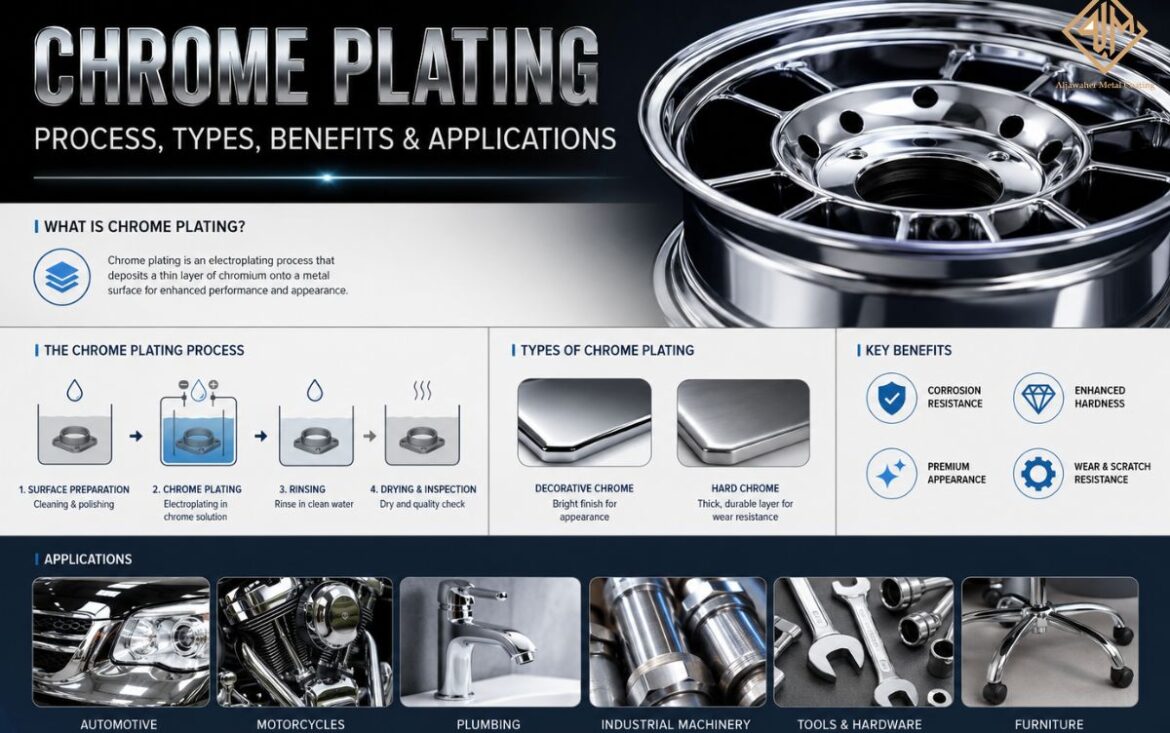
Chrome plating is a metal plating process used to coat a base metal with a thin layer of chromium to enhance its durability, corrosion resistance, aesthetics, and wear resistance. It has a wide range of applications, such as in the automotive, industrial, manufacturing and engineering industries, due to the ability to increase component life and provide a smooth, attractive finish.
Therefore, if you’re planning to get chrome plating done in Dubai, whether it’s for decorative finish or industrial protection, it’s important to understand the process so you can decide which coating is best suited for your needs. Plating companies like Aljawaher metal coating offer custom plating services that enhance performance and durability.
What is chrome plating?
Chrome plating is an electroplating application where the metal is coated by chromium with the help of an electrical current. The chromium layer provides a hard, corrosion-resistant and aesthetically pleasing finish.
Why is chrome plating used?
Chrome plating is often used to:
- Prevent metal from corrosion
- Increase wear resistance
- Improve surface hardness
- Reduce friction
- Enhance appearance
- Extend equipment lifespan
Due to these benefits, the chrome-plating process is keeping its popularity in various industries.
How does chrome plating work?
The process of chrome plating usually takes place in the following steps:
1. Surface Preparation
The metal surface is properly cleaned to get rid of dirt, grease, rust and contaminants.
2. Pre-Treatment
The component can be polished, ground or buffed to obtain a smooth surface for the base.
3. Electroplating
The part is dipped in a solution of chromium, and an electric current causes chromium to plate onto the surface of the part.
4. Finishing and Inspection
The coated part is polished and inspected to meet the required thickness, adhesion and finish standards.
Therefore, consistent results and long-lasting protection can be obtained with a well-controlled plating process.
Types of chrome plating
1. Decorative Chrome Plating
Decorative chrome plating is primarily about looks and offers some wear and corrosion resistance.
Common uses include:
- Automotive trims
- Furniture fittings
- Consumer products
- Architectural elements
2. Hard Chrome Plating
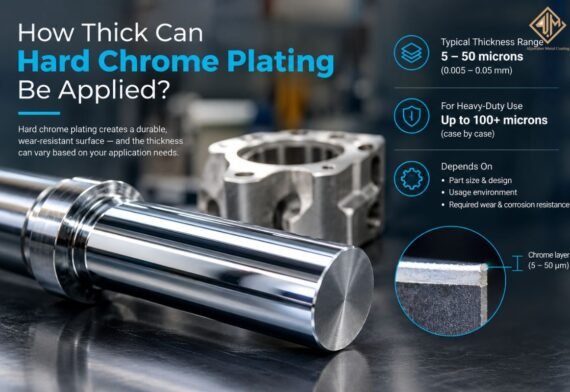
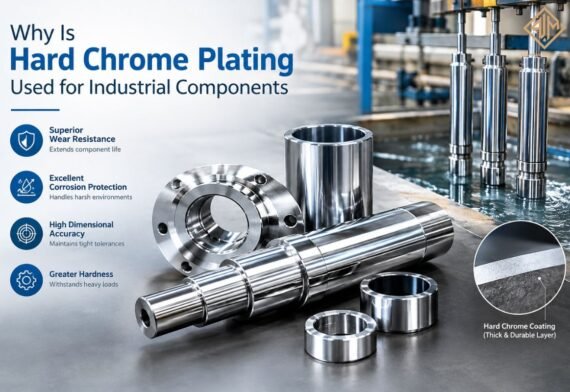
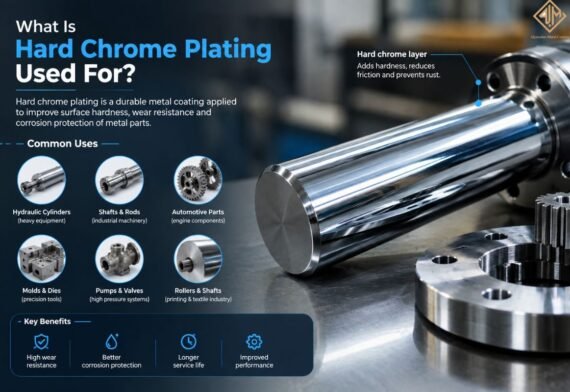
Hard chrome plating is designed for industrial applications where durability and wear resistance are critical.
Common uses include:
- Hydraulic cylinders
- Industrial rollers
- Shafts
- Machine components
Furthermore, chrome plating services is a popular choice for businesses looking to enhance the performance of their equipment and minimise maintenance expenses.
Benefits of chrome plating
- Enhanced Corrosion Resistance
Chrome plating is a protective layer that prevents rust and environmental damage.
- Increased Surface Hardness
The chromium layer helps to reduce both scratches and wear, making components tougher.
- Reduced Friction
Because of reduced friction, many industrial parts are more easily operated.
- Longer Equipment Life
Protected components generally provide more durability, which can help to lower replacement and maintenance costs.
- Attractive Appearance
Chrome plating provides a shiny, mirrored appearance to the product, improving its aesthetic appearance.
- Cost-Effective Protection
Chrome plating offers long-term value and operational savings as compared to frequent part replacement.
Common Applications
Chrome plating is used in a variety of industries.
| Industry | Applications |
| Automotive | Bumpers, wheels, trims, exhaust parts |
| Manufacturing | Rollers, molds, machine parts |
| Aerospace | Precision components |
| Oil & Gas | Valves, shafts, cylinders |
| Construction | Heavy equipment parts |
| Marine | Corrosion-resistant components |
There are a number of organisations that are looking for chrome plating that are able to give the solutions that will enhance the durability of the equipment in demanding environments.
Industry example: why businesses choose chrome plating?
In industrial uses, equipment can be subjected to extremely tough environments with friction, moisture, chemicals and loads. If the components are not adequately protected, they wear out rapidly and result in expensive downtime.
For example, if a company has chrome-plated hydraulic rods, it can help to minimise wear and corrosion in contrast with untreated hydraulic rods. This means fewer repairs, higher productivity and reduced operating expenses.
That is one of the reasons why companies tend to collaborate with an experienced provider like Aljawaher metal coating for guaranteed surface treatment solutions. The objective of the best metal coating company in Dubai is not just to ensure the coating quality but also to ensure that the client puts to his best use the equipment and its life.
Furthermore, Aljawaher metal coating is suitable for the industries where precision-engineered finishings for both decorative and industrial purposes are required, thus ensuring consistency in quality and reliability.
Why does choosing the right coating partner matter?
The quality of the chrome plating depends on process quality, coating thickness and technical skills.
When choosing a service provider, consider such things:
- Industry experience
- Quality control standards
- Coating capabilities
- Inspection procedures
- Project turnaround time
Aljawaher Metal Coating is a reliable best metal coating company in Dubai that offers cutting-edge coating solutions to meet industrial and commercial needs. They are able to optimise the performance and lifespan of components in order to maximise their value to customers.
Final thoughts
Chrome plating remains one of the best metal finishing processes for increased durability, corrosion resistance and aesthetics. The process is used for a variety of applications, including automotive parts, industrial machinery, and heavy-duty equipment, and can provide long-lasting protection and improved performance.
When it comes to plating solutions for reliable work, it is important to have the expertise of specialists chrome plating services in Dubai from Aljawaher metal coating to ensure that the work is done with high quality for your application. The cost savings, longer equipment life and increased overall operation efficiency gained from investing in professional chrome plating today will benefit the user.
Frequently asked questions
The purpose of chrome plating is to enhance the properties of metals, including resistance to corrosion, durability, hardness, appearance, and resistance to wear.
Decorative chrome plating is more about looks, whereas hard chrome plating is more about industry durability and wear resistance.
The life is related to the operating conditions, coating thickness, and maintenance. Good components can have a long lifespan if they are properly plated.
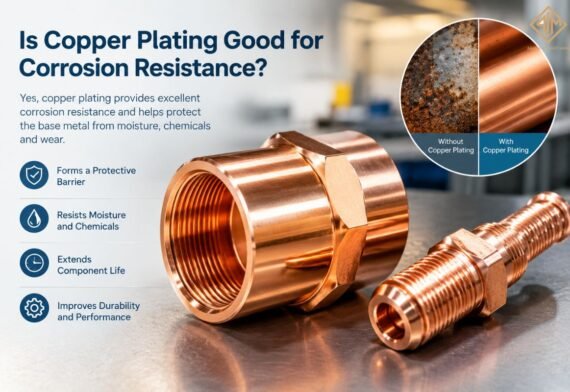
Yes. Chrome plating is excellent resistance against corrosion and protects the metallic surface from rust.
Chrome plating is used in many industries such as automotive, manufacturing, aerospace, marine, oil and gas, and construction.